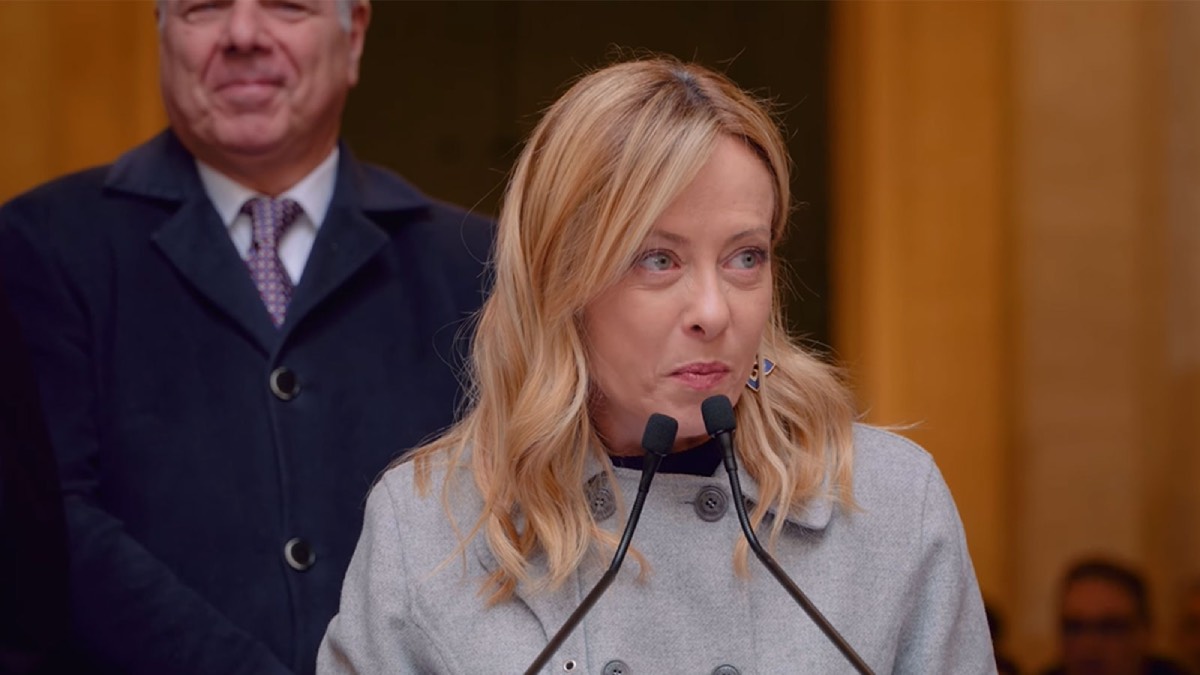
Prime Minister Giorgia Meloni said on Sunday that Italy is preparing to introduce a ban on the burqa in schools, along with a legal limit on the number of foreign students per class, so that Italian children do not feel like a minority in the classroom.
“Italian children cannot feel like a minority in the classroom,” Meloni said at Fenix, a national youth festival organised by the youth wing of her Brothers of Italy (FdI) party. “It’s unthinkable that in an Italian classroom, Italian children feel cornered because they’ve become the minority. It can’t be done,” she added, while playing up her right-wing credentials at the event.
Cabinet measure on foreign students and Italian language
Meloni said a measure would soon be presented to a Cabinet meeting to legally establish a maximum number of foreign students per class. “It also requires parents of foreign students facing serious difficulties integrating into the school system to learn Italian and bans burqas and niqabs in schools,” she said at the annual gathering.
She did not specify what the maximum number of foreign students per class would be.
Explaining her reasoning, Meloni said, “If there is only one child in a class who doesn’t understand Italian, that child will likely be able to learn the language and integrate quickly with the help of classmates and teachers. However, if the number of children who don’t understand the language becomes large, or even the majority, that is no longer integration; it is neglect.”
Face-covering remarks
“You must go to school with your face uncovered, and in Italy no one, in the name of a real or supposed tradition, can decide that a young woman must hide herself,” Meloni said.
Migration and integration in Italy
Italy is one of the European countries most exposed to migrant arrivals because of its central Mediterranean location, which has made migration a major challenge for successive governments. The integration of migrants, particularly those from Muslim-majority countries, remains a point of contention in Italian society and politics. Debates over religious symbols, cultural integration, citizenship rules and immigration policy frequently polarise public opinion.
Students who are not Italian citizens account for 11.6 per cent of those enrolled in Italian schools, according to Fondazione ISMU, a research institution.
Note for editor: The source headline says Italy will ban the “burqa and hijab” in schools, but Meloni’s quoted statement refers only to “burqas and niqabs”, and the hijab is not mentioned in her direct remarks. I have used the terms from her quote in the headline and body to stay accurate to what she said. You may want to confirm this with the original source before publishing.