
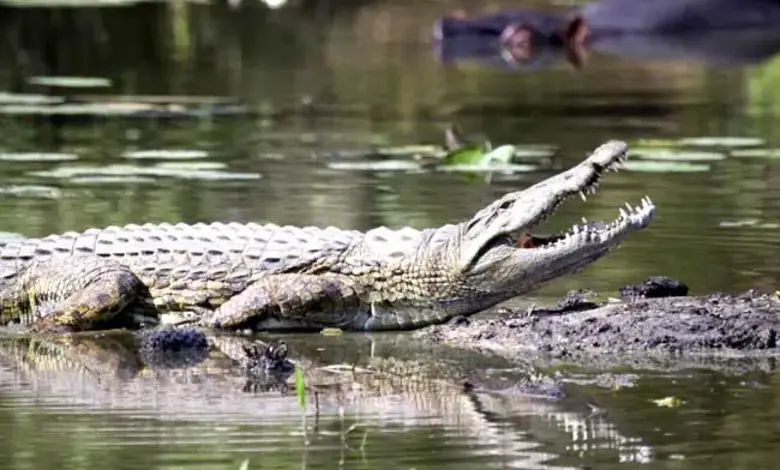
Israeli authorities have approved a regulatory change that permits the use of crocodiles as part of security measures to prevent prison escapes. The Environmental Protection Minister reclassified Nile crocodiles from wild animals to captive-bred wildlife, facilitating their deployment in controlled environments for security purposes.
National Security Minister Itamar Ben Gvir, who oversees the Israel Prison Service, welcomed the decision. He had previously suggested surrounding certain facilities with the reptiles, drawing comparisons to security practices at other detention centers. Ben Gvir shared a social media post featuring an image of himself with a crocodile, stating that efforts were underway to encircle prisons with the animals as a deterrent.
The updated rules specify that Nile crocodiles can be bred and maintained by authorized security bodies under strict conditions designed to prevent their release into the wild. The regulation requires approval from the Environmental Protection Minister when possession is deemed necessary for security reasons. Oversight of these animals shifts from the nature and parks authority to relevant security entities.
Ben Gvir reportedly plans to implement the measure at Ketziot prison in southern Israel, a facility holding numerous militants captured following the October 7, 2023 attack. The proposal initially faced skepticism and ridicule from some prison service officials when first raised.




The move has sparked discussion regarding its practicality and implications for prison management. Proponents view it as an innovative approach to enhancing perimeter security at high-risk institutions. Critics have questioned the feasibility and potential risks associated with maintaining large reptiles in such settings.
This development reflects ongoing efforts to strengthen security protocols amid regional tensions. The regulation provides a legal framework for using non-traditional methods in correctional facilities while maintaining safeguards to protect both the animals and the surrounding environment. As implementation proceeds, authorities will likely monitor its effectiveness in deterring escape attempts.