
Is Trump Quietly Building A ‘Core-5’ Superclub With India, Russia, China and Japan To Replace The G7 And Cut Europe Out?
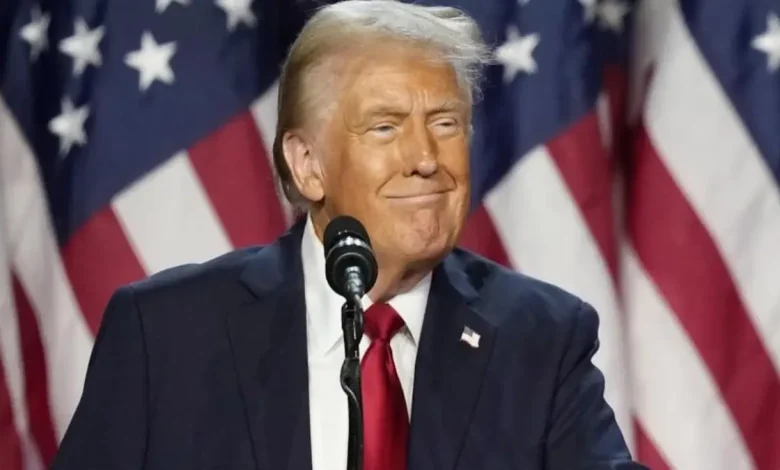
President Donald Trump is reported to be exploring a new ‘Core-5’ superclub comprising the US, Russia, China, India and Japan, with the grouping being discussed as a possible alternative to the G7 that would effectively sideline Europe, Politico reported, citing Defence One. The proposed Core-5 platform is being framed as a club of “major powers” that could become one of the most influential blocs in history and fundamentally reshape the global geopolitical order.
The reports have gained traction because Trump had already signalled such an idea at the G7 Summit in June this year, where he argued that Russia and China should be part of the grouping and called the 2014 decision to remove Russia after its annexation of Crimea a “very big mistake”. According to Defence One, the Core-5 concept appeared in a longer, unreleased version of the US National Security Strategy, though the White House has denied that any such unpublished document exists.
At the G7, Trump said, “You wouldn’t have a war right now if you had Russia in,” and added that excluding Vladimir Putin from the bloc “makes life more complicated”. That line of thinking is understood to have fed into the idea of a five-nation superclub bringing together the US, Russia, China, India and Japan under one strategic framework. The draft strategy reportedly describes a Core 5 (C5) made up of these five countries, each with a population exceeding 100 million.
Reports also suggest that the group’s first agenda item has already been identified: security in the Middle East, with a focus on normalising relations between Israel and Saudi Arabia. One of Trump’s key foreign-policy goals in a second term is to bring Saudi Arabia into the Abraham Accords, which were signed in 2020 during his first term to normalise ties between Israel and several Arab states but did not include Riyadh.

The Core-5 idea represents a major shift in US priorities, moving away from its traditional dependence on European allies and toward deeper engagement with large, emerging and non-Western powers. While the final National Security Strategy released by Washington on December 5 did not reference the Core-5 proposal, it did speak of a desire for more stable relations with Russia and noted areas of divergence with Europe.
At the same time, US–India ties, strained after Trump imposed a steep 50% tariff on Indian goods over New Delhi’s continued purchase of Russian oil, appear to be stabilising, with Prime Minister Narendra Modi holding a third phone conversation with Trump on Thursday in recent months and describing it as “very warm”. Unlike the G7, membership in the Core-5 would not be contingent on countries being both affluent and democratically governed.