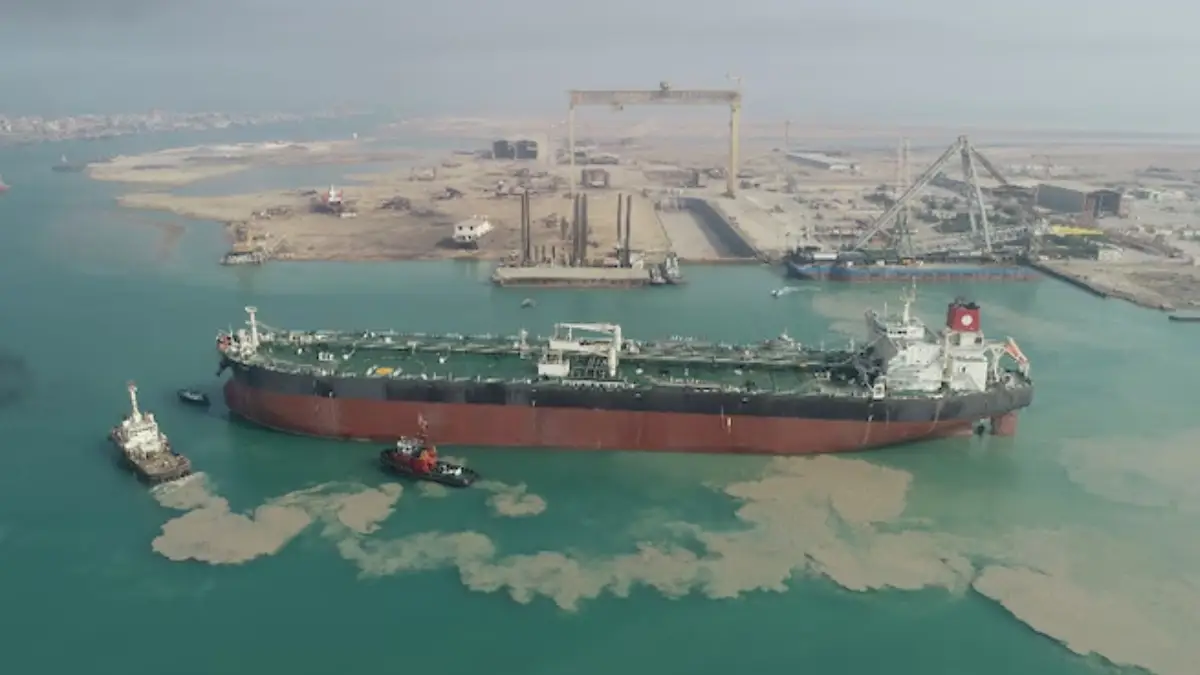
Tehran : Iran’s oil industry is caught in a bind as Tehran cannot halt production without damaging wells, and sanctions and blockade have choked exports, leaving crude piling up. The storage at Kharg Island, which produces over 90% of Iran’s oil, and stores up to 30 million barrels of crude oil, is nearing capacity due to the US blockade in the Strait of Hormuz.
The vessel Nasha, which had been idle and empty for years, is now being redeployed as floating storage to hold excess crude that cannot be exported. The move is only a temporary fix, but Tehran’s reliance on it shows how tightly the US naval blockade is constraining the country’s oil infrastructure. According to the satellite imagery provided by the Maritime tracker platform TankerTrackers, from April 16, shows three tankers loading at Iran’s Kharg Island export terminal with a combined total of 5 million barrels.
If storage reaches its full capacity, Iran might face a stark dilemma with few viable options. Oil that cannot be stored cannot continue to be produced, and oil that cannot be exported cannot generate the revenue Tehran depends on. The blockade, therefore, is not merely a military tactic. It is turning out to be an economic chokehold on Iran.
The US Treasury Secretary Scott Bessent warned earlier that Iran might soon reach its crude oil storage capacity. This shortage of space to store oil is a major issue, as Iran would have to start closing its wells, especially the water-injection fields that require steady operation to avoid damage and long-term production losses.
Read Also : Indian Student Canada Shares Work-Study Struggle In Viral Video
-

-

-

-