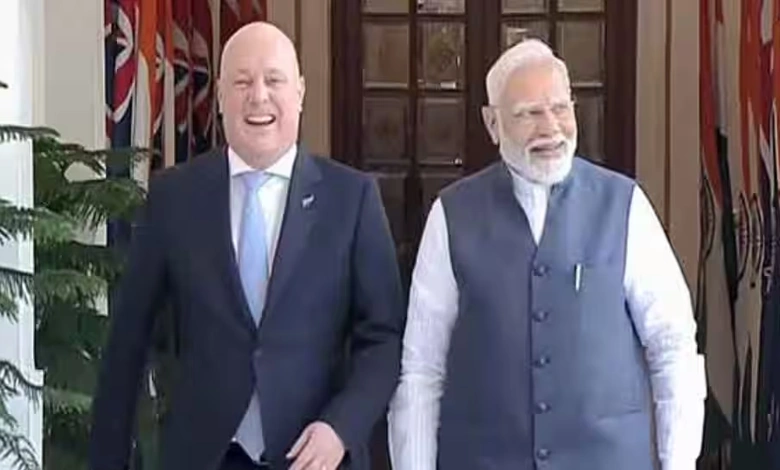
India and New Zealand are poised to sign a major free trade agreement (FTA) today, marking a significant milestone in their economic relationship. New Zealand Prime Minister Christopher Luxon described the pact as a “once-in-a-generation” deal, underscoring its scale and long-term impact on bilateral ties.
The agreement is expected to be formalised in New Delhi and represents the culmination of negotiations that concluded late last year. The FTA is designed to deepen trade and investment links between the two countries, while also creating new opportunities for businesses and workers on both sides.
Under the terms of the deal, Indian exporters will gain duty-free access to the New Zealand market across all goods, a move that is likely to benefit sectors such as textiles, pharmaceuticals, engineering products, and processed foods. In return, India will reduce or eliminate tariffs on a large share of New Zealand exports, including items like wool, wood, and agricultural products, while continuing to shield sensitive domestic sectors such as dairy.
The agreement is also expected to significantly boost investment flows. Estimates indicate that the pact could bring in around $20 billion in investment over the next 15 years, while helping to double bilateral trade to approximately $5 billion within five years.
ALSO READ : Trump Event Shooter Names Kash Patel As Only Official Off Target
Beyond trade in goods, the FTA includes provisions aimed at enhancing mobility and services. These measures are likely to support Indian students and professionals seeking opportunities in New Zealand, alongside initiatives to strengthen cooperation in areas such as innovation and services.
Officials from both countries view the agreement as a strategic step toward strengthening economic cooperation in the Indo-Pacific region. By reducing trade barriers and encouraging cross-border investment, the pact is expected to unlock new avenues for growth and reinforce the broader partnership between India and New Zealand.
Overall, the signing of this agreement signals a new phase in bilateral relations, with both nations aiming to leverage the deal to expand trade, create jobs, and enhance long-term economic collaboration.
-

-

-

-