
Iran Attacks World’s Biggest Gas Hub In Qatar, in Retaliation to Israeli Attack on Key Gas Field

Tehran/Dubai: Iran has significantly ramped up its military actions by targeting oil and natural gas infrastructure across the Persian Gulf region on Thursday, marking a sharp escalation in the ongoing conflict that is reverberating through global energy markets.
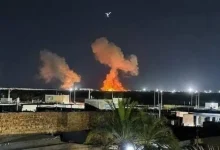
The strikes come directly in response to an Israeli assault on a major Iranian gas field, heightening fears of broader regional involvement and further straining already tight worldwide supplies. Iran’s actions have focused on critical energy assets in Qatar, Saudi Arabia, Kuwait, and the United Arab Emirates, while an Iranian missile also struck oil refineries in Israel’s northern port city of Haifa.
Additional incidents underscored the growing risks to maritime traffic: one ship was set ablaze off the UAE coast, and another sustained damage near Qatar. Efforts to circumvent the Strait of Hormuz—through which roughly one-fifth of global oil passes—faced setbacks when an Iranian drone targeted a Saudi refinery on the Red Sea, a route Riyadh had promoted as an alternative export pathway.
ALSO READ : Biggest Iran Strikes Today: Pete Hegseth Says 7,000 Targets Hit, War Ends only On US terms



Global commodity prices reacted sharply. Brent crude, the international benchmark, surged to highs of $118 per barrel, reflecting more than a 60% increase since the Israel-US campaign against Iran began. European natural gas prices climbed 17% on Thursday alone and have doubled over the past month.
Qatar reported that the attacks disabled approximately 17% of its liquefied natural gas (LNG) export capacity, potentially costing $20 billion in annual revenue and jeopardizing supplies to Europe and Asia, according to statements from QatarEnergy’s CEO and the state’s energy minister to Reuters.
Saudi Arabia confirmed a hit on its SAMREF refinery in the Red Sea port of Yanbu. Authorities in Kuwait reported strikes on two refineries, while gas operations in Abu Dhabi were also affected.
Gulf nations condemned the Iranian campaign. Qatar, Saudi Arabia, and the UAE issued strong denunciations, with Arab League Secretary General Ahmed Aboul Gheit describing the moves as a “dangerous escalation.”
Iran showed no immediate indication of de-escalation. In Israel, repeated waves of Iranian attacks prompted millions to seek shelter, causing structural damage though the Haifa refinery strike resulted in no “significant damage,” per Israel’s Energy Ministry.
In Washington, Defence Secretary Pete Hegseth asserted that the US military “controls the fate” of Iran and urged Tehran to avoid targeting Arab allies. He referenced the recent killing of an IRGC leader by Israel and suggested further leadership risks for Iran’s Revolutionary Guards and Basij forces.
Israel, meanwhile, conducted its first strikes on Iranian targets in the Caspian Sea, hitting dozens of sites including ships, a shipyard, and a command centre, according to military spokesman Lt Col Nadav Shoshani.
The US Treasury Secretary Scott Bessent indicated Washington might lift sanctions on stranded Iranian oil to ease global supply pressures and curb price spikes.
As the war enters a more volatile phase, the targeting of energy infrastructure has amplified economic fallout and raised the prospect of wider confrontation.