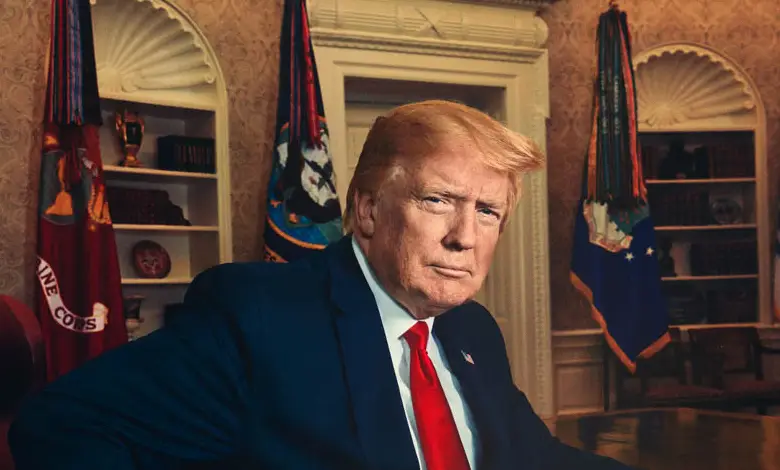
US President Donald Trump, in a nationally televised address on Wednesday night, described tariffs as his “favourite word” while presenting what he called a report card of his second-term administration. One of the earliest moves of Trump 2.0 was to impose sweeping tariffs on countries across the globe, a strategy that has strained Washington’s relations with several traditional allies.
In his address, Trump claimed that record levels of investment are now flowing into the United States because of his policies. Framing tariffs as a core instrument of his economic agenda, he said: “Much of this success has been accomplished by tariffs, my favourite word, tariffs, which, for many decades, have been used successfully by other countries against us, but not anymore. Companies know that if they build in America, there are no tariffs, and that’s why they’re coming home to the USA in record numbers. They’re building factories and plants at levels we haven’t seen, AI, automobiles.”
How much have tariffs brought in?
Earlier this week, US Customs and Border Protection (CBP) reported that the United States has collected more than $200 billion in tariffs so far this year as a result of the new duties ordered by Trump.
“Between Jan. 20 and Dec. 15, 2025, U.S. Customs and Border Protection collected more than $200 billion in tariffs thanks to more than 40 executive orders put in place by President Donald Trump’s Administration,” CBP said.
“This figure underscores CBP’s effectiveness in promoting secure, fair, and compliant trade, strengthening America’s national and economic security,” the agency added.
Read More: Trump Administration Broadens Travel Restrictions, Adding Five Nations to Full Ban
Tariff receipts dipped in November for the first time since Trump introduced broad new import duties in April. The government collected $30.75 billion from tariffs that month, slightly lower than the $31.15 billion recorded in October.
Earlier in 2025, Trump moved unilaterally, without seeking congressional approval, to roll out what he termed “reciprocal tariffs” on imports from most countries around the world. He also imposed separate “fentanyl tariffs” on goods from Canada, China and Mexico, arguing that these measures were a response to those governments’ failure to stop the flow of the drug into the United States.