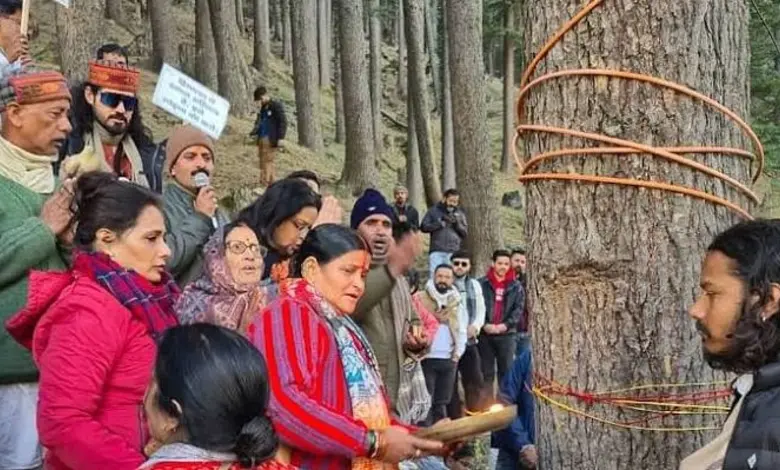
Dehradun: A proposed road widening project in Uttarakhand has triggered a wave of protests after plans to fell thousands of trees along the Bhaniyawala Rishikesh stretch drew sharp criticism from environmentalists, local residents and conservation groups.
The project, aimed at easing traffic and improving connectivity between Dehradun and Rishikesh, has become the centre of a growing debate over balancing development with environmental protection. While initial reports indicated that around 3,000 trees would be cut, later official updates suggested the number could exceed 4,300, intensifying public concern.
Over the past few days, hundreds of people have gathered at protest sites, hugging trees, tying sacred threads around trunks and carrying placards in a symbolic revival of Uttarakhand’s iconic Chipko movement. Several demonstrators were detained during the protests, but activists say they will continue their campaign until the project is reconsidered.
The biggest concern is the ecological impact. The proposed road passes through the Shivalik forest belt, an important wildlife landscape that also serves as an elephant movement corridor connected to the Rajaji landscape. Environmentalists argue that removing thousands of mature trees could fragment habitats, increase human elephant conflict and weaken the region’s natural defence against climate change.
Activists insist they are not opposed to better roads but want authorities to explore alternatives that minimise tree loss. They have called for a fresh environmental assessment, greater transparency and engineering solutions that protect old growth trees wherever possible.
The state government, however, maintains that the widening project is essential to reduce traffic congestion, improve road safety and strengthen connectivity for residents, tourists and pilgrims travelling to Uttarakhand’s major religious destinations. Officials have said the project has received the necessary approvals and that compensatory afforestation will be carried out as required under existing norms.
The protests have quickly grown beyond a local issue, drawing support from students, retired forest officials, environmental groups and citizens across the state. For many, the movement is about more than a single road project it is about protecting Uttarakhand’s fragile Himalayan ecosystem at a time when the state is already grappling with landslides, forest fires and the effects of climate change.
As the standoff continues, the controversy has once again highlighted a question that is becoming increasingly difficult to ignore Can infrastructure development in ecologically sensitive regions move forward without sacrificing forests that have taken decades to grow?
The answer could shape not only the future of the Bhaniyawala Rishikesh project but also the way similar infrastructure projects are planned across the Himalayan region.
ALSO READ: Ahmedabad Unveils ‘Urban Greening Policy’ After Removing 12,000 Trees in Seven Years