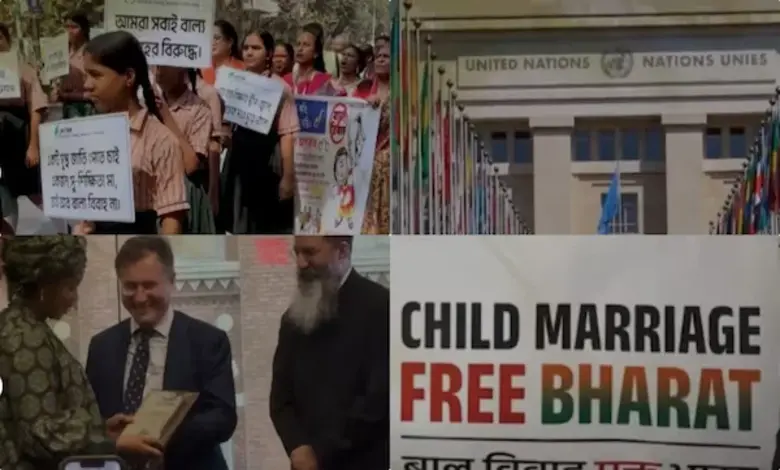
New Delhi: November 27 will now have a special place in the global fight against child marriage. The United Nations General Assembly has declared the date the International Day for the Elimination of Child, Early and Forced Marriage, bringing the issue into sharper focus worldwide.
The decision was taken on September 4, 2026, following a resolution introduced by Sierra Leone. The campaign behind the move was led in part by Bhuwan Ribhu, founder of Just Rights for Children, who has been working for years to end child marriage in India.
The date itself is significant for India. On November 27, 2024, the Centre launched Bal Vivah Mukt Bharat, or Child Marriage Free India, a nationwide campaign aimed at preventing child marriages and creating greater awareness about the issue.
Child marriage is not simply a matter of a young person getting married too early. It can change the course of a child’s entire life. Children forced into marriage are more likely to leave school, face early pregnancy, experience violence and lose the freedom to make important decisions about their own future.
India has made progress, but the numbers show that there is still a long way to go. According to data from the National Family Health Survey-5, around 23% of women aged 20-24 were married before they turned 18 during 2019-21.
Indian law prohibits marriage involving a girl below 18 and a boy below 21. The Prohibition of Child Marriage Act, 2006 also provides punishment for people who conduct, promote or help arrange such marriages.
The government has set an ambitious goal of making India free of child marriage by 2030, with a target of reducing its prevalence by 10% by 2026. The national campaign has focused on awareness, reporting cases, involving local communities and improving coordination among government agencies.
Some encouraging examples have already emerged. Balod district in Chhattisgarh was declared India’s first child marriage free district in 2025, while several village panchayats in Surajpur also received child marriage free status after reporting no cases for two consecutive years.
The UN’s decision does not mean the problem has been solved. But it gives the issue a permanent date on the international calendar and, for India, November 27 now carries an even bigger message childhood should not end with a wedding.
ALSO READ: Afghanistan : Taliban Formally Recognizes Child Marriage With Special Rules; Read In Details
-

-
-

-