
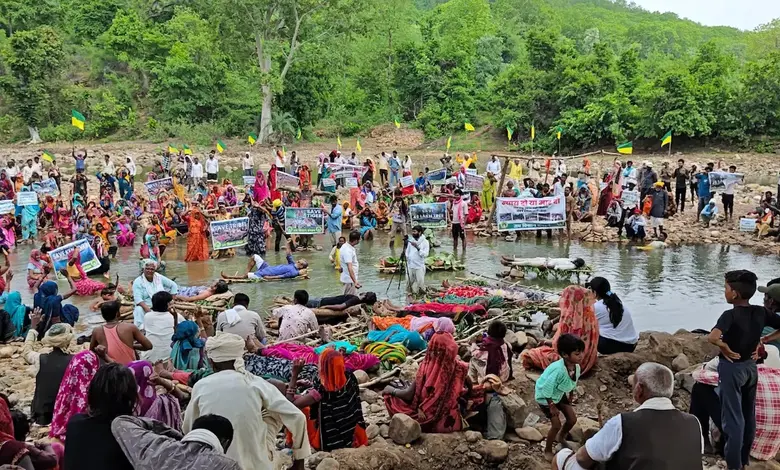
Chhatarpur: Standing in waist deep water with folded hands as symbolic funeral pyres burned nearby, hundreds of tribal men and women have launched one of the most striking protests against the Ken-Betwa River Linking Project. Their message is simple they are unwilling to leave the land their families have called home for generations.
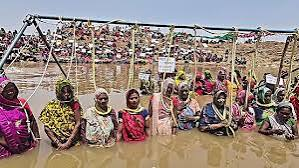
The protesters, many from villages likely to be affected by the project, have combined a Jal Satyagraha with a symbolic Chita Satyagraha to press for what they say are long pending assurances on rehabilitation and compensation. They insist they are not opposed to development but fear losing their homes, farms and forests without a secure future in return.
For many families, the protest is about much more than land. The forests provide food, fuel and income, while the rivers sustain agriculture and daily life. Elders say leaving the villages would also mean breaking ties with ancestral traditions, sacred sites and a way of life that has existed for generations.
“We are not asking the government to stop development,” one protester said during the demonstration. “We are asking it not to erase our lives in the name of development.”



The Ken-Betwa River Linking Project, India’s first river interlinking initiative, is designed to transfer water from the Ken River to the Betwa River. The Centre has projected the project as a major step towards improving irrigation, supplying drinking water to drought-prone regions of Madhya Pradesh and Uttar Pradesh, and generating hydroelectric power.
But the project has also drawn criticism from tribal groups and environmental activists, who warn that several villages face displacement and that forests and wildlife habitats could be affected. They argue that any development project of this scale must be accompanied by transparent land acquisition, fair compensation and rehabilitation that genuinely restores people’s livelihoods rather than merely relocating them.
The symbolic pyres have become the defining image of the ongoing agitation. Protesters say the pyres represent the death of their identity if they are forced to leave their ancestral land. At the same time, by remaining in the river for hours, they are invoking the Gandhian tradition of non violent resistance to make their voices heard.
The demonstrations have continued despite repeated appeals from local authorities. Protest leaders say they will maintain the agitation until the government provides written guarantees on compensation, rehabilitation and resettlement for every affected family.
As the Ken-Betwa project moves ahead, the protest has once again brought into focus a question that has accompanied many large infrastructure projects in India how to balance the promise of development with the rights and dignity of the people who stand to lose the most.
ALSO READ: Sonam Wangchuk Weakens on 19th Day of Hunger Strike