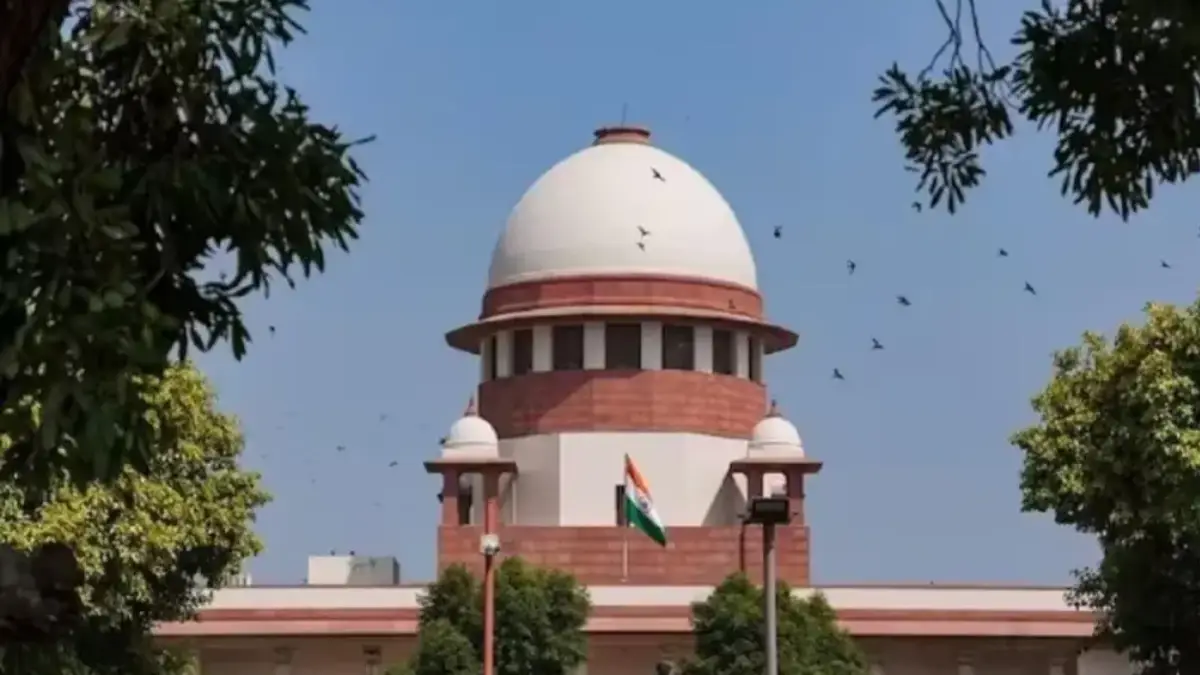
The Supreme Court on January 22, 2026, directly questioned the Election Commission of India (ECI) over the absence of any clear reference to illegal immigration in its notification launching the Special Intensive Revision (SIR) of electoral rolls.
A Bench led by Chief Justice of India Surya Kant, sitting alongside Justice Joymalya Bagchi, pointed out during the hearing that the SIR directive spoke only of “frequent migration” and rapid urbanisation as reasons for the verification drive. The court noted that the process had already resulted in the deletion of nearly 6.5 crore names from draft rolls across nine States and three Union Territories. In Uttar Pradesh alone, roughly 3.26 crore voters had been issued notices requiring them to produce documents proving citizenship.
Representing the ECI, senior advocate Rakesh Dwivedi asserted that the Commission’s powers under Article 324 of the Constitution, combined with the citizenship requirements under Article 326, entitled it to verify voters’ status. He referred to the 2003 amendments to the Citizenship Act, which restricted citizenship transmission to cases where both parents are Indian citizens and introduced the category of “illegal immigrant.” Dwivedi argued that the SIR offered a legitimate occasion to enforce these changes, which earlier summary revisions had not addressed because they relied solely on self-declaration by applicants.
ALSO READ : Supreme Court Allows Hindu, Muslim Prayers At Disputed Madhya Pradesh’s Bhojshala Site On Basant Panchami
Justice Bagchi, however, observed that the notification’s mention of “migration” seemed to describe lawful movement within India—whether between States or within a State—rather than unauthorised entry from across the border. He stressed that migration inside the country is a constitutionally protected right, while illegality attaches only to cross-border unauthorised immigration. “The aspect of illegality comes only in the case of immigration,” the judge remarked, adding that the SIR order did not make this distinction with sufficient clarity or emphasis.
Dwivedi acknowledged that the language could have been “more happily” or “more clearly” drafted and suggested that “migration” was intended as an umbrella term covering both internal shifts and trans-border cases. The Bench, however, insisted on the need to differentiate the two situations and asked whether the ECI was now attempting to retrospectively highlight illegal immigration or whether its primary concern remained long-standing issues such as duplicate or erroneous entries caused by demographic changes over the past two decades.
The court further probed what considerations had actually driven the Commission’s decision to launch the SIR—whether it was seeking broader discretion by listing general grounds or genuinely aiming to tackle illegal immigration. Dwivedi maintained that the other reasons cited in the order were independently sufficient to justify a comprehensive revision and that the 2003 amendments made it necessary to move beyond self-declaration when confirming citizenship.
-

-

-

-