
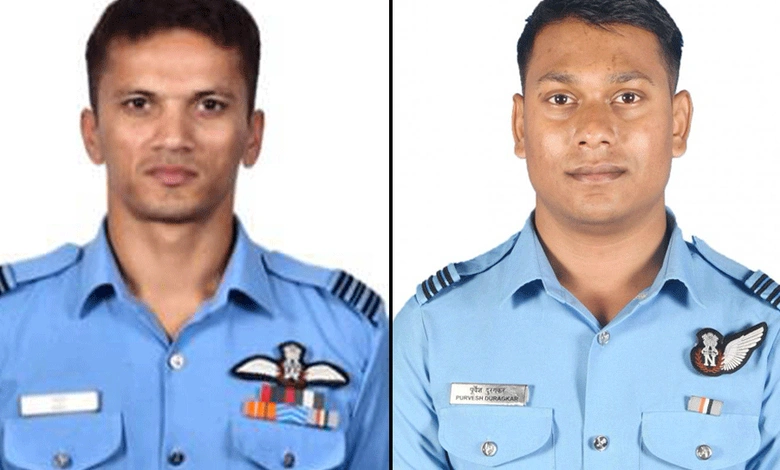
In a somber development, the Indian Air Force (IAF) confirmed on Friday that two of its pilots lost their lives when a Sukhoi Su-30MKI fighter jet crashed in Assam’s Karbi Anglong district.
The incident occurred on Thursday evening during a routine training mission. The twin-seater aircraft, a mainstay of the IAF’s combat fleet, had taken off from the airbase in Jorhat. Radar contact with the jet was lost shortly afterward, with the last communication recorded around 7:20 pm to 7:42 pm, according to various defence sources.
The crash site was located approximately 60 km from Jorhat in the hilly and forested terrain of Karbi Anglong. Search and rescue operations were promptly launched following the aircraft being reported overdue. Debris from the jet was discovered past midnight, and the IAF later verified that both occupants had sustained fatal injuries.
The pilots have been identified as Squadron Leader Anuj and Flight Lieutenant Purvesh Duragkar. In an official statement posted on X, the IAF expressed profound sorrow over the tragedy: “IAF acknowledges the loss of Sqn Ldr Anuj and Flt Lt Purvesh Duragkar, who sustained fatal injuries in the Su-30 crash. All personnel of the IAF express sincere condolences and stand firmly with the bereaved family in this time of grief.”




ALSO READ : IAF Sukhoi-30 MKI Fighter Jet Crashes in Assam’s Karbi Anglong; Search Operations Continue
The Su-30MKI is a two-seater, multirole, long-range fighter jet originally developed by Russian manufacturer Sukhoi and produced under licence by Hindustan Aeronautics Limited (HAL) for the Indian Air Force. It serves as a key component of the IAF’s frontline strike capability.
No further details on the cause of the crash have been released, and investigations are expected to follow standard protocols to determine the circumstances leading to the accident. The loss has sent shockwaves through the defence community, underscoring the inherent risks faced by aviators even in peacetime training exercises.