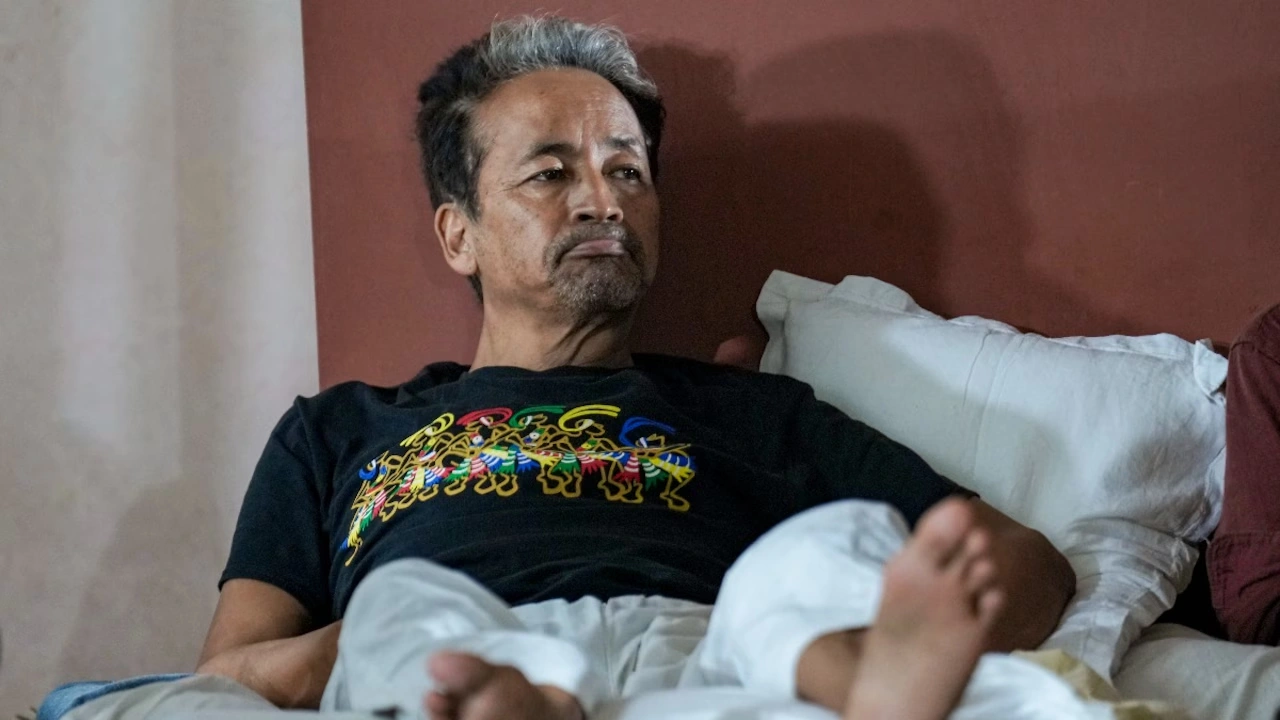
New Delhi: A day after he was shifted from Jantar Mantar to Delhi’s Safdarjung Hospital, environmentalist and education reformer Sonam Wangchuk has described his hospitalisation as an “illegal detention” and appealed to citizens to join what he called “India’s second freedom movement.”
In a message shared from the hospital on Saturday, Wangchuk urged people to participate in the proposed ‘Chalo Sansad’ march on July 20, saying the campaign is a fight for “freedom from fear” and “freedom from injustice.” His remarks have once again brought national attention to the protest, which has gathered momentum over the past several weeks.
Wangchuk was moved to Safdarjung Hospital after Delhi Police cited concerns over his health, saying doctors had advised immediate medical intervention following his prolonged hunger strike. Officials maintained that the decision was taken purely on medical grounds as his condition had become increasingly fragile.
The activist, however, has contested that claim. According to Wangchuk, he was taken to the hospital against his wishes and is being prevented from returning to the protest site. His supporters have echoed those allegations, insisting that his fast continues despite his hospitalisation.
The development has triggered fresh political reactions. Several Opposition leaders questioned the government’s handling of the protest, arguing that peaceful demonstrations should not be curtailed through administrative action. The Centre has not accepted those allegations, maintaining that ensuring Wangchuk’s safety and health was the only priority.
Adding another legal dimension to the matter, Wangchuk’s wife, Gitanjali J. Angmo, has approached the Delhi High Court seeking permission to transfer him to a private hospital. The petition raises concerns over his continued stay at Safdarjung Hospital and seeks greater transparency regarding his treatment.
The protest itself has grown well beyond its initial demands. What began as a movement over alleged examination irregularities and calls for accountability in the education system has evolved into a broader campaign attracting students, activists, academics and civil society groups from across the country. Wangchuk’s participation has further amplified the movement, giving it a national platform.
Despite his hospitalisation, organisers say preparations for Sunday’s ‘Chalo Sansad’ march remain unchanged. Supporters are expected to gather in large numbers in the national capital, even as security arrangements have been tightened ahead of the proposed mobilisation.
Known for his work in education and sustainable development, Wangchuk has repeatedly framed the current agitation as a struggle to safeguard democratic rights and public accountability. His latest message reinforces that position, portraying the protest as a larger citizens’ movement rather than a campaign centred on an individual.
As Delhi braces for the planned march, the focus is likely to remain on two key questions whether Wangchuk will be allowed to leave the hospital and how authorities respond to the gathering expected near Parliament. The answers could determine the direction of a protest that has rapidly emerged as one of the country’s most closely watched public movements.
-

-
-
-