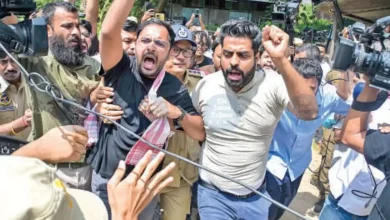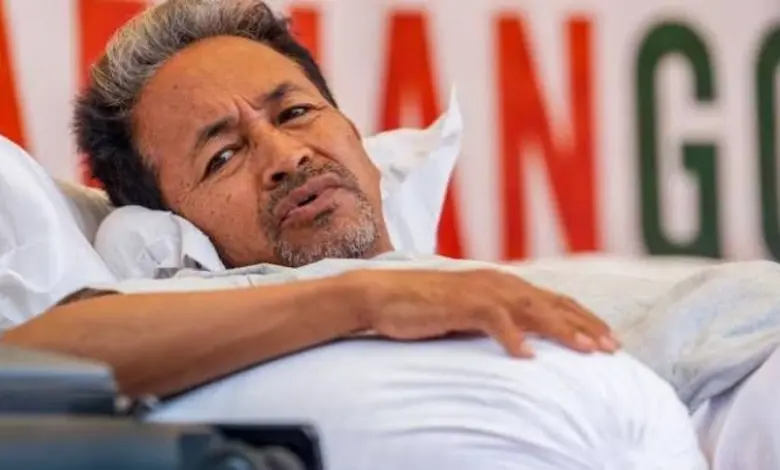
New Delhi: The Opposition has railled behind climate activist and education reformer Sonam Wangchuk ahead of the Monsoon Session of Parliament, launching a scatching attack on the centre over his removal from Delhi’s Jantar Mantar, where he had been on an indefinite hunger strike for nearly three weeks.
Calling the police action an assault on democratic rights, leaders from the INDIA bloc accused the Narendra Modi government of silencing peaceful voices instead of addressing the concerns raised by Wangchuk and thousands of students backing his campaign.
Leader of Opposition Rahul Gandhi said Wangchuk’s removal was “wrong” and accused the BJP led government of following the path of “asatya and hinsa” (falsehood and violence). “No amount of force can stop students from raising questions about the country’s future,” Gandhi said, adding that peaceful protest was a democratic right.
Congress president Mallikarjun Kharge said the government’s action was “shameful” and reflected what he described as an “arrogant mindset.” He alleged that the BJP government had repeatedly tried to suppress peaceful movements and remarked that “from G.D. Agrawal to farmers, wrestlers and now paper leak victims, this government has spared no one.”
Aam Aadmi Party national convenor Arvind Kejriwal also criticised the Centre, saying Wangchuk should have been heard instead of being removed by the police. “Leave arrogance and listen to the people,” Kejriwal said, adding that governments become stronger through dialogue, not by silencing dissent.
Shiv Sena (UBT) chief Uddhav Thackeray said the Centre should have engaged with Wangchuk through talks instead of taking coercive action. Several other opposition leaders described the police action as “authoritarian” and said it raised serious questions about the government’s commitment to democratic freedoms.
Wangchuk was shifted to Safdarjung Hospital late on Friday after his health deteriorated following 21 days of fasting. Delhi Police said the decision was taken on the advice of doctors and in accordance with directions of the Delhi High Court, which had stressed the need to protect his life. Officials maintained that the move was purely based on medical concerns and not on political considerations.
Hospital authorities later said Wangchuk was stable but weak and would remain under observation. His supporters, however, alleged that he was taken away against his wishes and accused the government of trying to derail a peaceful movement.
The protest has drawn support from students, civil society groups and several opposition parties, who have demanded greater accountability over alleged irregularities in national entrance examinations. Wangchuk has consistently maintained that his fast was peaceful and aimed at ensuring transparency and justice for students.
The BJP has dismissed the Opposition’s allegations, insisting that the administration acted solely to safeguard Wangchuk’s health after doctors warned that his condition had become critical. Government sources have maintained that no democratic right was curtailed and that authorities fulfilled their legal and humanitarian responsibility.
With the Monsoon Session beginning on Monday, the Wangchuk issue is now expected to be among the Opposition’s principal attacks on the government. Along with demands for answers on examination irregularities and the treatment of protesters, opposition parties are likely to seek a detailed discussion on the circumstances surrounding Wangchuk’s removal.
What began as a hunger strike has now evolved into a major political flashpoint, setting the stage for a stormy Parliament session in which the government is expected to face sustained criticism over its handling of one of the country’s most closely watched protests.
ALSO READ: Lok Sabha Speaker Recognises Merger of 6 Rebel UBT MPs With Shinde’s Shiv Sena
-
-

-
-