
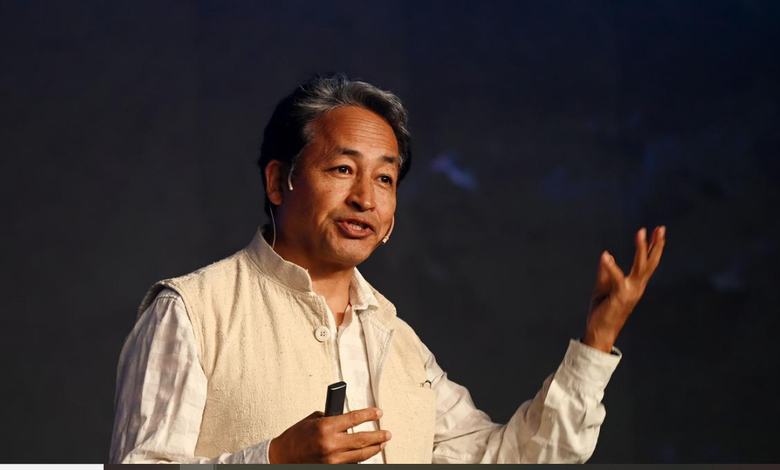
New Delhi: Even after ending his 26 day hunger strike, education reform activist Sonam Wangchuk has made it clear that his campaign is not over. While welcoming the Centre’s written assurances and dialogue with Union ministers, Wangchuk says the government’s real test begins now delivering on the promises made to students and ensuring that examination paper leaks become a thing of the past.
His remarks come at a time when fresh allegations surrounding recruitment and examination irregularities, including the controversy in Punjab, have once again put the spotlight on the credibility of India’s examination system. Across the country, students continue to express frustration over repeated paper leak cases, saying years of hard work are being jeopardised by organised cheating networks.
Wangchuk, who suspended his fast after the Centre assured him that his concerns would be addressed, acknowledged the government’s willingness to engage in talks. However, he also cautioned that public trust cannot be restored through assurances alone.
“The promises now need to be seen on the ground,” has been the central message from Wangchuk and several student groups backing the movement.



The Centre has assured protesters that it will strengthen measures to curb paper leak rackets, tighten the legal framework against those involved, and continue discussions on reforms aimed at making examinations more transparent and secure. Officials have also indicated that the government is committed to improving the integrity of recruitment and competitive examinations.
For thousands of students, however, the issue goes beyond a single examination or a single state. Every new allegation of a paper leak revives fears that merit is being undermined and deserving candidates are paying the price. Recent developments in Punjab have only added to those concerns, with many aspirants demanding swift investigations and strict action wherever wrongdoing is established.
Student organisations have welcomed the government’s outreach but insist that accountability must follow. They are seeking time bound investigations, action against those responsible for paper leaks, and reforms that prevent such incidents from recurring instead of responding only after controversies emerge.
The movement itself has evolved into a broader call for transparency in India’s examination system. What began as outrage over repeated paper leak incidents has now become a nationwide demand for a fair, secure and trustworthy recruitment process.
Even after ending his hunger strike, Wangchuk has said he will continue monitoring the government’s progress and raise his voice if commitments remain unfulfilled. Protesters, too, have indicated that they will closely watch the implementation of the assurances before deciding their next steps.
For now, the immediate confrontation may have eased, but the larger challenge remains. With lakhs of students placing their hopes on competitive examinations every year, the success of the government’s response will ultimately be judged not by announcements, but by whether future examinations are conducted without controversy and public confidence is restored.
ALSO READ: ‘Rajghat First, Then The Mountains’: Sonam Wangchuk Reveals His Next Stop