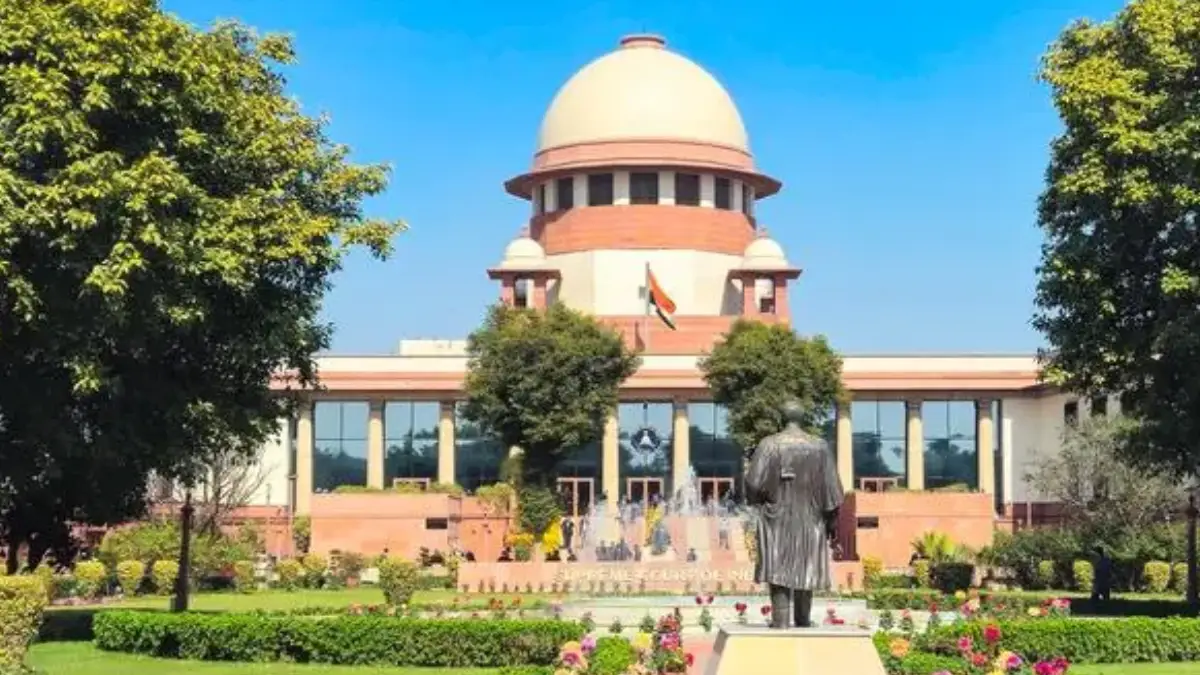
The Supreme Court on Tuesday invoked its extraordinary powers under Article 142 of the Constitution to cancel all FIRs listed before it against youth protesters over incidents between July 20 and 25 during the Cockroach Janta Party-led paper leak protests across the country, which had demanded then Union Education Minister Dharmendra Pradhan’s resignation. The court said any other FIRs related to the same incidents in any state or Union Territory should not be pursued or investigated, and would be treated as closed for all purposes.
Allowing applications filed by five states seeking cancellation of the FIRs, the Supreme Court said no state or Union Territory should register any fresh FIR for incidents between July 20 and 26.
The Only Exception
The court, however, said the Centre and Delhi Police would remain at liberty to register fresh FIRs against 2,873 persons, as described in their application, without prejudice to the affected parties’ right to seek legal remedy.
The government had earlier placed before the court a specific application by the Delhi Police seeking permission to register a fresh FIR against 2,873 people alleged to have serious criminal records, but only if an investigation established their involvement in offences involving bodily harm or destruction of property during the protests.
Solicitor General Tushar Mehta said the request was peculiar to Delhi and sought leave to file a fresh FIR only against those 2,873 individuals if their involvement in such offences was established. He added that the proposed action would not be a blanket exception covering all protesters.
Speaking on the only rider in the Supreme Court’s order, CJP chief spokesperson Saurav Das said that if the roughly 2,800 alleged hardened criminals were indeed present at the protest site and had committed serious crimes such as rape, murder or other heinous acts, they should be prosecuted, investigated and imprisoned.
“Regarding the Delhi Police’s apprehension, based on facial recognition technology, that around 2,800 alleged hardened criminals were present at the protest site, we argued during negotiations with the government that if these 2,800 hardened criminals were indeed present, the first question was why they were roaming freely in society in the first place,” Das told media personnel, according to news agency ANI.
Compensation and Court’s Reasoning
The Supreme Court said its decision to invoke Article 142 was based on commitments made before it by the central government and some states, along with a statement read out by the CJP co-convenor. It also took into account the future prospects of young protesters who had come to participate “bona fide” in peaceful protests.
On compensation, the court directed that modalities for a pan-India mechanism be worked out in consultation with states and Union Territories, with the framework to be adopted as a regular mechanism for compensatory measures.
The central government was also directed to provide compensation within three months in cases of suicides linked to NEET 2026. Reacting to the order, a CJP spokesperson thanked the Supreme Court and described the decision as “historic.”
CJP Withdraws September 5 Protest Call
The Cockroach Janta Party told the Supreme Court on Tuesday that it was withdrawing its call for a fresh protest march in Delhi on September 5, after the government assured the court it would honour its commitments to protesters, including the withdrawal of FIRs linked to the July 20 Jantar Mantar agitation.
CJP spokesperson and co-convenor Saurav Das made the statement before a bench headed by Chief Justice of India Surya Kant, after the government addressed the demands that had led to the fresh protest call.
Also Read:CJP Calls Off Sept 5 March After Govt Moves To Cancel FIRs; CJI Praises Decision
“In view of the positive assurance and judicial sanctity and the order being passed by this court today, CJP deems it appropriate to withdraw the protest march call,” Das told the court.
Responding to the decision, the Chief Justice said, “If both sides show good gestures, everything can be resolved.”
On August 24, CJP had announced the September 5 march from India Gate to the New Delhi Police Headquarters, alleging that the government had failed to honour assurances given when its nationwide agitation against the NEET paper leak was called off on July 25. Protesters had said several commitments made at the time — especially those relating to FIRs and written assurances — had not been fulfilled.
Centre Reiterates Three Assurances
During the hearing, Solicitor General Tushar Mehta told the Supreme Court that the Centre had given three assurances at a meeting with protest leaders. The first was that FIRs against protesters for incidents between July 20 and 25 would not be pursued. The second was that no fresh FIRs would be filed in connection with those incidents. The third related to compensation for the families of those who died by suicide. “The government stands by its commitments,” the Solicitor General told the court.
With the government reiterating its assurances before the Supreme Court and the bench cancelling all FIRs, the CJP withdrew its September 5 protest march call.
-

-
-
-