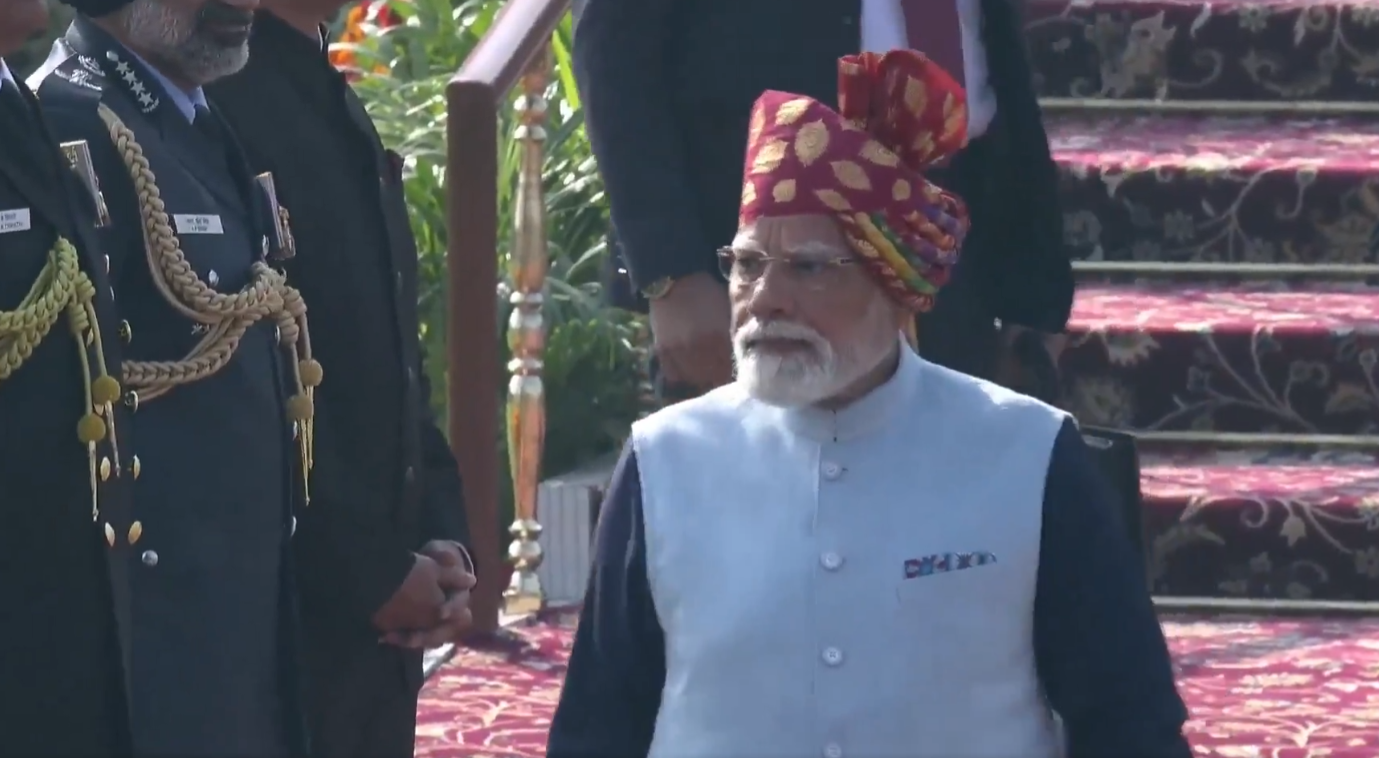
Since assuming office in 2014, Prime Minister Narendra Modi has turned his Republic Day appearance into a vibrant showcase of India’s cultural mosaic through one striking element: his turban (pagdi or safa). Every 26th January, he dons a completely new, never-repeated headgear, each one carefully chosen to highlight regional craftsmanship, traditional textiles, and symbolic meanings. This evolving tradition has become an eagerly awaited highlight of the national celebrations.
Also read : A Reminder That A True Classic Never Fade
The practice began modestly but grew into a deliberate celebration of unity in diversity. Over the years, Modi’s turbans have featured iconic styles:
- In his first Republic Day (2015), a bright red Bandhej (tie-dye) turban from Gujarat set the tone.
- 2021 saw the bold Halari pagdi—a red bandhej with yellow dots—gifted by the Jamnagar royal family, honoring Gujarat’s heritage.
- Uttarakhand-inspired looks included floral motifs like Brahmakamal in earlier years.
- Vibrant pheta styles with multicolored patterns (orange, red, green, yellow, white) appeared in 2023.
- Recent editions featured saffron tones symbolizing Swarnim Bharat (Golden India), red-and-yellow striped safa in 2025 paying tribute to tie-dye artistry, and a striking red tie-dye pagdi with Rajasthani influences in 2026.
These headgears often draw from Rajasthan’s elaborate safas, Gujarat’s bandhani and Patola techniques, or other regional traditions, paired with kurta-pyjama, bandhgala jackets, or Nehru ensembles. The colors and patterns carry subtle messages—saffron for national pride, red for valor and auspiciousness, or multi-hues for inclusivity.
Also read : Know Inside the Anant Ambani’ $1.5 million Vanatara Watch
Beyond aesthetics, the tradition underscores Modi’s philosophy of Ek Bharat, Shreshtha Bharat. By spotlighting indigenous artisans and textiles annually, he promotes cultural preservation and regional pride amid Republic Day’s patriotic grandeur. Social media erupts each year with admiration, comparisons, and discussions about the symbolism.
As India marks its Republic Day parades, military displays, and national progress, PM Modi’s fresh turban quietly weaves a narrative of heritage on wheels—proving that personal style can powerfully echo the nation’s pluralistic spirit.
-
-
-

-