
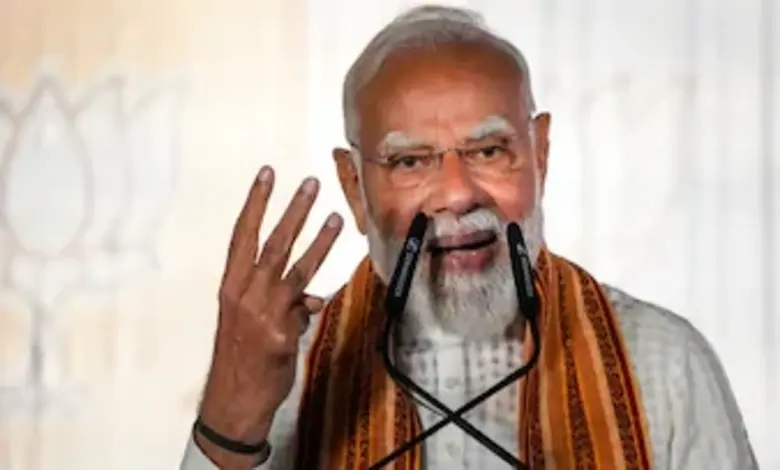
In a development that sent shockwaves through financial markets, the Indian rupee slumped to a fresh all-time low on Tuesday following Prime Minister Narendra Modi’s public appeal for measures to conserve foreign exchange reserves.
The domestic currency weakened by 82 paise to close at a record 95.31 against the US dollar. At the same time, the benchmark Sensex on the BSE plunged 1,312.91 points, reflecting widespread investor unease over the government’s signals amid global pressures.
Prime Minister Modi’s remarks, which urged citizens to cut back on fuel consumption, defer gold purchases, limit foreign travel, and prioritise domestic goods, have been interpreted by many as an acknowledgement of emerging economic challenges. The appeal comes against the backdrop of rising crude oil prices triggered by the ongoing crisis in West Asia, which has strained India’s foreign exchange reserves.
Analysts and market participants viewed the Prime Minister’s pitch as an indication of brewing difficulties in managing the country’s external sector. The call for austerity measures, including conserving fuel and fertilisers while avoiding non-essential imports of gold and overseas trips, highlighted the pressure from elevated global energy costs.



ALSO READ : Pakistan Sheltered Iranian Aircraft at Its Bases to Evade U.S. Strikes, Report Claims
The rupee’s sharp decline and the equity market’s steep fall underscore the sensitivity of investors to any perceived signs of stress on India’s macroeconomic fundamentals. Foreign exchange reserves have faced depletion, adding to concerns over the currency’s stability.
This is not the first instance of the Prime Minister advocating conservation efforts. However, the timing and framing of the latest comments appear to have amplified market jitters, with sectors sensitive to import costs and consumer spending — such as jewellery — reacting particularly sharply.
Economists noted that while the intent is to safeguard reserves and support the rupee amid external headwinds, the messaging has contributed to a negative sentiment in the short term. The government continues to monitor the situation closely as global oil prices remain volatile due to geopolitical tensions.
The episode highlights the delicate balance policymakers must strike between addressing immediate external vulnerabilities and maintaining market confidence. As India navigates these challenges, the focus remains on steps to bolster foreign exchange buffers and mitigate the impact of global commodity shocks.