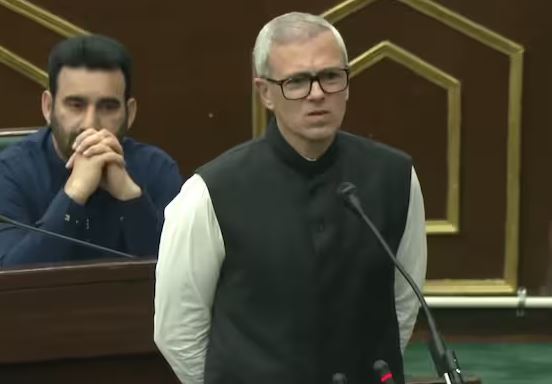
Jammu and Kashmir Chief Minister Omar Abdullah, who also serves as Finance Minister, presented a ₹1.27 lakh crore budget for the 2026-27 fiscal year in the Legislative Assembly in Jammu on Friday. The financial plan underscores a commitment to inclusive development while addressing the Union Territory’s persistent fiscal difficulties and elevated unemployment rates, among the highest in India.
Mr. Abdullah described the budget as a broad strategy incorporating citizen-focused measures designed to offer prompt assistance, reinforce social security nets, advance balanced regional progress, and stimulate job creation. He placed particular emphasis on aiding marginalized communities, introducing 32 specific welfare schemes targeted at women, orphans, persons with disabilities, and other disadvantaged groups.
Among the prominent announcements were provisions for six free LPG cylinders each year to households enrolled under the Antyodaya Anna Yojana (AAY); free travel on smart city buses and other government-operated transport for women and individuals with disabilities; fee reimbursements transferred directly to bank accounts for AAY students in Classes 9-12 and those pursuing higher education; and government backing for the non-institutional care of 6,000 orphans.
The Chief Minister underscored that these initiatives would provide tangible benefits to residents, especially the most vulnerable, while advancing fair and sustainable advancement across Jammu and Kashmir. Acknowledging ongoing financial limitations, he framed the budget as a measured step toward long-term economic stability and enhanced social welfare.
Reactions from opposition benches were sharply critical. Peoples Democratic Party MLA Waheed-ur-Rehmaan Parra labeled the budget “hopeless and vague,” contending that it neglects the priorities of youth—who constitute 60-65% of the population—and fails to inspire confidence or recovery. BJP MLA and Leader of Opposition Sunil Sharma criticized it as disproportionately benefiting National Conference members, asserting that it delivers little meaningful aid to average citizens.
-

-

-

-