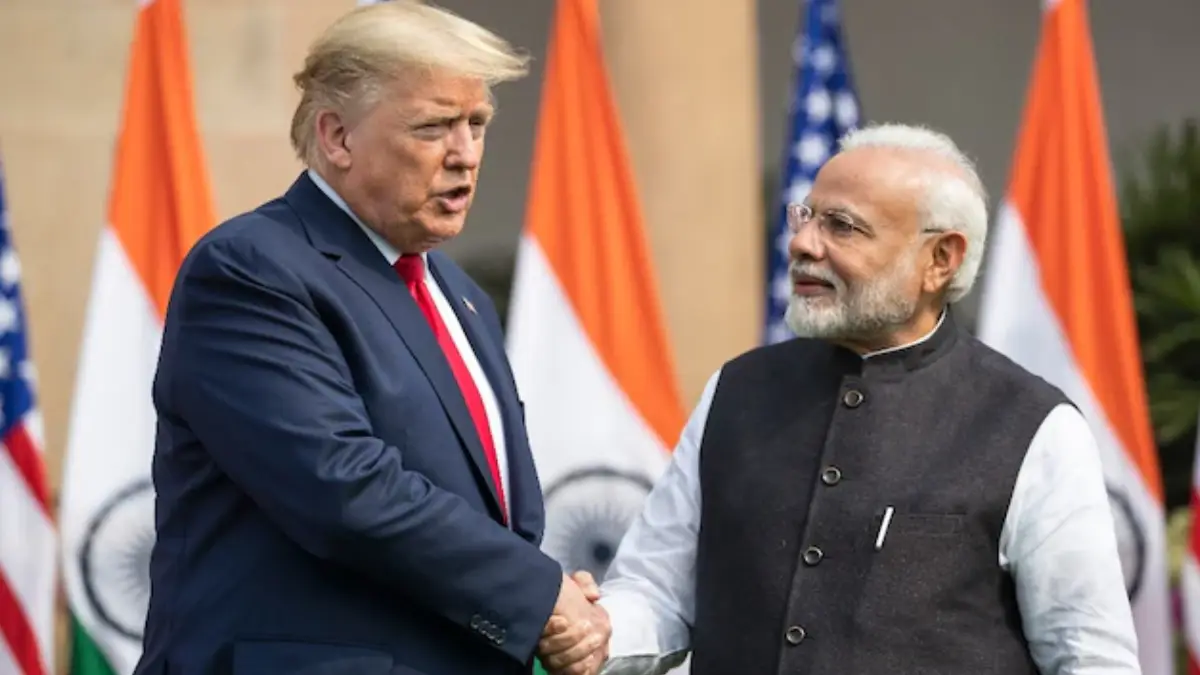
New York : India and the US have finally shaken hands on a trade framework, opening the doors for a broader US-India Bilateral Trade Agreement (BTA) down the line. It cuts US tariffs, clears decades-old market barriers, opens new lanes for Indian goods, and, importantly, pulls the two economies closer at a time when global supply chains are being redesigned.
Union Commerce and Industry Minister Piyush Goyal called the pact a “landmark framework” that opens a USD 30 trillion market for Indian exporters and creates lakhs of new jobs, especially for MSMEs, farmers and youth. We take you through the key gains for India and what they could mean for exporters, manufacturers, and the broader economy.
The most immediate gain comes from the United States lowering its reciprocal tariff on Indian exports to 18%. Until now, many categories of Indian goods were hit with a punishing 50% duty, a tariff wall that priced out thousands of Indian businesses. Goyal said that this single shift gives Indian suppliers a “huge market opportunity” in the world’s largest consumer economy.
The moment the new tariff applies, Indian products become more competitive in one of the world’s largest markets. Once the interim agreement is fully concluded, the US will go a step further and remove tariffs entirely on some of India’s strongest export engines. Generic pharmaceuticals, gems and diamonds, and aircraft parts will all enter the US market duty-free.
According to Goyal, tariff-free access for generics, gems and diamonds will “further enhance India’s export competitiveness and Make in India”. India will eliminate or reduce tariffs on all US industrial goods and a wide basket of US agricultural items. These concessions might look large on paper, but they align with India’s own needs.
Reducing tariffs makes these critical inputs cheaper, faster to import, and easier to integrate into domestic production. The deal also forces long-delayed regulatory fixes. India has committed to addressing bottlenecks affecting US medical devices, Information and Communication Technology (ICT) goods and food and farm products.
This brings more predictability into the system and clears long-standing irritants for global companies. The agreement strengthens cooperation on high-end technology, particularly hardware essential for artificial intelligence and cloud infrastructure. Both countries will increase trade in graphic processing units, or GPUs, and expand joint work on semiconductors and export-control coordination.
Beyond tariffs, the deal focuses heavily on reducing the friction of doing business. India and the US will coordinate on testing standards, certification processes, and conformity assessments across mutually identified sectors. For companies on both sides, this means fewer repeat tests, fewer regulatory surprises, and faster turnaround times.
Read Also : India Firmly Rejects Pakistan’s Baseless Claims Linking It To Deadly Islamabad Mosque Bombing
-

-

-

-