
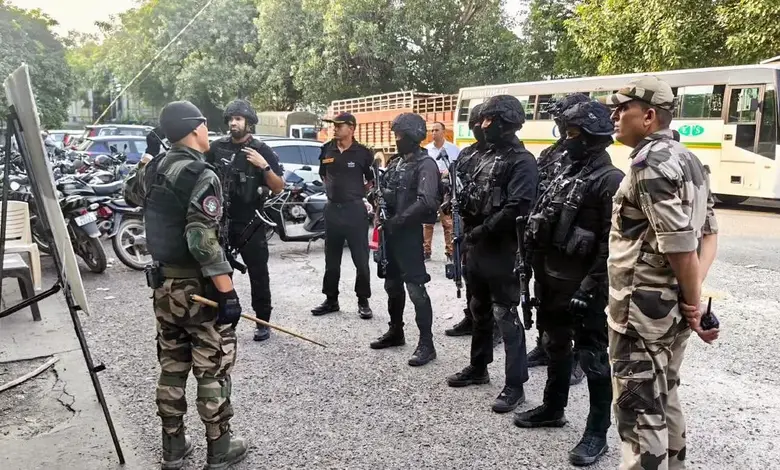
The National Testing Agency (NTA) is tightening security around its examination work after the NEET-UG paper leak controversy. The agency has now deployed 39 personnel of the Central Industrial Security Force (CISF) at its new office in New Delhi.
The CISF will guard the confidential areas where sensitive examination-related work is carried out. Personnel will monitor entry and exit points, control access and screen staff and visitors. The security checks will include frisking, X-ray baggage screening machines and Door Frame Metal Detectors (DFMDs).
The move comes after repeated questions over paper leaks and security lapses in the examination process. The NTA has also shifted its confidential and sensitive operations from its earlier office in Okhla to a new facility at the Government of India Press Building on Minto Road.
The agency has been allotted more than 55,000 square feet of space in the building. The fifth floor and parts of the fourth and sixth floors have been allotted to the NTA. Its confidential operations have been shifted to the new premises over the past month.




The confidential areas have now been separately demarcated, with movement and operations in these areas set to be closely monitored. The Home Ministry has approved CISF security cover for the premises.
ALSO READ: Clashes Reported At SRFTI Campus Over RSS-Affiliated Group’s Event
But why has such a strict security system become necessary?
The answer goes back to the NEET-UG paper leak case. A CBI chargesheet identified three subject experts as the primary sources of the leaked question paper. According to the investigation, experts entering and leaving the NTA’s confidential section were not subjected to proper checking or frisking.
The CBI also pointed to the absence of a dedicated CCTV live-feed monitoring control room at the NTA office. This meant that the activities of the accused experts went unnoticed.
The latest measures are therefore not limited to physical security. The NTA is also working on stricter access controls, encryption standards, immutable logging and tamper-evident storage for examination-critical systems.
The agency is also reviewing security across different stages of the examination process, including candidate registration, admit cards, computer-based testing, OMR processing and results.
Security-readiness reviews will be conducted before each examination cycle. These will also cover biometric authentication, face matching, CCTV systems and live monitoring during examination days.
The NTA is further preparing an examination-specific cyber-incident response system and strengthening its cybersecurity framework through independent audits.
With the NEET paper leak raising serious concerns over examination security, the latest changes aim to create tighter control over confidential material and reduce the chances of unauthorised access in future examinations.