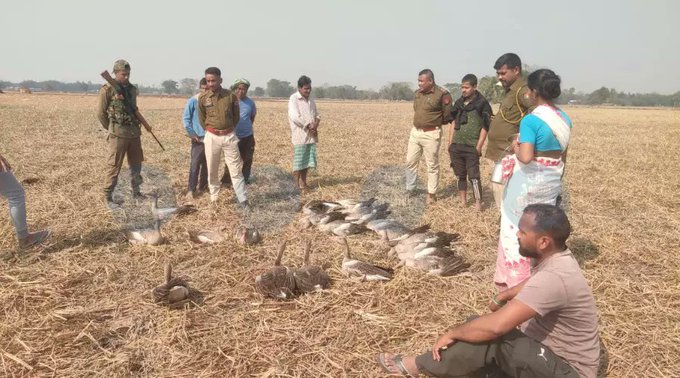
Jorhat/Majuli — Authorities in Assam’s Majuli district have launched an investigation after the carcasses of approximately 50 migratory birds were discovered across several locations on Monday, with poisoning emerging as the primary suspected cause.
The dead birds were reported from areas including Dakshinpat Kumar Gaon, Sumoimari, Komargaon, and Rawanagaon, often in or near agricultural fields where the winter visitors had gathered in search of food. Forest officials suspect that unidentified individuals deliberately used pesticides or other chemical substances in the farmlands, leading to the mass deaths.
Also read : Plane Crash : Mamata Banerjee Hints At Foul Play, Wants Supreme Court-Monitored Probe
Majuli, the world’s largest riverine island and a key wintering site for migratory birds from colder regions, attracts thousands of winged visitors annually during the winter season. These birds arrive as early as November, stay for months to feed, and depart by early spring. This year’s early arrivals made them particularly vulnerable in farmlands.
A forest official stated that villagers alerted authorities during Republic Day celebrations on January 26, prompting immediate action. Eight surviving birds were rescued and are receiving treatment at Ratanpur Veterinary Hospital. Investigations confirmed the use of poison, leading to the detention of 17 individuals, including four women, for questioning.
Also Read : US Group Claims Air India 787 Had Years of Faults Before Fatal Ahmedabad Crash
Environmentalists and conservationists have expressed outrage over the incident, calling for swift arrests and stricter enforcement against the use of banned pesticides. Such poisoning incidents threaten biodiversity in Majuli’s wetlands, which serve as critical habitats for migratory species.
This event highlights ongoing challenges in human-wildlife coexistence in Assam, where agricultural practices sometimes conflict with bird conservation. Past cases in the region have involved banned substances like carbofuran, often linked to attempts to protect crops or livestock, though deliberate targeting of birds remains a concern.
-

-

-

-