
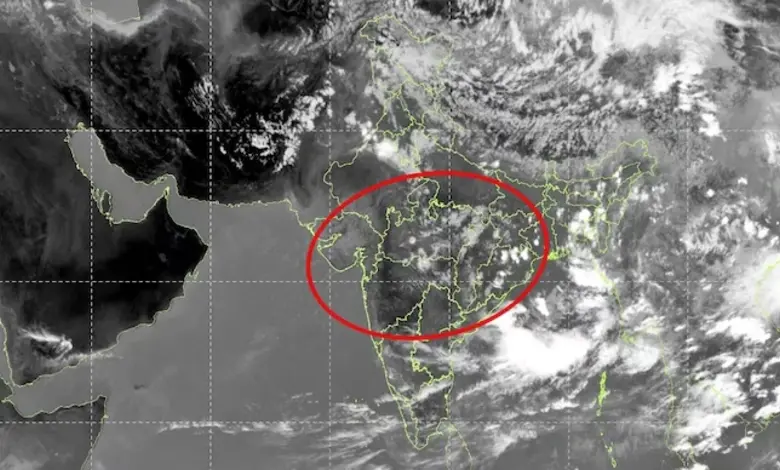
India’s southwest monsoon, which made a promising early advance, has abruptly slowed, resulting in substantial rainfall deficits across multiple regions. Central parts of the country are bearing the brunt, with experts noting limited prospects for an immediate rebound.
Data indicates that Central India has recorded a significant 65 percent deficit in rainfall from June 4 to June 16. During this period, the region received just 19.2 mm compared to the typical 55.2 mm. This area, encompassing key farming states like Madhya Pradesh, Chhattisgarh, and portions of Maharashtra, relies heavily on consistent monsoon showers to support planting activities.
The slowdown follows an initial swift progression after the season’s onset over Kerala. However, rainfall has diminished notably in the past week, exacerbating shortfalls in vital agricultural zones. Eastern and Northeastern India have also faced challenges, accumulating 77.5 mm against an expected 125.8 mm, equating to roughly a 38 percent deficit. Prolonged dry conditions in these normally wetter early-season areas are heightening worries about soil moisture and water supplies.
Nationwide, the country has seen 38.1 mm of rain in contrast to the average 59.7 mm, translating to an overall 36 percent shortfall. In contrast, Northwest India has experienced rainfall close to normal levels, with 24.6 mm against a typical 24.4 mm. Southern Peninsular India has similarly stayed near expected figures, recording 59.4 mm compared to the seasonal norm of 69.1 mm.



Weather specialists link the current lull to the lack of robust weather disturbances over the Bay of Bengal and the Arabian Sea. These systems usually help draw the monsoon further inland. Recent satellite observations reveal a marked decrease in the structured cloud formations tied to the monsoon flow.
The situation unfolds as indications emerge of a strengthening El Niño pattern in the Pacific, a climatic event often connected to subdued monsoon activity in the region. While the primary rainy months of July and August lie ahead, providing potential for improvement, sustained dry weather could impact farming schedules, water storage in reservoirs, and overall availability in affected states.