New Delhi: What began as a straightforward clarification during Passport Seva Divas celebrations has snowballed into a major talking point across India and beyond, trending on X with nearly 150,000 posts and igniting confusion, questions, and sharp political reactions.
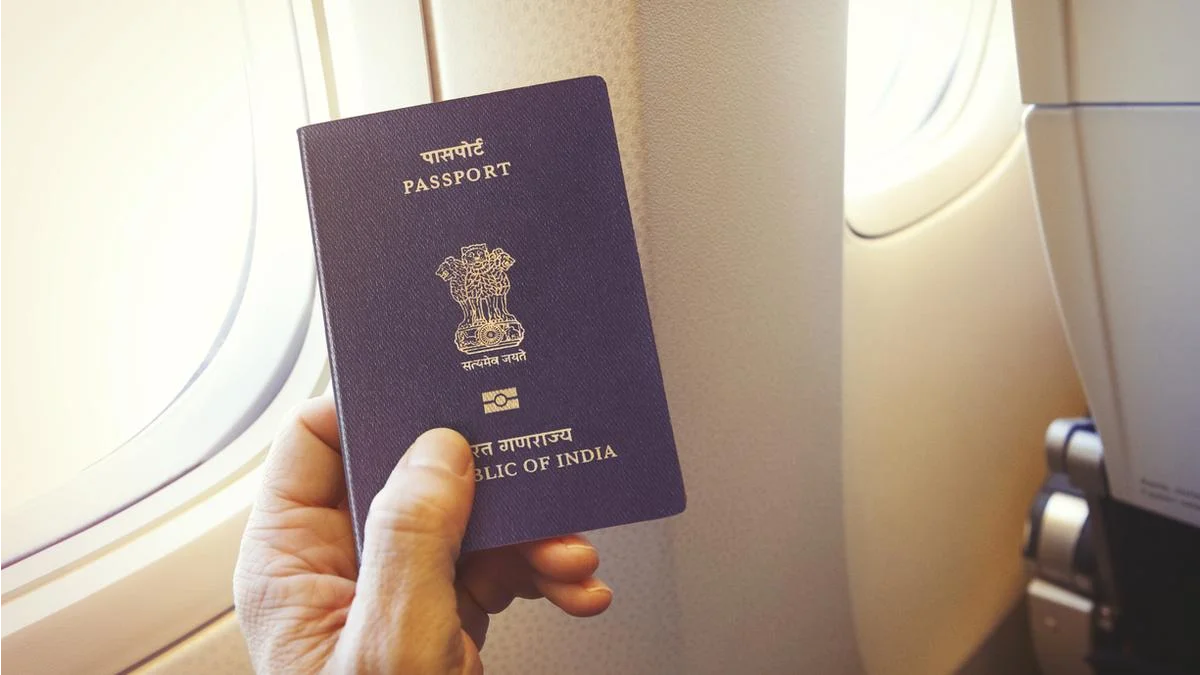
On June 24, during the 14th Passport Seva Divas event marking the expansion of passport services nationwide, a senior Ministry of External Affairs (MEA) official stated that an Indian passport is primarily a travel document and not conclusive proof of citizenship.
“Even though while travelling abroad, passport attests to your nationality, yet it is not a document of your citizenship,” the official told The Hindu in response to a query.
The remark, made amid ongoing electoral rolls revisions in states like Bihar, quickly went viral. Users on X flooded timelines with questions: If the passport widely regarded as the most authoritative government-issued document doesn’t prove citizenship, then what does?
Government Clarifies: This Is No New Policy
Government sources moved swiftly to douse the fire, stressing that this is not a new decision or a recent policy shift. They pointed out that the passport has never been treated as conclusive proof of citizenship in the last 12 years or even before under the current dispensation.
The legal position, they noted, aligns with past court rulings, including observations by the Bombay High Court. A passport is issued only after authorities are satisfied that the applicant is an Indian citizen, but the document itself does not “create” citizenship or serve as irrefutable proof if the status is legally challenged.
The Legal Reality: No Single Document Is Conclusive
India’s citizenship framework, rooted in the Constitution (Articles 5–11) and the Citizenship Act, 1955, does not designate any one document as definitive proof for all purposes.
- Citizenship is determined by facts of birth, descent, registration, or naturalisation.
- A passport is strong evidence of nationality for international travel but can theoretically be issued to non-citizens in rare public-interest cases under the Passports Act.
- Other common documents Aadhaar, Voter ID, PAN, birth certificate, or driving licence are similarly not standalone conclusive proofs of citizenship, as clarified by the Ministry of Home Affairs in Parliament earlier.
The Supreme Court has previously observed that the burden of proving citizenship lies on the person asserting it. Recent observations in electoral roll matters have reinforced that even passports and birth certificates, while high-value documents, are not always treated as absolute.
Experts, including former Foreign Secretary Nirupama Menon Rao, have echoed the distinction: “A passport does not create citizenship, nor is it the legal instrument that can determine citizenship if that status is challenged before a court.”
Public Confusion and Political Backlash
The clarification triggered widespread bewilderment. On X, users posted images of their passports highlighting the word “Indian” under nationality, asking what document could now be relied upon. Memes and sarcastic posts proliferated, with some questioning the government’s intent amid debates over the National Register of Citizens (NRC) and electoral verification drives.
Opposition voices were quick to pounce. Shiv Sena (UBT) leader Aaditya Thackeray questioned whether the statement would create doubts internationally about who holds Indian passports. TMC MP Mahua Moitra remarked that it seemed “the only proof of Indian citizenship today is to be both Hindu and a BJP voter.”
Veteran screenwriter Javed Akhtar called the clarification “absurd,” asking pointedly whether passports were being issued without full conviction of citizenship.
Why the Timing Matters
The statement comes at a sensitive moment. Several states are undertaking intensive revisions of electoral rolls, requiring voters to furnish documents. The question of what constitutes valid proof of citizenship has gained fresh urgency in this context.
For ordinary citizens, the passport has long been the gold standard accepted globally, issued only to verified citizens, and carrying the Republic’s emblem. The legal nuance, while accurate, has exposed a gap between how documents function in everyday life versus how they are interpreted in strict legal or disputed scenarios.
The Bottom Line
India does not issue a universal “citizenship certificate” to all its citizens by birth. Proof is often established through a combination of records birth certificates, parental documents, school records, land records, and electoral rolls rather than any single card.
The MEA’s clarification, while legally consistent, has highlighted this complexity to a public that has long viewed the passport as ironclad evidence of Indian identity.
As the debate rages on social media and in drawing rooms, one thing is clear: in India, proving you are a citizen is not as simple as flashing your passport. And that realisation, for millions, has come as an unexpected jolt.
-

-
-

-