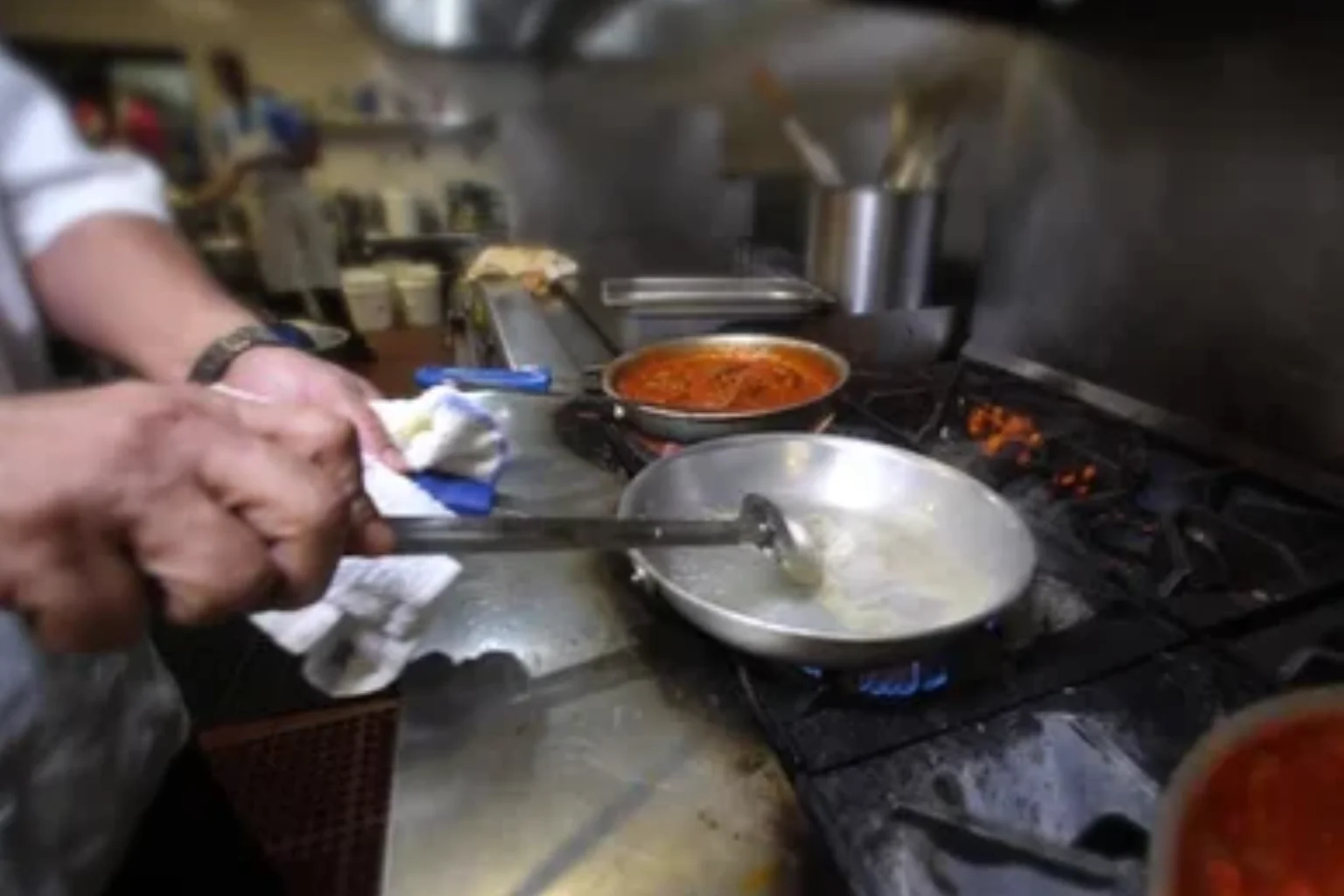
A handwritten sign reading “Only coffee and tea today” greets customers at Bangalore Thindis on Bengaluru’s Infantry Road. In Coimbatore, the 58-year-old Annapoorna hotel has pulled rava dosas and parottas off its menu. At Chennai’s Kaylir Canteen, co-founder Dhanya Srinath took to Instagram to explain a trimmed offering: “We are trying to be a space that never pauses operations during situations like this… the options will be limited, but it will be yummy.”
Across India, restaurants are scrambling to stretch whatever LPG they have left as the West Asia conflict continues to disrupt fuel supply chains. On Monday, March 9, 2026, LPG cylinder supply was restricted in several cities. The Bangalore Hotels Association issued a public notice warning that hotels may be forced to shut down entirely if supply is not restored.
‘No Supply’ — Chefs and Owners in the Dark
Chef Tresa Francis, who runs Coracle in Bengaluru, says her supplier confirmed there was no LPG available when she called. “The supply is restricted and rationed, is what I hear. But I do not know how that works,” she says.
Prices have been climbing for roughly two weeks by an estimated 40%, according to Japtej Ahluwalia, co-founder of Chennai-based restaurant group BORN (Beyond Ordinary Restaurants and Nosh) and a managing committee member of NRAI (National Restaurant Association of India). BORN operates seven restaurants across Chennai, including Sortd, Fufu, and Double Roti, collectively consuming 20 to 25 cylinders a day. Until recently, cylinders were available at roughly double the market price. Now, even at inflated rates, supply has dried up entirely.
“We are trying to keep up with this rapidly evolving situation,” Ahluwalia says. “Vendors aren’t able to supply to us given a new notification that has classified us as a non-essential service. We are working on optimising menus across restaurants; high gas consumption items like Asian woks or even pizzas are being limited, and our focus is on conserving our existing gas reserves as much as possible for weekend operations, which contributes to nearly 40% of our revenue.”
Where feasible, BORN is also swapping out gas-powered equipment temporarily renting electric griddles to replace burger griddles that run on gas. “Alternatives like this are however feasible only for select equipment,” Ahluwalia notes.
Is Induction a Viable Alternative?
The short answer, according to most restaurateurs, is no at least not immediately.
Santhosh Zachariah of Chennai speakeasy MadCo has pushed back opening hours to dinner only in order to conserve LPG, and cut dishes requiring high heat and long cook times including a popular bone marrow preparation. “Induction is not an alternative for a lot of the cooking we do,” he says. “Also, our electricity bills will go through the roof.”
Naga Bharan, who runs five outlets of Panchakattu Dosa across Hyderabad, shares that reluctance. “The change requires a complete overhaul in infrastructure, including our electrical work,” he explains. His current workaround is running one dosa stove instead of two and informing customers of possible delays. “Everyone is co-operative and understands the crisis. Earlier, our dosa stoves used to be kept on in anticipation of orders. No stove is allowed to run idle anymore.”
Zorawar Kalra, founder of Massive Restaurants which operates brands including Masala Library, Pa Pa Ya, and Farzi Cafe underscores the scale of the problem. “Commercial LPG is the backbone of kitchen operations across India, and any disruption threatens the continuity of food service for millions,” he says. “The restaurant industry is a ₹6.6-lakh-crore ecosystem and a major employer. A single day’s lack of supply will cost the industry and the economy between ₹1,200–1,300 crore, as 70–75% of the ecosystem relies on LPG.”
Menus Shrink, Kitchens Adapt
Sampath T, owner of Spicy Venue in Hyderabad and an NRAI member, estimates he has enough commercial LPG stock for about a week. His team is leaning toward dishes that don’t demand extended flame time. “While biryani cannot be skipped, we are looking at stir-fried in place of deep-fried Indian side dishes for the time being,” he says, adding that a full switch to induction is not immediately workable without infrastructure changes and testing to achieve the right flavours for Indian cooking.
Newer Hyderabad restaurants Kadamba and Naad, which offer a mix of Indian and global cuisine, are maximising use of electric equipment and actively promoting non-Indian dishes. Owner Vikas Passary, who also runs Little Italy and Orlo, says guests will be informed of menu availability the moment they receive their menus. “The tandoor specials will remain, but the rest is about planning ahead and hoping there is no crisis.”
In Visakhapatnam, Vinay Gopal Manik Pradeep, manager of Mana Biryani Vindu on MVP Double Road, has made a firm call. “We would rather shut down than increase prices. We are planning to make only biryanis for now and stop serving fried items,” he says.
Syed Irfan, owner of Subhan Bakery in Hyderabad, is appointing a dedicated supervisor to monitor LPG usage across his Indian kitchen operations.
Delhi Spared — For Now
Supply in Delhi has not yet been disrupted, but restaurateurs there are already preparing contingencies. Chef-founder Radhika Khandelwal of Trouble Trouble and Kona Sandwich Shop says even four induction stoves would not match the capacity of the 10-burner gas range her kitchens rely on. “We also have grills and pizza ovens which require gas,” she adds. Delhi-NCR’s coal- and firewood-based tandoors are also off the table, following a government crackdown on them to control pollution.
Veterans Say This Is Unprecedented
R Parthasarathy has spent more than 35 years in the restaurant business, running Hotel Sri Ranga in Salem for two decades. “We have had bad times collectively as the hotel industry before, but this shortage of commercial cylinders is new,” he says. He is currently managing lunch service using wood fire, reserving his remaining cylinders for dosas and parotta at dinner and breakfast.
In Chennai, Chef Chindi Varadarajulu of Pumpkin Tales and Zhoyu is exploring older methods. Her breads go into an electric oven; charcoal-powered stoves now handle staff meals and large base sauces, with induction used to finish dishes. “We are thinking of going back to the old style of cooking,” she says, adding that she is learning to use her new sigri.
At Annapoorna Hotels in Coimbatore, CEO Jegan S Damodarasamy says that if the situation does not improve within three days, ghee masala dosas among India’s most beloved comfort foods will also disappear from the menu. Already, dosas are unavailable between 10.30am and 6pm as a fuel conservation measure.
“If I remove dosa, sambar and coffee from the menu, it would cause more inconvenience to the public,” he says. “When metro cities like Bengaluru have shut restaurants already, for tier II cities it is even more challenging. At this point, I am only praying. This is the first time in the 58 years we have been open that we have not served dosas in the afternoon.”
-
-
-
-