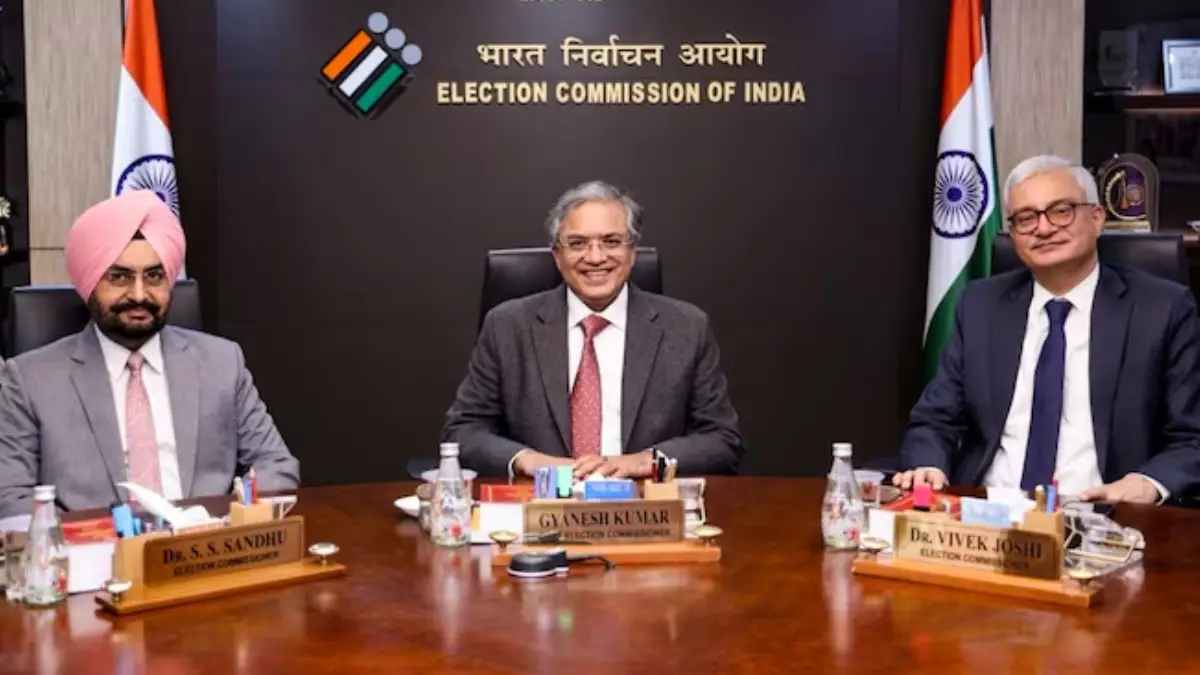
New Delhi : Chief Election Commissioner (CEC) Gyanesh Kumar is rightfully under scrutiny. The uproar against the CEC is over the questions raised regarding dissent by two Election Commissioners (ECs). The Indian Express newspaper’s investigation into the functioning of the Election Commission of India (ECI) on Wednesday (September 23) revealed a pattern of objections recorded by two ECs, Sukhbir Singh Sandhu and Vivek Joshi, on issues involving electoral rolls, Form 6, access to voter data and the functioning of the poll body’s IT systems.
These are not minor administrative disagreements. They concern the machinery through which citizens register as voters and through which electoral rolls are prepared and maintained. On the back of the report that exposed the dissents by the two ECs, the scrutiny on CEC Gyanesh Kumar is justified. But at the same time, it is also important to question if the two ECs did everything in their capacity to highlight their objections. If they believed the functioning of the Commission had become so problematic that their objections were repeatedly ignored, why did they continue to participate in the institution’s public defence?
If the ECs believed their concerns had reached a point where the institution was no longer functioning as it should, why didn’t they tender their resignation? These questions do not diminish the scrutiny on Gyanesh Kumar. They actually complete it. The Indian Express reported that Sandhu and Joshi repeatedly recorded objections over the functioning of the Commission. One of the most significant disputes concerned the gradual centralisation of the electoral-roll database and the functioning of the ECI’s IT architecture.
Joshi recorded on May 16, 2026, that the proposed changes to Form 6 could not be made through an SIR order because the form was prescribed under the Registration of Electors Rules, 1960. He suggested that the matter be sent to the government for the necessary rule changes. Sandhu concurred with him on May 19. Yet, according to The Indian Express, the disputed changes subsequently appeared on the ECI’s online portal ECINet. On August 13, Sandhu again recorded that the changes were “unauthorised or illegal” and called for them to be removed.
Was their view rejected? Was there a formal Commission decision? Was there a majority? Was the matter discussed by all three? And if the CEC disagreed, on what legal basis? The issue is particularly important because Article 324 establishes the Election Commission as an independent constitutional authority. The 2023 law governing the CEC and ECs also provides for decision-making by the multi-member Commission, with a majority prevailing where unanimity is not possible.
It isn’t known if the two utilised the legal powers available to them to the full extent. This is where the other half of the story begins, which is not widely spoken. If the two ECs believed that their concerns were being systematically ignored, their conduct deserves scrutiny. Take the press conferences. Leader of the Opposition in the Lok Sabha, Rahul Gandhi, held his first press conference alleging “vote chori” on August 7, 2025. Ten days later, on August 17, Gyanesh Kumar addressed the media to respond to those allegations and defend the Election Commission’s position.
Read Also : Bihar Minister’s ‘US-Japan’ Remark Sparks Row After Fresh Assault Cases
-

-
-

-