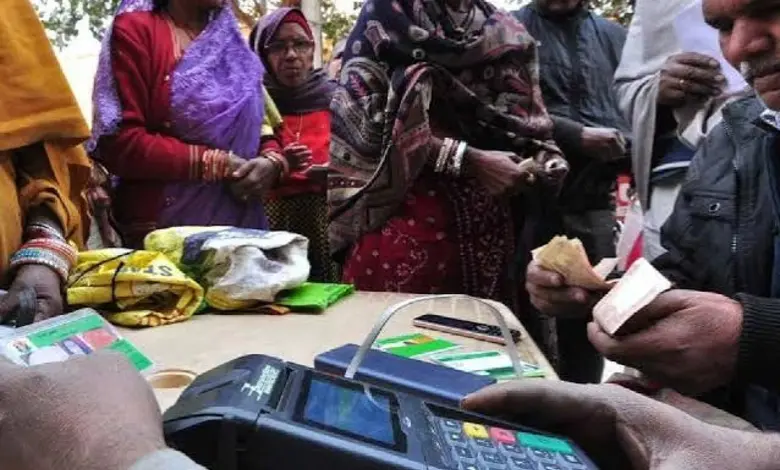
New Delhi: Buying groceries with a QR code has became routine for millions of Indians. Now, Delhi is preparing to bring the same digital covenience to its Public Distribution Systems (PDS). The Delhi government has announced that it will roll out smart ration cards equipped with QR codes and introduce facial authentication to make the distribution of subsidised food grains faster, more transparent and less prone to fraud.
The move is part of a broader effort to modernise the capital’s ration delivery system and ensure that benefits reach only genuine beneficiaries. Officials say the new technology will help eliminate duplicate and fake ration cards while making verification at Fair Price Shops quicker and more reliable.
Unlike the existing paper based ration cards, the new smart cards will carry a unique QR code that can be scanned instantly during ration distribution. This is expected to reduce paperwork, improve record keeping and make it easier for authorities to monitor the movement of food grains across the supply chain.
Another significant feature of the upcoming system is facial authentication, which will work alongside the existing Aadhaar based biometric verification. The option is expected to benefit people whose fingerprints often fail to match because of age, illness or years of manual labour a problem that has prevented many eligible beneficiaries from receiving their monthly ration on time.
Officials believe the addition of face authentication will reduce such instances while ensuring that only authorised beneficiaries receive food grains under the Public Distribution System.
The announcement comes as the Delhi government steps up its efforts to improve the functioning of ration shops. Authorities have said strict action will be taken against cases of under weighing, delays in distribution and diversion of food grains. The objective, they say, is to make the system more accountable and restore public confidence in welfare delivery.
To address long pending complaints, the government has also announced weekly grievance redressal camps, where residents can seek help with new ration card applications, corrections in personal details, addition or deletion of family members and other related issues. The camps are expected to make the process easier for citizens who have struggled with paperwork or administrative delays.
The initiative also fits into the Centre’s larger push towards digitising welfare schemes through technology. Over the past few years, Aadhaar enabled authentication has become a key part of the Public Distribution System across several states, and Delhi’s plan to introduce QR enabled smart cards marks another step in that direction.
For beneficiaries, the transition is expected to bring several advantages, including quicker verification at ration shops, fewer authentication failures, greater transparency in distribution and better protection against fraud. Existing ration cards will continue to remain valid until the government announces the rollout schedule and replacement process for the new smart cards.
While the complete implementation timeline is yet to be announced, the message from the Delhi government is clear the future of the capital’s ration distribution system is set to become more digital, more secure and more citizen friendly.
-

-

-

-