
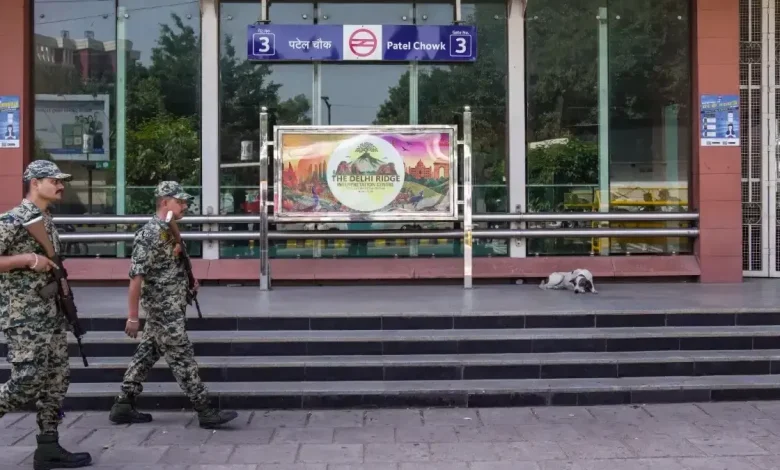
New Delhi: Thousands of Delhi residents are facing a difficult day of travel as extensive security measures ahead of the Cockroach Janata Party’s (CJP) planned protest at Jantar Mantar disrupt public transport, restrict movement across central Delhi and threaten business activity. With dozens of metro stations affected, several trains cancelled and mobile internet suspended in parts of the capital, ordinary citizens are bearing the immediate cost of a political confrontation.
Delhi Metro Rail Corporation announced restrictions on entry and exit at 57 stations from Friday night, with a revised advisory subsequently listing 45 stations for closures until 6 pm on Saturday. The interchange facility remains available at affected stations, except New Delhi station, according to the advisory. Commuters may need to use alternative stations, buses, autos or cabs, potentially adding time and expense to daily journeys.
Rail passengers have also been affected. Mail and Express trains scheduled to arrive at New Delhi and Hazrat Nizamuddin stations between 4 am and 2 pm on Saturday were cancelled at their originating stations under the announced restrictions. Travellers risk missing connecting services, work commitments and other appointments unless they check their train status before leaving home.
The disruption extends beyond transport. Shops and offices in Connaught Place have been advised to remain closed, while schools and courts have shifted to online operations as a precaution, according to reports. Traders have warned that reduced footfall could hurt sales during the festive season, when businesses depend on customers visiting central Delhi.



Mobile internet services have also been ordered suspended within a four kilometre radius of the Janpath Kartavya Path crossing from Friday night until Saturday night. The restriction could complicate digital payments, online bookings and communication for residents and visitors in the affected area.
Authorities have intensified security, with more than 20,000 personnel reported deployed or expected across the capital. Delhi Police denied permission for the protest, citing procedural and public order concerns. CJP organisers, however, maintain that they intend to proceed with the demonstration.
The protest centres on demands for Chief Election Commissioner Gyanesh Kumar’s resignation over alleged irregularities in the Special Intensive Revision (SIR) of electoral rolls. Critics claim the exercise threatens voters’ rights, while the Election Commission and the BJP have denied allegations of voter list manipulation.
While officials say the restrictions are intended to prevent disorder and protect public safety, the scale of the measures raises questions about their impact on people with no role in the political dispute.
For daily wage workers, office goers, small traders and families travelling across the capital, the immediate concern is practical reaching their destinations safely, on time and without additional expense. As Delhi navigates the security clampdown, residents remain caught between the right to protest and the need to keep a major city moving.