
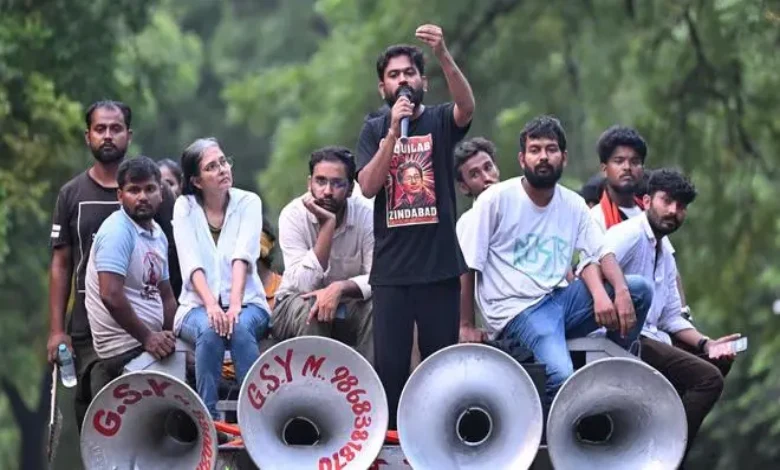
The Cockroach Janta Party (CJP), the student-led outfit that led nationwide protests over the alleged NEET paper leak, is gearing up for its next chapter after prompting one of the most significant policy responses to an education crisis in recent memory. After wrapping up a month-long sit-in at Delhi’s Jantar Mantar, the group’s core members are set to gather in Maharashtra’s Chhatrapati Sambhajinagar on August 5 to chart their future strategy, campaign direction and organisational structure.
The upcoming meeting follows the Centre’s announcement of sweeping examination reforms in response to the protests, along with the resignation of the education minister amid sustained pressure. Reuters reported that the group has gathered input from students and supporters across the country and now faces a choice: stay focused on NEET-related issues or widen its campaign to cover broader youth and education concerns.
What could CJP take up next?
Having achieved its first major goal — pushing the government into examination reforms — CJP is expected to broaden its focus beyond NEET. Reforms to other recruitment examinations are likely high on the list, including concerns over alleged paper leaks and delays affecting SSC, PSC, railway and other government recruitment tests. The group may also position itself to track whether the Centre follows through on the reforms it announced in response to the protests.
Student rights are expected to stay central to CJP’s agenda, with likely demands including age relaxation for affected candidates, additional attempts at exams, fee refunds and quicker grievance redressal.



Beyond the examination system itself, unemployment and delays in government recruitment could emerge as major campaign issues, alongside calls for greater transparency, more secure testing systems and fairer evaluation processes. According to Reuters, the organisation’s move to collect suggestions from students nationwide points to plans for a wider youth-focused campaign.
Can the movement hold onto public support?
Analysts note that sustaining momentum after meeting an initial demand is often the hardest part for movements built around a single issue. Whether CJP can keep public backing may hinge on its ability to keep tackling problems that directly affect students and job seekers, while pushing authorities to actually deliver on the reforms they’ve promised.
Consistent engagement with students, clear communication and non-violent mobilisation are expected to matter most in maintaining public trust going forward. Building out local volunteer networks and keeping state-level teams active could also help the movement stay relevant once the initial protest energy fades.
Observers also point out that staying independent of party politics — and sticking to policy-focused issues — could help CJP preserve the credibility that fuelled its rapid rise. Whether the group settles on a clear long-term roadmap, with visible results to show for it, may determine if CJP becomes a lasting platform for India’s youth or fades after its early win.
What obstacles lie ahead?
Moving from a single-issue protest to a broader public movement brings its own set of organisational and political hurdles. Students across different states often face different education and employment challenges, which could make it harder for CJP to build consensus on what to prioritise next. Scaling up nationally will also demand stronger leadership structures, bigger volunteer networks and greater organisational capacity than the group has needed so far.
Also Read:12 Injured As Air India Phuket-Delhi Flight Loses Altitude During Turbulence
As CJP grows, it’s likely to draw more political scrutiny and criticism, even as public expectations for fast results rise in parallel. There’s also a risk that taking on too many causes at once could dilute the movement’s core focus. Balancing online campaigning with sustained on-the-ground engagement will likely be key if CJP wants to become a lasting organisation rather than a protest that burns out.
What could the August 5 meeting mean going forward?
The decisions to come out of the Chhatrapati Sambhajinagar meeting could influence the trajectory of student politics and youth activism in India more broadly. Should CJP choose to widen its platform, it could open the door to greater cooperation among student groups across states around shared concerns examination reforms, recruitment transparency and unemployment chief among them.
The movement’s next steps could also inspire other issue-driven youth campaigns that lean on peaceful protest and digital organising rather than conventional political party structures.