
Indians Will Benefit The Most By US Supreme Court’s Order On Birthright Citizenship ! Know Why
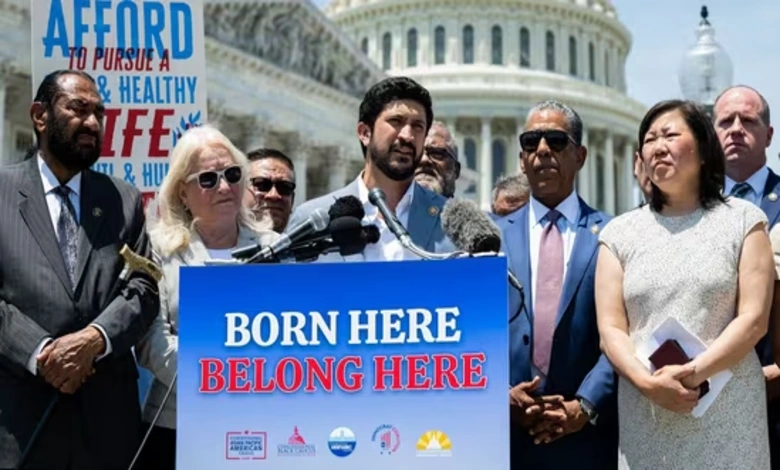
The US Supreme Court has firmly rejected an executive order by President Donald Trump seeking to curtail birthright citizenship, reaffirming a longstanding policy that grants automatic citizenship to nearly all children born on American soil.
In a 6-3 decision, Chief Justice John Roberts emphasized that citizenship under the Fourteenth Amendment has historically hinged on birthplace rather than the immigration status or residency of the parents. He noted that the Constitution extends this fundamental right to every free-born person in the land, preserving a core principle of American identity without introducing new legal precedents.
The ruling strikes down efforts to deny citizenship to babies born to undocumented immigrants or those on temporary visas, providing clarity after more than a year of uncertainty following the order issued early in Trump’s second term.
Indian-American community leaders and lawmakers have hailed the decision as a significant victory for immigrant families. They highlighted its importance for communities facing extended visa backlogs, where children are frequently born in the United States well before their parents secure permanent residency. The outcome safeguards the rights of families who have established lives in the country and underscores America’s tradition as a nation shaped by immigration, particularly as it approaches its 250th anniversary.


ALSO READ : Saudi Arabia Property Law: Indians Can Now Buy Real Estate Direct
For the Indian diaspora, the implications are especially profound. With millions of Indian-origin residents in the United States, a substantial portion hold temporary work visas such as H-1B, where Indian nationals represent a large share of recipients. Children born to these families on American soil will continue to receive citizenship, easing concerns for parents navigating complex immigration pathways.
Data indicates that around 5.2 million people in the US identified as Indian in recent years, with many having resided there for over a decade. Roughly half of Indian immigrants are naturalized citizens, reflecting deep roots in American society. The ruling brings relief to this group, which has been among those most affected by the proposed changes.
Authorities have indicated they will continue targeting fraudulent practices, such as birth tourism—where individuals travel specifically to secure citizenship for their children through deliberate short-term visits. Prosecutions may focus on visa application misrepresentations, maintaining safeguards against abuse while upholding constitutional protections.
This decision reinforces equal application of birthright citizenship, offering stability to immigrant communities and affirming the inclusive foundations of US law.