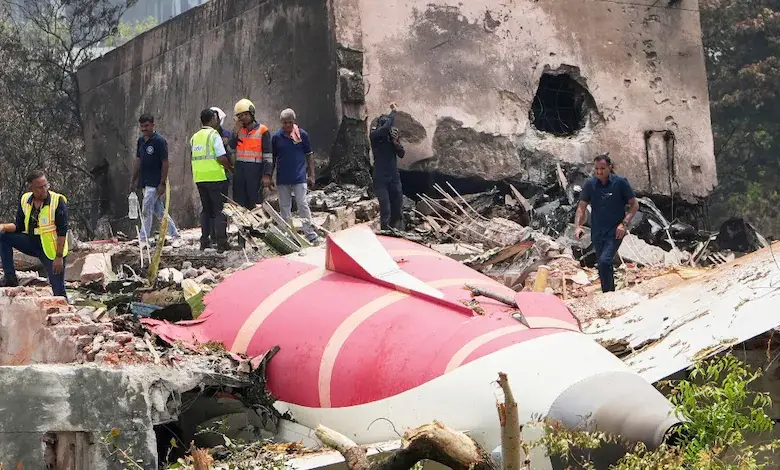
Indian investigators are set to conclude in their final report that Air India Flight 171 crashed due to one of the pilots deliberately shutting off the aircraft’s fuel switches in what was “almost certainly” an intentional act, Italian newspaper Corriere della Sera reported on Wednesday, citing sources from western aviation agencies. The conclusion is drawn from the absence of any technical defect and analysis of enhanced cockpit voice recordings that reportedly identified which pilot operated the switches.
India’s Aircraft Accident Investigation Bureau and the civil aviation ministry did not respond to HT’s requests for comment on the report. Flight 171, a Boeing 787 Dreamliner, crashed on June 12 shortly after takeoff from Ahmedabad airport, killing 260 people — 241 of the 242 on board and 19 on the ground when the aircraft plummeted onto a medical student hostel 32 seconds after losing thrust from both engines.
While it remains unclear whether the final report will include a detailed description of how the switches were intentionally turned off or explicitly attribute responsibility, the main suspect is the aircraft’s commander, Sumeet Sabharwal, who died in the crash, Corriere reported. Indian pilots associations and Sabharwal’s family have criticised what they say has been a designed attempt to pin the blame for tragedy, and calling for more scrutiny on the aircraft maker, the airline and other factors.
The newspaper said a conclusion pointing to the captain marks a “desired turning point” for US experts assisting the investigation, after weeks of confrontations with their Indian counterparts who had refused to recognise a human role in the tragedy.
In December, Indian investigators from the AAIB travelled to Washington where they re-analysed the aircraft’s black box data at National Transportation Safety Board laboratories, focusing particularly on cleaned-up cabin audio recordings, the sources told Corriere.
The audio analysis made clear which pilot took the fatal actions and ruled out the possibility of a mistake, according to the report.
Also Read: Epstein Called Me Two-Faced : Hardeep Puri Hits Back At Rahul Gandhi
New Delhi’s apparent change in position stems from US pressure and Western threats to re-evaluate the security level of Indian airlines, which risk damaging the image of a country investing heavily in air transport, tourism and trade, the sources said.
“Admitting that it was one of the pilots who knocked down the plane is increasingly considered a sustainable sacrifice,” one source told the newspaper.
US experts conducting simulator tests of a Boeing 787 never found a scenario in which both engines shut down due to a failure, with human intervention whether intentional or accidental the only reasonable explanation, Corriere reported.
Western evaluations based on the flight data recorder pointed to Sabharwal, who was monitoring while first officer Clive Kunder was piloting, the newspaper said. The engines shut down in sequence first the left engine, where the captain sits, then the right. In the final seconds, the first officer’s control yoke was positioned to regain altitude while the captain’s remained stationary, according to the report.
The preliminary report, released one month after the crash, established that the engines shut down almost simultaneously after fuel switches were moved from “run” to “cutoff”. The cockpit voice recorder captured one pilot asking “Why did you turn off the engines?” with the other responding “It wasn’t me”, though the report did not identify which pilot said what.
The final conclusions will undergo a “political” evaluation, the sources told Corriere on condition of anonymity. The final document could adopt a more cautious version to avoid strong national controversies, the newspaper reported.
Also Read:
NTSB spokesman Peter C Knudson referred Corriere to the Indian AAIB. Indian authorities including the AAIB, the Directorate General of Civil Aviation and the Civil Aviation Ministry did not respond to the newspaper’s questions.
-

-

-

-