
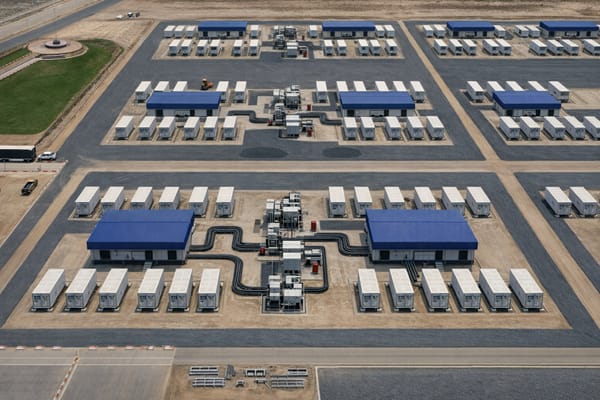
Adani Green Energy Ltd has commissioned a 3.37 Gigawatt-hour (GWh) Battery Energy Storage System at its Khavda site in Gujarat, marking the largest single-location deployment of its kind outside China. The project, which incorporates an additional 1.37 GWh capacity brought online in March 2026, was completed in just ten months from the start of on-site construction—one of the swiftest timelines for a utility-scale battery installation globally.
This milestone significantly bolsters grid stability and enables the delivery of reliable, round-the-clock renewable power. The 3.37 GWh system can store sufficient clean energy to supply nearly one million households for a full day, equivalent to meeting peak demand in cities such as Indore or Chandigarh, or powering the entire state of Goa. It could also keep more than 12 million LED bulbs illuminated continuously for ten hours.
The deployment underscores the growing importance of large-scale energy storage in supporting India’s clean energy goals. As renewable generation expands, battery systems play a vital role in managing the natural variability of solar and wind output caused by weather, time of day, and seasonal changes. By storing surplus energy and releasing it during periods of high demand, the technology helps maintain a stable and responsive power supply.
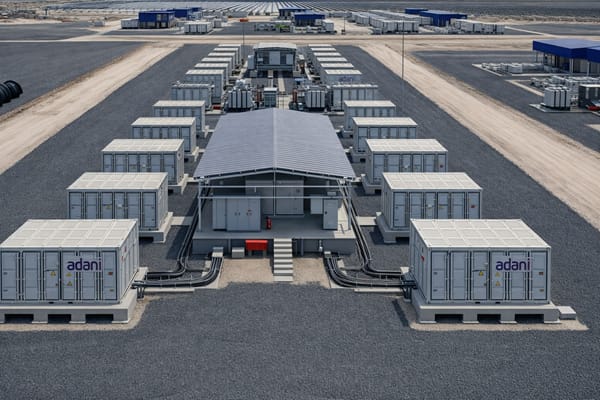
Company officials have outlined ambitious expansion plans, targeting more than 10 GWh of additional battery storage capacity in the coming financial year and scaling up to 50 GWh over the next five years. The Khavda BESS integrates advanced energy management systems with lithium-ion technology to enhance efficiency, reliability, and grid integration. It forms part of a broader development at Khavda, where Adani Green Energy is building one of the world’s largest renewable energy facilities with a planned capacity of 30 GW by 2029. Of this, 9.9 GW is already operational.




Sagar Adani, Executive Director of Adani Green Energy, noted that large-scale storage infrastructure will be essential for the next phase of the country’s energy transition. He emphasized that as renewable capacity grows rapidly, robust storage solutions are key to providing dependable, dispatchable clean power and building resilient energy systems for the future.
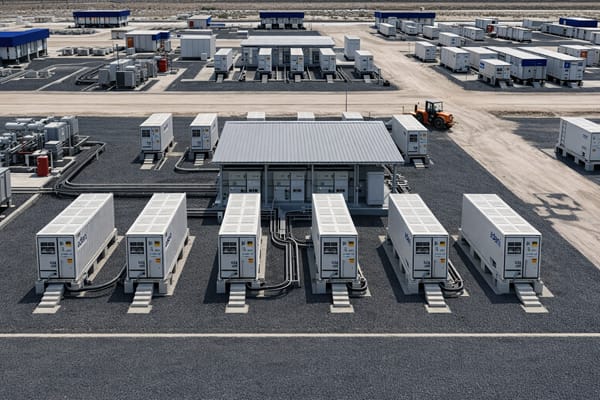
Adani Green Energy currently operates 19.7 GW of renewable capacity across 12 states in India, with a long-term target of 50 GW by 2030. The company is developing the 30 GW Khavda project on 538 square kilometres of land and maintains high environmental standards across its portfolio, including water-positive operations and zero waste-to-landfill practices.
This advancement highlights the evolving role of battery storage in transforming intermittent renewable sources into consistent, large-scale power infrastructure.