
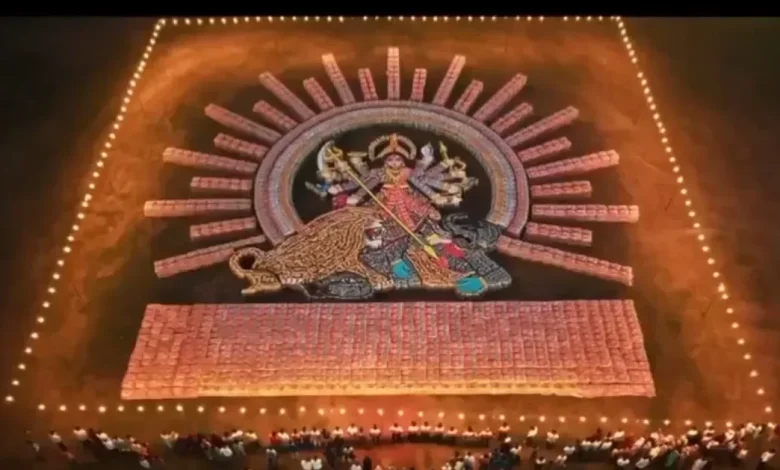
Kymore: In a striking blend of devotion and large scale visual design, Adani Cement has created a 70 by 70 foot image of Maa Durga using 15,000 cement bags at its Kymore plant in Madhya Pradesh. The installation, unveiled as part of the company’s Navratri and Durga Puja 2026 campaign, brings together 750 tonnes of cement represented by bags of ACC and Ambuja Cement and involved a reported 12,600 man hours of collective effort.
Titled “Jahan Vishwas, Wahan Shakti” (Where There Is Trust, There Is Strength), the project is designed to reveal its full impact from an aerial viewpoint. From the ground, the cement bags appear as individual units. Seen from above, their carefully planned arrangement forms the image of the goddess, including her crown, eyes, ten arms and flowing silhouette.
The company has documented the making of the installation and its aerial reveal in a digital film intended for its social media and other online platforms.
A campaign built around trust and strength




Beyond its sheer scale, the installation serves as the centrepiece of a branding exercise connecting two names in Adani Cement’s portfolio ACC and Ambuja Cement.
The campaign draws on ACC’s longstanding association with trust and Ambuja Cement’s emphasis on strength. These themes are brought together through the image of Maa Durga, who is widely revered in Hindu tradition as a symbol of power and protection.
The campaign’s message links these ideas to the role of cement in building homes and infrastructure, while using the festive season to connect with audiences through faith and tradition.
How the installation comes together
According to the published campaign description, the digital film follows the process from workers positioning individual cement bags to the moment the complete image becomes visible from above. The gradual change in perspective is central to the presentation an arrangement that looks fragmented at ground level transforms into a recognisable image when viewed as a whole.
The reported 12,600 man hours highlight the scale of the coordinated work behind the display. However, the company’s published figures do not independently establish how many individual workers participated or how long the project took to complete.
The installation offers Adani Cement a high visibility way to showcase its brands during one of India’s major festive periods. At the same time, it places collective effort at the centre of a campaign built around devotion, trust and strength.
While the company presents the project as a distinctive aerial tribute, its wider significance lies in how an industrial product has been used to create a religious image intended for a digital audience.
ALSO READ: From Hero Pilot To CWG 2030: Ahmedabad’s Navratri Tattoos Tell A New Story