[By Devansh Desai Mumbai Samachar Desk]
Ahmedabad: The inequalities currently prevailing in social, political, and economic spheres have become a matter of widespread concern. On one side, groups are advocating Hindu unity, while on the other side, caste organizations demand political representation based on caste divisions.
A large section of society either gives theoretical approval to the idea of “eliminate caste discrimination, we are all Hindu brothers” or wishes to gain political advantage from it. However, this situation resembles a forest fire. When a jungle catches fire, lions and rabbits run together, but once the fire subsides, the lion pounces to devour the rabbit.
A similar dynamic operates around caste unity. From Jayprakash Narayan to Samarasata Manch, efforts have been made in this direction. The political and social grip of castes appears to be growing stronger. Prominent socialist leader Ram Manohar Lohia remarked, “Caste will never go away.”
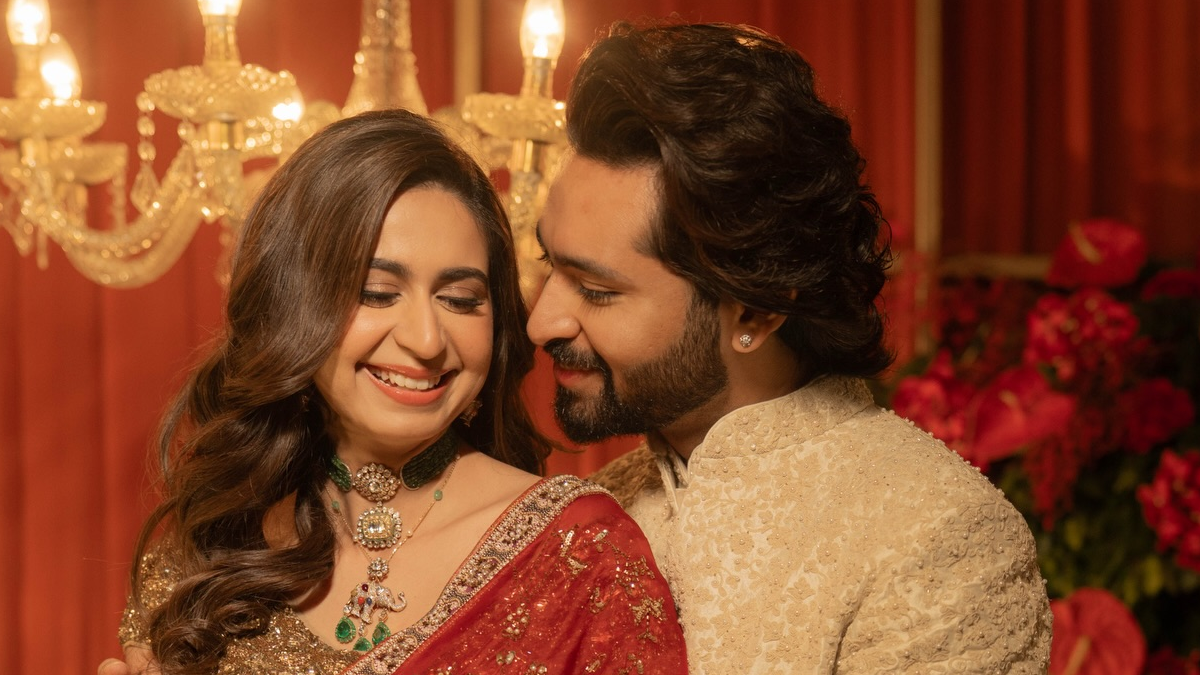
Amid this political and social inconsistency, Kinjal Dave’s engagement to a young man from the Jain community took place, and a section of the Brahmin community registered its opposition. Not only that, there was also talk of ostracizing Kinjal’s family from the caste.
Many people participated in discussions about this issue through social media. While marriage and the selection of a life partner are entirely personal or family matters, when such an incident involves a public figure, it becomes newsworthy. Eventually, Kinjal also clarified her position and stated that legal action would be taken if her family faced any harassment over this matter.
What If an Ordinary Girl Were in Kinjal Dave’s Place?
According to the 2011 census, the proportion of inter-caste marriages was 5.8%. Thus, despite increasing education levels, the general tendency to select life partners based on caste remains evident in marriage matters. In the 21st century, education levels among women have risen. Women have become truly empowered. Therefore, the standards and reasons for marriage selection have also changed.
Girls seek life partners who give them wings to fly and the sky to soar. Hence, they sometimes prefer to choose life partners beyond caste, religion, or region in search of their ideal companion. Even in educated and modern families, there are households that say, “If the boy is good, we will arrange the marriage” when the girl likes someone.
The level and nature of discussion that occurred regarding Kinjal Dave’s case is concerning. It doesn’t seem that this decision will significantly impact Kinjal or her family. Kinjal is personally connected with the ruling party. From an economic and political prestige standpoint, she is in a strong position. Therefore, she will continue to receive support and assistance. Yet, this controversy took on such a form.
What would happen if ordinary girls took such a step? It is worrying that if all castes adopt this attitude, social harmony faces danger and girls’ freedom to choose partners will be suppressed. This attitude should not become widespread. Caste is not merely a division of groups. The debate about which castes are higher and which are lower is endless and complex in India.
Some people argue, “What’s wrong with Kinjal marrying a wealthy boy from a high caste?” Would Kinjal not have married him if the boy weren’t from a high caste or were poor? The long-term solution to this is a caste-free social structure.
Male Dominance in Caste Decisions
The invaluable contribution of the Brahmin caste to social reform in India should be a matter of pride for Brahmins. Growing caste rigidity across various castes is visible on social media. Some time ago, I wrote in an article: How many caste organizations in India’s various castes have women as presidents?
In most castes, men occupy decision-making roles. If castes are strong social institutions, they too should function democratically. Daughters are so capable that they don’t need anyone else to make decisions for them.
Society that speaks on women’s marriage and marriage selection needs to raise a stronger voice on the issue of atrocities against women.
In 2023-24, 6,100 women who were victims of dowry-related harassment died in the country. The growth rate was 14%. All these women had married within their own communities. During such times, people remain silent.
Even in the media, adequate discussion is not seen. It is essential that daughters in one’s own home and family remain safe and happy.
Among the laws enacted for women’s rights in India, many rights must be claimed by women from their own families.
Thus, we cannot deny the necessity of law to obtain rights from one’s own people in this country. Currently, posts saying “society first” are going viral on social media, but whose society? And which society? That question is important.
What When a Son Marries Outside the Caste?
A section of economically independent women prefer to remain single if they don’t find a suitable match in marriage. Organizations of single women are also active in major cities. If we insist on caste requirements in the marriage institution in changing India, many inconsistencies may arise.
In March 2026, a life partner selection fair for all Brahma Samaj of Gujarat is going to be organized. In which 84 castes of Brahmins will participate. Brahmin youth from 14 countries will participate. In this fair, 3,333 girls and 6,667 boys have registered thus the number of boys seeking marriage is double that of girls.
Various factors, including the declining number of girls, are responsible for this situation. According to these statistical details, if 3,334 young men have to marry into other castes, will we ostracize these Brahmin youth? In a community where the number of daughters is declining, there is a compulsion to bring girls from other castes.
If this happens, then many sons may face ostracism, or if we insist on girls from the same caste, they will have to remain unmarried. Or different standards will have to be maintained for sons and daughters meaning sons can bring girls from other castes, but daughters cannot marry into other castes. How appropriate is it to insist on intra-caste marriages without answering these questions?
Marriage Is a Matter of Personal Choice
While people who consider the controversy over Kinjal Dave’s engagement unnecessary, those supporting or opposing her, are continuously pouring their opinions on social media according to their understanding, the analysis of this episode prompts reflection on several matters.
First, when Kinjal clarified the controversy, was it necessary to explain how suitable a partner she had chosen? She mentioned that Gayatri Mantra is chanted in her in-laws’ home. Would she not have married Dhruvin Shah if Gayatri Mantra wasn’t chanted?
She didn’t need to present the worthiness of her chosen partner to the public. Through statements like “those opposing my engagement won’t give even Rs. 5,000 to anyone,” she seems to have undermined her own dignity. She and her family liked Dhruvin, and they got engaged this is their personal choice, a right the country’s Constitution has given them. Where necessary, they can fight a legal battle, but by making statements about whether the person criticizing them is social or antisocial, they are diminishing their own dignity.
Being a Celebrity Is a Double-Edged Sword
The second matter is that Kinjal is a celebrity. She has succeeded at a young age through her own strength. Therefore, this controversy is linked to her. One thing is true: she has the right to a private life “right to privacy.” However, any public figure should remember that fame is a double-edged sword. When you open your personal life for publicity, that boundary doesn’t remain. Every celebrity must be prepared to face criticism along with prestige.
Read More: Singer Kinjal Dave Warns of Legal Action Amid Family’s Social Boycott Row
The third and most important point is that given Kinjal’s political, economic, and social life in terms of women’s partner selection for marriage, such controversy will not significantly affect her. However, if the practice of ostracizing families that allow marriage into other castes develops in other castes as well, many questions will arise about civilized society’s unity and human society’s civilization. May Kinjal triumph, but through this incident, other daughters should not suffer.
Note: The views expressed here are the author’s; Mumbai Samachar English is not necessarily in agreement with their perspective.