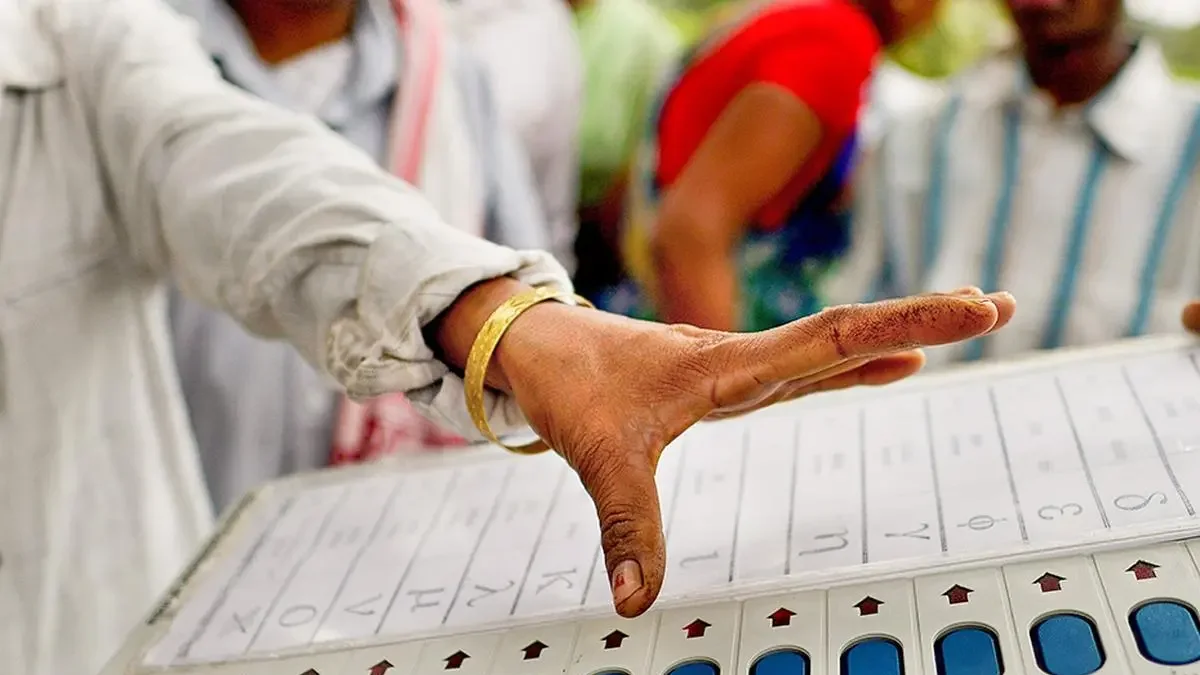
Gujarat went to the polls on Sunday for one of its largest local body elections in recent years, covering 15 municipal corporations, 84 municipalities, 34 district panchayats and 260 taluka panchayats with more than 10,000 seats at stake. Over 4.19 crore voters were registered across nearly 50,000 polling stations. Counting is scheduled for April 28.
By 6 pm, the state recorded an overall voter turnout of 48.55%. Vapi led all municipal corporations with 65.68%, while Gandhidham recorded the lowest at 39.86%.
Turnout through the day
By 5 pm, Vapi was already at the top with 57.65%. Porbandar registered the lowest among municipal corporations at 32.56%. At 4 pm, Vapi stood at 53.74%. The 3 pm statewide average was 32.17%, with Vapi again highest at 51.21% and Gandhidham lowest at 25.52%.
At 1:30 pm, Morbi led the pack among corporations at 39.80%, followed by Navsari at 39.58% and Vapi at 39.00%. Ahmedabad stood at 26.05% and Porbandar at the bottom with 24.37%. The statewide average at 1 pm was 20.1%, with Vapi recording the highest at 38.77%.
By 11:30 am, Gujarat had registered 14.94% turnout. Within the first hour of polling, approximately 5% voting was recorded across the state, though several booths saw delayed starts due to EVM malfunctions.
Boycott resolved in Narmada after AAP MLA steps in
Voting in Fulsar-Duthar village of Dediapada taluka in Narmada district resumed at around 12:30 pm after AAP MLA Chaitar Vasava intervened to resolve an election boycott.
Villagers had refused to vote over a stalled tar road connecting Fulsar to Duthar, held up due to pending wildlife clearance from the forest department. Vasava met with administrative officials on the spot. Officials from the Roads and Buildings Department and Forest Department issued a written assurance that approvals would be secured and the road completed within a month. Voting resumed shortly after.
EVM glitches, fire, and booth confusion
Voting started an hour late at a polling station in Jamnagar after an EVM developed a technical fault. EVM malfunctions were also reported in Vasna. In Mehsana, residents of Dela village boycotted the election entirely not a single voter turned up at the polling station even two hours after voting began.
A fire broke out at Sharda Mandir School on Bamroli Road in Godhra, which was serving as a voting centre. The incident occurred just before polling commenced, causing panic. Voting proceeded after the situation was brought under control.
In Kutch’s Bhuj, voters struggled to locate their assigned polling booths due to lack of clear information, mirroring similar administrative lapses reported in Ahmedabad.
Congress alleges attack on candidate in Anand
A political row erupted in Anand district after Congress alleged its Ward No. 13 candidate for the Karamsad-Anand Municipal Corporation, Harshil Dave, was attacked by BJP candidate supporters during the campaign. Congress called the alleged incident an assault on democracy, stating that violence had no place in the electoral process. The BJP has not issued a response.
Also Read:
In Rajkot, police detained 20 individuals including Congress candidate Makbul Davdani of Ward No. 15 amid the polling process.
VIPs at the booths
Union Minister C R Patil cast his vote at Uttar Gujarat Vidyalaya in Surat. “Gujarat local body elections are being held today. I cast my vote along with my family. My mother, who is around 89 years old, also participated in voting. Voting is both a right and a duty,” Patil said.
MLA Hardik Patel voted in Viramgam. Prime Minister Narendra Modi was expected to vote at Nishan School in Ranip, Ahmedabad. Union Home Minister Amit Shah was also expected to cast his vote in the city. Former Chief Minister and Uttar Pradesh Governor Anandiben Patel was expected to vote from Thaltej, while Madhya Pradesh Governor Mangubhai Patel was likely to vote in Navsari.
What makes this election cycle significant
The contest is multi-cornered with the BJP, Congress, AAP and Independents in the fray. More than 20,000 candidates remained after withdrawals, with several already elected unopposed.
This is the first election cycle conducted after the implementation of 27% reservation for Other Backward Classes, alongside existing quotas for Scheduled Castes, Scheduled Tribes and women a change expected to reshape the composition of local governance bodies across the state.
(With inputs from syndicated feed)