
Ahmedabad: Kidney transplants in Gujarat jumped 34% in two years from 818 procedures in 2023 to 1,099 in 2025. Sixteen patients in the state have died waiting for a donor over the past five years, according to official data.
At Civil Hospital’s Kidney Hospital, the climb has been building for a decade: 341 transplants in 2016, 500 last year. Of those 500, 330 patients were from Gujarat and 170 traveled in from outside the state. The breakdown included 157 cadaver donations and 49 swap transplants. Take out public holidays and the hospital is now averaging more than two transplants a day.
Also Read:Gujarat Police Seizes Liquor Worth ₹1.2Cr In Banaskantha, 2 Arrested
The dialysis numbers are the harder thing to look past, honestly. Gujarat’s Dialysis Program treated 5.61 lakh patients in 2025 about 1,538 people a day. Doctors say they’re also seeing kidney disease turn up in patients younger than they’d expect.



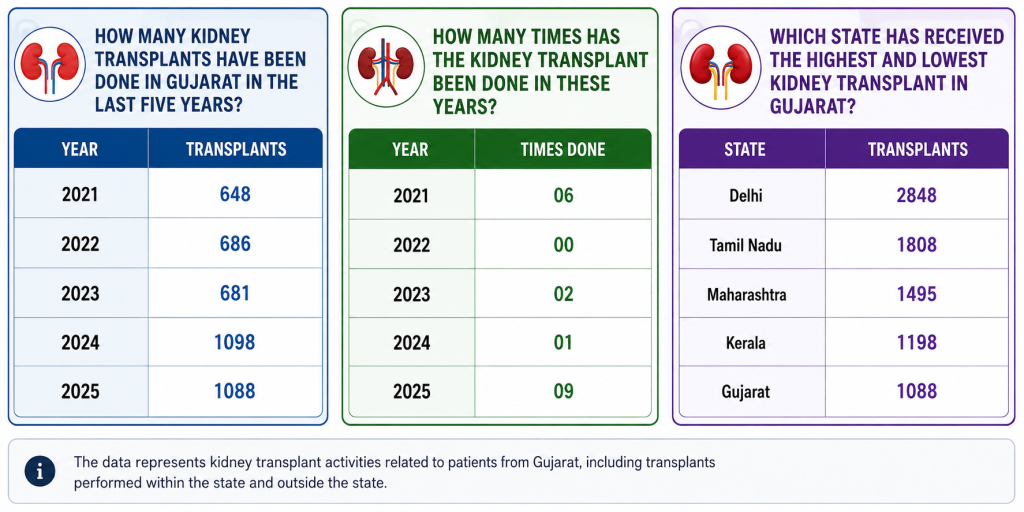
Nationally, Delhi led all states with 2,458 transplants in 2025, ahead of Tamil Nadu (1,909) and Maharashtra (1,475). Transplant numbers only tell half the story, though waitlist deaths are still a serious issue. Delhi recorded 132 in 2025, then Rajasthan (19), Goa (17), Maharashtra (15), Madhya Pradesh (11), and Karnataka and Haryana (10 each).
The causes are mostly familiar. Unmanaged diabetes and high blood pressure top the list — both damage kidneys slowly, often with no symptoms until function has already dropped. Add in diets heavy on salt, oil, and processed food, chronic dehydration, and not enough movement, and it’s a fairly predictable recipe.
Self-medication is a bigger factor than people realize: years of painkillers and steroids taken without medical supervision can grind down kidney function long before anyone connects the dots. In some pockets of the state, hard water and groundwater with high fluoride and nitrate levels add another layer of risk.
Not every factor here is bad news, though. Better diagnostics mean more cases are being caught and recorded — so some of this rise is really just Gujarat getting better at finding a disease that was probably going undetected before.