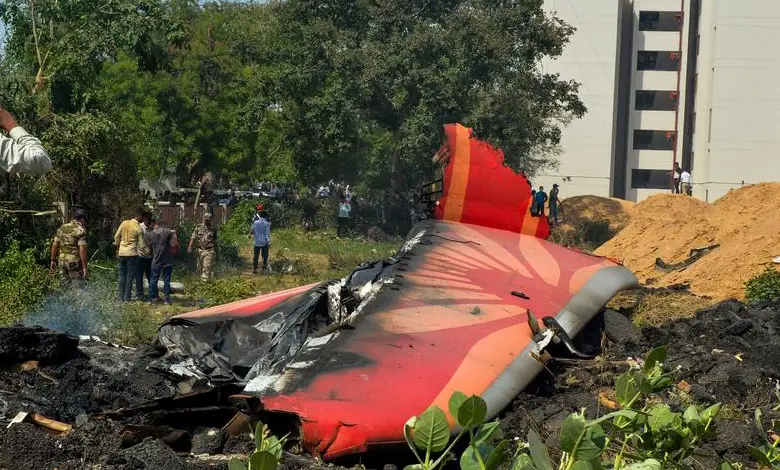
The Supreme Court has directed the Aircraft Accident Investigation Bureau (AAIB) to conclude its investigation into the catastrophic crash of Air India Flight 171 and submit its final report within the next three weeks.
During proceedings on February 11, 2026, a Bench headed by Chief Justice of India Surya Kant accepted the Union government’s plea for an extended timeline to complete the inquiry into the June 12, 2025, disaster at Ahmedabad airport. The incident claimed the lives of everyone aboard — 229 passengers and 12 crew members — when the Boeing 787 aircraft crashed moments after departure.
Expressing concern over the prolonged wait, Chief Justice Kant remarked, “There is considerable anxiety among pilots, the bereaved families, and the general public. We too are keenly awaiting the outcome of the investigation.” He made the observation while addressing Solicitor General Tushar Mehta, who appeared for the government.
The court has asked the Solicitor General to place the completed AAIB report on record once ready. Mr. Mehta clarified that the investigation — which includes international cooperation and technical complexity — is focused on determining the root cause of the accident rather than attributing individual blame. “No one intends to hold the pilots responsible,” he told the Bench. “The sole objective is to establish what led to the crash.”
The hearing also briefly addressed operational implications for the Boeing 787 Dreamliner. When the Chief Justice inquired about the number of Indian carriers flying the type, the Solicitor General confirmed several airlines operate the aircraft. The Bench noted that any decision to ground the fleet would cause widespread disruption to domestic and international air services.
Counsel representing petitioner Pushkarraj Sabharwal — the 91-year-old father of one of the deceased pilots — along with senior advocate Gopal Sankaranarayanan and advocates Prashant Bhushan and Neha Rathi, pressed for a separate judicial commission headed by a retired judge. They argued that the AAIB process had limitations and pointed to selective media leaks, including purported excerpts from cockpit voice recordings, which had intensified public speculation and added to the grief of affected families.
The Supreme Court, however, reiterated that the AAIB operates under Section 4C of the Aircraft Act, 1934, and the Aircraft (Investigation of Accidents and Incidents) Rules, 2017, with the primary goal of identifying safety deficiencies to prevent recurrence, not to fix liability.
The Bench — also comprising Justice Joymalya Bagchi — indicated it would examine the final AAIB findings before deciding whether any further judicial intervention, such as a court-supervised inquiry, is warranted.
Multiple petitions, including those filed by Mr. Sabharwal, the Federation of Indian Pilots, and other stakeholders, had highlighted perceived delays and the impact of premature media disclosures. The court has listed the matter for follow-up after the stipulated three-week period.
-

-
-
-