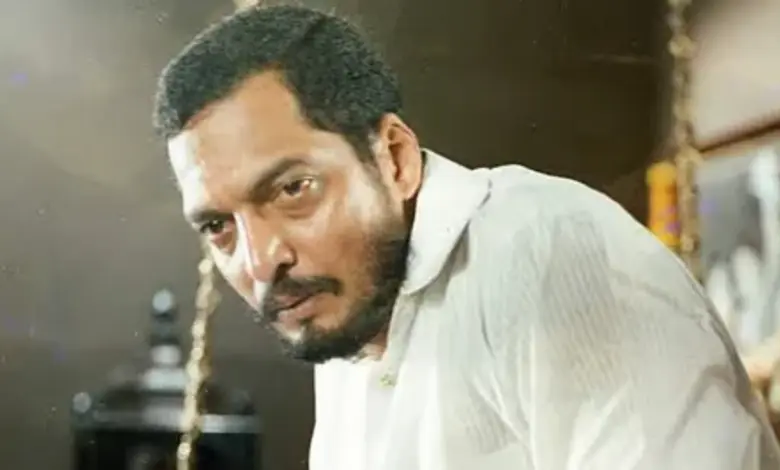
After the earthly demise of one of the greatest performers of Indian cinema and stage, Nana Patekar, tributes from across the nation and from respected artists have been pouring in. These tributes are making people realise his presence and artistry, unearthing something valuable and presenting it to the people. Nana Patekar was someone who seemed deeply thoughtful about his own words, presence, opinions, and art, and who intended to do something influential through his life. Every social commentary spoken through his tongue hit hard because it was truthful. One striking example of his authenticity, among many others, is the largely improvised section of Krantiveer’s iconic final monologue. Director Mehul Kumar did not write a word-for-word speech. Instead, he explained the entire social situation to the performer, allowing him to express his own side of the commentary. Nana, speaking his own words, made the fiery speech reach straight into the hearts of the audience. That gallows scene is still remembered vividly by many. Wajood, Thodasa Roomani Ho Jaye, Prahaar, Yeshwant, and all the films featuring Nana stood out because of his aggressive approach to the art, marking a place for him alongside the finest performers, with Natsamrat standing as a testament to his acting prowess.
Parinda, the high-stakes debut of the then-budding filmmaker Vidhu Vinod Chopra, is unconventional and gritty. It introduced neo-noir to Indian cinema in a very different way on the big screen. Without Nana, the film could have gone in a different direction because he was someone who seemed to break the pattern. His distinct mannerisms were unpredictable, sparking the character’s inner trauma. Nana’s expressionism as the villain of the film does not impose anything; instead, it exposes his fright, his feeling of terror, and everything a villain could do to a viewer. The unconventional character arc written by the writer is boosted by Nana’s aura, which is a rare form of flow state for any actor.

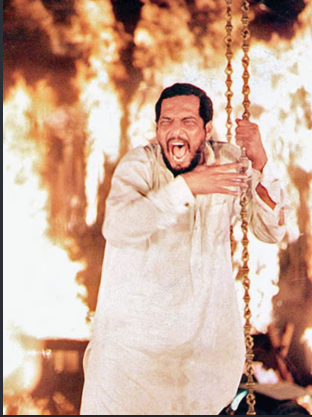
Surprisingly, he seemed to be in his flow state every time he appeared on screen, judiciously making his performance reach its full potential. One of the most striking aspects of Nana’s performance in Parinda is his reaction to fire and the way it exposes the inner chaos of Anna Seth. Fire, in the film, is not merely an element of destruction but also becomes a reflection of the terror and mental instability that reside within him. Nana’s reaction to it reveals a side of Anna that words could never fully express.
ALSO READ: Salman Khan’s YouTube Channel Crosses 30,000 Subscribers: What ‘Being The Salman Khan’ Offers Fans
His expressions carry a strange mixture of fear, discomfort and unpredictability, making the audience look beyond the image of a ruthless gangster. What makes the performance so striking is the way Nana moves between these emotions. His reactions seem gradual, as if something is building within him, yet they can turn instantaneously into an outburst that leaves the audience unsettled. In a matter of seconds, the face that appears almost composed can become frighteningly unpredictable. This gradual yet instant transformation is where Nana’s brilliance as a performer becomes visible.
He does not simply play a villain who creates fear in others; he exposes a man who is himself surrounded by fear. His eyes, pauses, smirks and sudden changes in temperament make Anna Seth a character whose violence is not merely an external quality but also an expression of his inner disturbance.
Nana makes the audience uncomfortable not just through what Anna does, but through the uncertainty of what he might do next. It is this unpredictability that makes his performance so memorable and places Anna Seth among the most striking villains in Indian cinema. The mental chaos, unpredictability, and Nana’s own introspection into the character gave critics and audiences a different shade of villainy: a villain who is not trying to be a villain, yet somehow makes people believe that he is one of the generational villains of Indian cinema. From a strange smirk to a violent outburst in a matter of seconds, Nana displayed his intellect as a performer and attempted to reveal the heartbeat of Anna Seth, his character in Parinda, as a human being. The other cast members and the direction also played an important role in making his character reach the audience so strikingly.
Nana, in the truest sense, was a “performer”, an intentional performer of art and a servant of the stage. His films remind us of how authenticity is carried forward by an actor through the ages. Every Nana screen presence carried his silent aggression, raw and lofty personality, method, and, most importantly, TRUTHFULNESS.
-

-
-

-