Nearly three decades have passed since JP Dutta’s war epic Border arrived in cinemas. Set against the backdrop of 1971, the film depicted the Indian Army’s courageous stand during the Battle of Longewala in the Indo-Pak conflict. Over time, it achieved cult classic status, celebrated for its powerful dialogues, compelling performances, and stirring musical score. Border also established a benchmark for subsequent war cinema large-scale productions celebrating patriotism and honoring the courage of India’s Armed Forces. While some succeeded, others fell short, including Dutta’s own Kargil-focused effort, LOC. Twenty-nine years later, JP Dutta returns with Border 2, this time serving as producer alongside his daughter Nidhi Dutta, while handing directorial duties to Anurag Singh. But does Border 2 match the impact of its predecessor? Here’s the analysis.
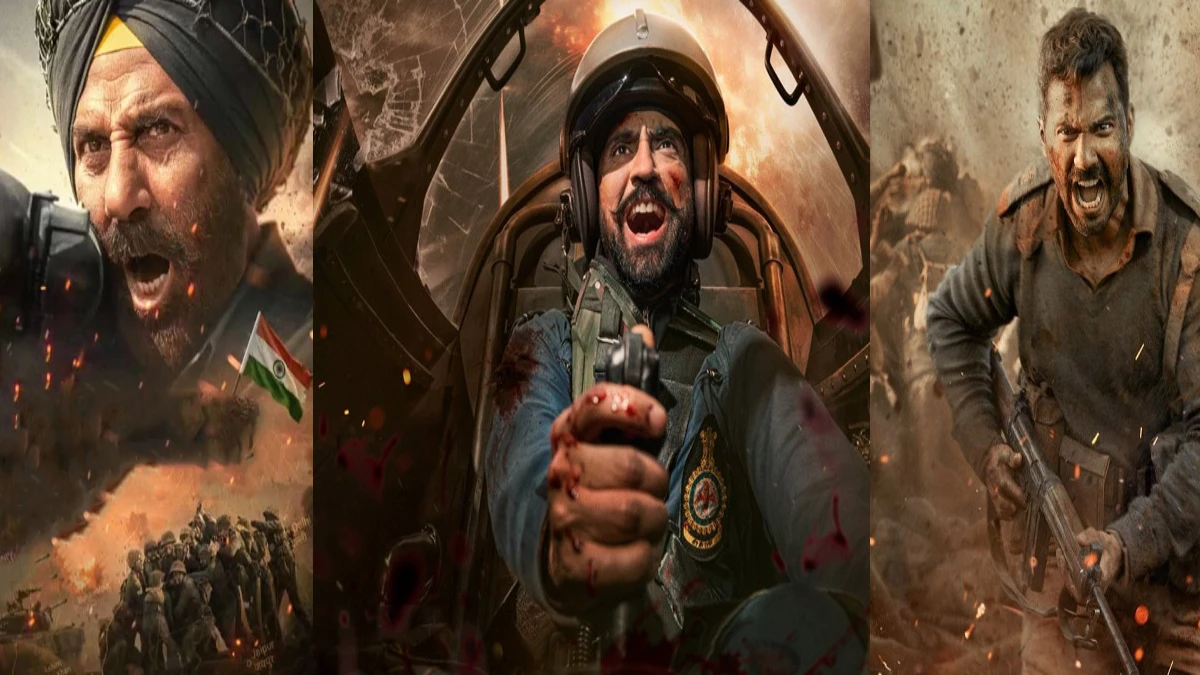
Featuring Sunny Deol, Varun Dhawan, Diljit Dosanjh, Ahaan Shetty, and an ensemble cast, Border 2 unfolds as a multi-front war narrative. Like its predecessor, the sequel is set in 1971, but whereas the original centered on the Battle of Longewala, this installment spotlights multiple historic confrontations including the Battle of Basantar, the Battle of Poonch, and the tragic sinking of INS Khukri. Fundamentally a war film celebrating armed forces bravery, director Anurag Singh provides extensive character backstories for the protagonists, transforming the narrative into an extended dramatic experience.
Major Hoshiar Singh Dahiya (Varun Dhawan) is deployed in the Jammu-Pathankot region with his battalion. Once a distinguished cadet at the military academy, he now awaits deployment orders while combat rages elsewhere. His academy friends and batchmates have also risen to officer positions across the defense forces. Nirmaljit Singh Sekhon (Diljit Dosanjh) serves as a fearless fighter pilot with the Indian Air Force at Srinagar base, always ready to confront adversaries alone. Meanwhile, MS Rawat (Ahaan Shetty), the trio’s third member, patrols maritime boundaries as a Navy officer. All three received their training at the same academy under Lt Col Fateh Singh Kaler (Sunny Deol), currently stationed with his unit in Kashmir.
The friends’ brief gathering at Sekhon’s wedding is interrupted when India enters war with Pakistan in 1971, sending each officer to their designated posts to face the approaching conflict.
STRENGTHS AND WEAKNESSES
Comparisons between the two films are unavoidable, given both chronicle the same war and feature Sunny Deol. Deol receives the most powerful monologues, delivering them in his signature manner—dramatic, resolute, and commanding. Singh successfully captures patriotic sentiment without excess. The soldiers depicted are courageous and spirited yet compassionate, understanding how to treat adversaries with respect.
Similar to Border, this sequel maintains neutrality. Where a young officer portrayed by Akshaye Khanna once rushed to rescue a Koran, here a Sikh soldier preserves a flame burning inside an abandoned dargah honoring a promise made to a Kashmiri Muslim man. In another moment, Varun Dhawan’s character respectfully places a family photograph beside a fallen Pakistani soldier’s body, granting him dignity in death.
Among the film’s most touching moments is a scene where two jawans share news after receiving letters from home. One celebrates becoming father to a daughter but contains his happiness upon witnessing his colleague grieve his mother’s passing, who then finds joy hearing about the newborn’s arrival.
The narrative also revisits earlier years, showcasing the bond between the three protagonists, and provides substantial background for Sunny Deol’s character, featuring Mona Singh as his spouse.
Border 2 presents soldiers with greater humanity, an element largely absent from the original.
However, combat sequences in the latter half appear disjointed, and the visual effects lack persuasiveness. While Deol’s presence endures, his age is evident, with noticeable instances where body doubles execute challenging stunts.
The second portion caters to audience expectations with several lines feeling excessive and theatrical. Many action sequences appear overly choreographed, diminishing authentic realism.
DILJIT DOSANJH STANDS OUT
Among the cast, Diljit Dosanjh delivers the standout performance. He embodies a competitive individual who also proves a devoted friend, welcoming his solitary, reserved companion into his home and family. Dosanjh brings elegance and appeal to his role, making his sequences most memorable. Notable is the academy scene where he and Dhawan portray students constantly attempting to outmaneuver each other. The chemistry between both actors is apparent, with Dhawan and Dosanjh executing their moments effectively. Shetty, however, gets eclipsed by these two performers and their inherent charisma.
Also Read: Oscars 2026: India’s Homebound Misses Nomination, Exits Academy Awards Race
The musical score of Border 2 successfully evokes nostalgia. Sandese Aate Hai, now reimagined as Ghar Kab Aaoge, remains among the finest war film songs, capturing families’ anguish as soldiers depart to defend the nation.
THE FEMALE PRESENCE IN BORDER 2
Given the 1971 war context, when women’s participation in armed forces was minimal, female characters have limited scope. Here, women portray supportive military spouses. Mona Singh movingly conveys a mother’s grief after losing her son in combat. Newcomer Medha Rana equally impresses as Hoshiar Singh’s wife. Sonam Bajwa and Anya Singh receive restricted screen presence.
VERDICT
Border 2 arrives during heightened tensions between both nations. At moments, it appeals to popular sentiment, emphasizing how Hindustan presents a unified front against the opposing state, stirring nationalist feelings among viewers. Overall, however, Border 2 succeeds in examining soldiers’ human dimensions. It concentrates not solely on warfare but on how conflict impacts relationships, friendships, and families.
-

-

-
-