
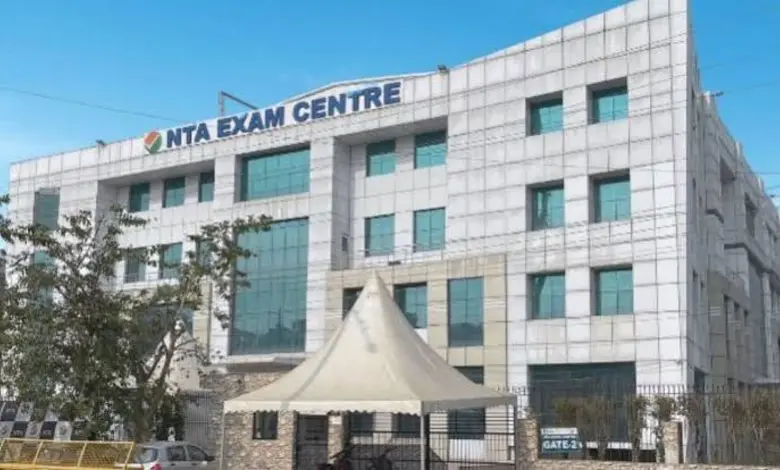
New Delhi: The National Testing Agency (NTA), which conducts some of India’s biggest entrance examinations, is functioning with only 24 permanent employees, the Centre informed the Rajya Sabha during the Monsoon Session of Parliament. The disclosure has once again brought the agency’s administrative capacity into focus, especially given the scale of exams it oversees every year.
In a written reply to Parliament, the Ministry of Education said the NTA has 39 sanctioned permanent posts, of which 15 are currently vacant. To keep its operations running, the agency depends heavily on 197 contractual and outsourced staff.
The numbers stand in sharp contrast to the size of the NTA’s responsibilities. Since it was set up in 2018, the agency has conducted more than 270 examinations and handled over 6.6 crore candidate registrations, making it one of the country’s busiest examination bodies.
Every year, millions of students appear for exams conducted by the NTA, including NEET-UG, JEE Main, CUET (UG and PG), UGC-NET, and several recruitment and entrance tests for higher education institutions across India.



The staffing details assume greater significance in the backdrop of the scrutiny the NTA has faced in recent years. The agency has been at the centre of several controversies, particularly after allegations of irregularities and paper leaks in NEET-UG 2024. Questions over examination security, transparency and administrative preparedness have triggered widespread debate and led to calls for reforms in the country’s entrance examination system.
Despite the limited number of permanent employees, the government has maintained that the NTA manages nationwide examinations through a combination of contractual manpower, outsourced services and technology partners. This operational model, it says, enables the agency to conduct large scale examinations across thousands of centres while maintaining a relatively small permanent workforce.
The NTA was established in 2018 as an autonomous body under the Ministry of Education with the objective of bringing greater transparency, uniformity and efficiency to entrance examinations. Over the years, its role has expanded considerably, with several major national level exams now falling under its ambit.
The figures shared in Parliament are likely to renew discussions over whether an organisation responsible for examinations that determine the academic future of millions of students should have a stronger permanent administrative setup. Education experts have long argued that filling vacant posts and strengthening institutional capacity could improve oversight and public confidence in the examination process.
As the number of candidates appearing for national entrance tests continues to rise, the question of whether the NTA has adequate manpower to meet its growing responsibilities is expected to remain part of the broader conversation on examination reforms in India.
ALSO READ: CBSE Class 10 Second Board Result 2026: Check DigiLocker Link & Scorecard Download Steps