Dr. Yogesh Dadke
At first glance, three people have little in common: a parent preparing to pay a child’s university fees overseas, an NRI comparing an Indian investment with one in the United States, and a CFO reviewing next quarter’s import costs. Yet last week all three were, in effect, watching the same story unfold thousands of kilometres away—in the energy markets.
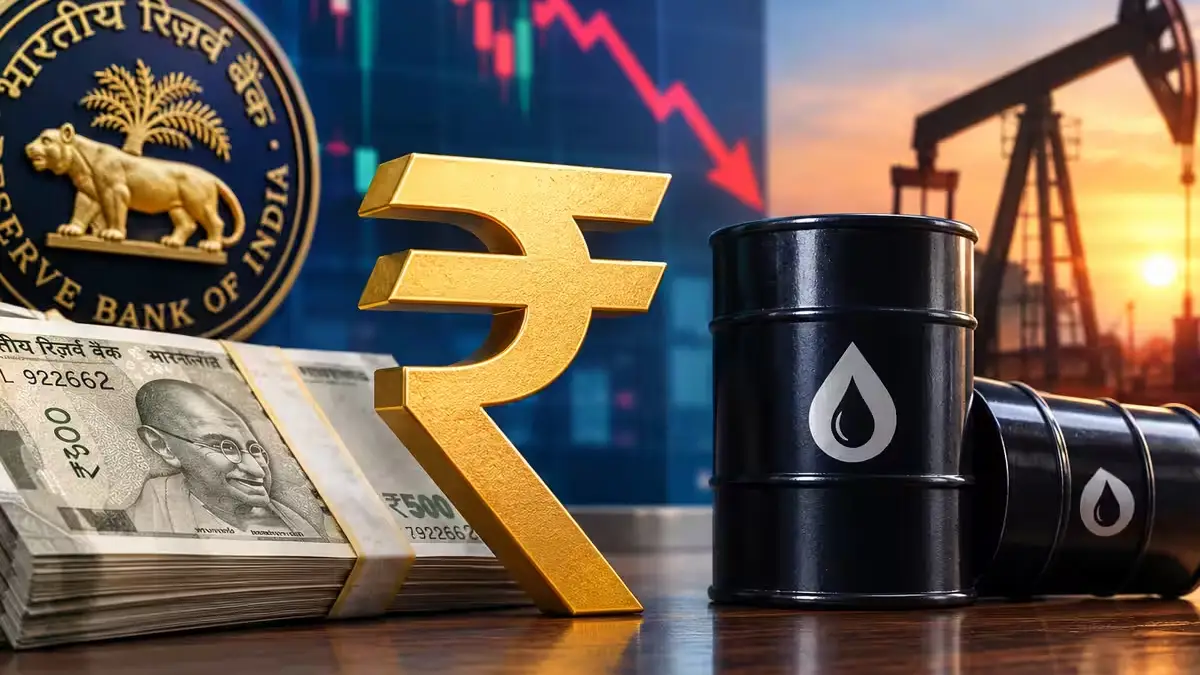
As Middle East tensions pushed Brent crude above $100 a barrel, the consequences travelled quickly. Oil fed inflation concerns; inflation pushed bond yields higher; higher yields changed expectations around central-bank policy; and those expectations moved currencies from Mumbai to Frankfurt and Tokyo. A geopolitical event does not remain geopolitical for long. It travels through energy, inflation, interest rates and capital flows before arriving in household budgets, investment returns and corporate margins.
The rupee felt that transmission directly. It fell 1.1% over the week to ₹95.55 per US dollar—its sharpest weekly decline in four months—as expensive oil and rising global yields increased pressure on an energy-importing economy. The RBI acted to moderate disorderly moves. Yet the other side of India’s external story was equally important: foreign-exchange reserves rose by about $45 billion in the latest reported week to a record $785.7 billion, providing a substantial buffer.
But this was not simply a “strong dollar, weak rupee” week. The global picture was more nuanced. In the United States, August consumer inflation accelerated, reinforcing expectations that the Federal Reserve could raise rates at its 15–16 September meeting. Higher US rates can support the dollar by making dollar assets more attractive—but markets were also balancing inflation against growth and geopolitical risk.
Europe faced a different version of the same dilemma. The European Central Bank raised its key rate by 25 basis points to 2.5%, its second increase this year, as higher energy costs complicated the inflation outlook. Yet the euro did not automatically strengthen. That is an important currency lesson: markets react not simply to whether rates rise, but to what was already expected, what policymakers signal next, and what tighter money may do to future growth.
Japan offered the sharpest contrast. After years in which investors routinely sold the yen to fund investments elsewhere, speculative positioning turned net-long yen for the first time since February. Expectations of faster Bank of Japan tightening, together with the possibility of Japanese capital returning home, have changed the conversation around a currency that only weeks ago was under intense pressure.
For readers, these are not abstract market moves. A parent paying overseas tuition experiences FX as a change in the family budget. An NRI should compare investments on a home-currency basis: a higher headline return in India can be diluted if the rupee depreciates materially against the currency in which wealth is ultimately measured. For an HNI, currency is therefore part of portfolio return—not merely a travel expense. For a CFO, it can alter landed cost, pricing, working capital, hedging and margins. And for a globally employed professional, sustained currency shifts can influence corporate budgets, hiring economics and the relative cost of talent across countries.
There is another dimension that sophisticated investors increasingly need to consider: the currency in which returns are ultimately measured. Imagine an NRI comparing a higher-return investment in India with a lower-yielding opportunity in the country where the investor lives. On paper, India may appear clearly more attractive. But if the Rupee depreciates materially during the investment period, part—or even all—of that additional return can disappear when the money is converted back into the investor’s home currency. The reverse can also work in the investor’s favour. This is why global investors distinguish between the return on an asset and the return after currency translation. Interest rates, equity gains and property appreciation tell only part of the story; exchange rates can quietly rewrite the final arithmetic. The return you earn is not always the return you keep.
The common thread is that exchange rates are transmission mechanisms. They convert global events into local economics.
The coming week is therefore unusually significant. The Federal Reserve meets on 15–16 September, while other major central banks and markets will continue assessing whether the energy shock is temporary or persistent. The question is not simply whether the dollar, euro, yen or rupee rises next. It is whether policymakers increasingly see expensive energy as another inflation cycle—or a shock that economies can absorb without prolonged tightening.
Disclaimer: THE CURRENCY COMPASS™ is for informational purposes only and does not constitute financial, investment, or trading advice. It interprets market developments rather than predicts them. Views expressed are personal and do not represent any institution or organization.
Read Also : TikTok Founder Zhang Yiming Becomes Asia’s Richest Person, Overtakes Gautam Adani
-

-
-

-