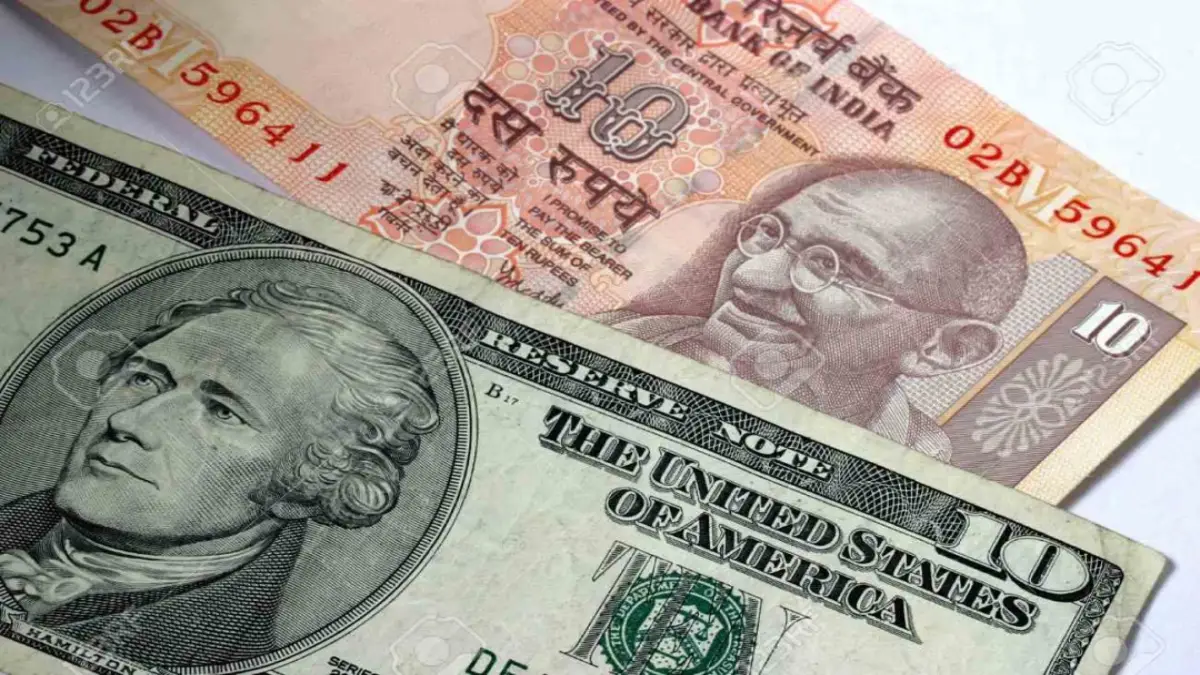
The Indian rupee has been losing ground against the US dollar almost steadily since the Covid pandemic. That fits the long-term pattern of roughly 2 to 3 per cent average annual weakening, but it has raised a question: why is the rupee the worst performer in Asia against the dollar?
Higher inflation in India than in the US, persistent current-account deficits and volatile capital flows are among the obvious reasons. The Reserve Bank of India (RBI) has been managing the depreciation, mainly by selling dollars through open market operations. Here are the facts and figures.
How the rupee has slipped since Covid
Stress was visible even before the pandemic, when the rupee stood at around 72 to a dollar. By the end of 2021, it was at around 75. A sharp fall at the end of 2022 took it to around 83 per dollar.
From 2023 to 2025, the currency hovered in the 82–85 range, a relatively stable phase. By the end of 2025, however, the slide worsened and the rupee crossed 90, a psychological barrier at the time. It is now at around 95, after testing record lows of around 96 earlier this year.
From early 2020 to late 2026, this adds up to a nominal decline of around 30 per cent. Taking the January 2022 average of 74.4 against late-2026 levels of 95, the depreciation is about 28 per cent.
How the rupee compares with Asian peers
During the Covid period, the depreciation was mild to moderate. The rupee was relatively resilient compared with some Asian peers, helped by a strong domestic recovery, capital inflows and RBI management. It was not the worst-hit Asian currency then.
In 2022, it became one of the weakest Asian performers, falling 10 to 11 per cent. Several global economic and geopolitical events affected fuel prices, one of the largest components of India’s import bill. These included aggressive rate hikes by the US Federal Reserve, which the RBI’s monetary policy broadly mirrored, a resurgence of the US dollar, and oil price spikes driven by the Russia–Ukraine war.
India imports close to 90 per cent of its crude oil requirement, which leaves the rupee particularly exposed to energy-price shocks.
Foreign portfolio investors (FPIs) also pulled money out of India during this period. Indian equities, with relatively few companies in emerging technologies such as artificial intelligence (AI), were regional underperformers. Foreign investors cut capital inflows that could otherwise have supported the rupee. India’s current account deficit widened significantly as a result.
The 2023–2024 period was relatively stable or modest. The rupee often outperformed or matched its peers in terms of volatility, supported by higher Indian real yields, bond-index inclusion prospects and RBI interventions. At times it was among the more stable emerging-market or Asian currencies.
Weakness accelerated in late 2024–2025, when the rupee became Asia’s worst or near-worst performer, falling 4.9 per cent in 2025. A different but related set of events was at play. US tariffs on Indian exports, including secondary penalties linked to buying Russian oil, were one major factor. FPI equity outflows increased amid concerns about India’s growth and corporate earnings. Uncertainty over the US–India trade deal and persistent current-account pressure also weighed on the currency.
In the same period, other Asian currencies such as the Malaysian ringgit, Thai baht, Taiwan dollar, Korean won and Singapore dollar strengthened or held up better as the dollar softened. Some were helped by trade surpluses or positive net international investment positions (NIIP). India has a negative NIIP.
The situation worsened in 2026, partly because of the start and continuation of the Iran–US–Israel war and the closure of the Strait of Hormuz. The resulting pressure on oil prices raised the import bill. Benchmark Brent crude has swung between $70 and nearly $110 per barrel during the first and second quarters of this financial year.
Global bond-yield spikes, continued FPI caution and external deficits are adding to the pressure. A steeper fall has been prevented by RBI interventions and by balance-of-payments measures, such as attracting large deposits and borrowing inflows.
Structural and recurring reasons
Several factors are boxing in the rupee: heavy dependence on oil imports, current-account and trade deficits, volatile capital flows, interest-rate differentials, global US dollar strength and a negative NIIP.
The RBI’s aim is to prevent a speculative attack on the rupee by curbing volatility, rather than to defend the currency at a specific level against the dollar. It intervenes through spot and forward sales in the foreign-exchange market and has built large reserves.
Also Read:Sridhar Vembu Reveals Zoho’s Own Cloud Infrastructure, Free Student Access
In short, the rupee is currently going through an orderly, or crawling, depreciation rather than an outright crisis.
External vulnerabilities over domestic factors
India is on a positive trajectory in GDP growth. Over the longer term, average depreciation stays in the 2–3 per cent range, but the currency sees uneven bursts around global shocks.
Compared with other emerging-market currencies, India has shown greater resilience, backed by higher forex reserves, including inflows from remittances. It has, however, lagged behind surplus-running or less oil-dependent Asian currencies during periods of dollar softness or commodity stress.
-
-

-

-