
Kishan Desai
(kddesai.creative@gmail.com)
The relationship between interest rates and the Indian economy is a complex yet crucial aspect of economic policymaking. The Reserve Bank of India (RBI), the country’s central bank, uses monetary policy and interest rate adjustments to influence economic activity, with far-reaching implications for everything from household finances to corporate investment decisions.
At the heart of this policy lies the challenge of striking a delicate balance between curbing inflation and sustaining economic growth. Interest rate decisions, therefore, play a pivotal role in shaping borrowing costs, consumer spending, business expansion and the broader economic outlook.
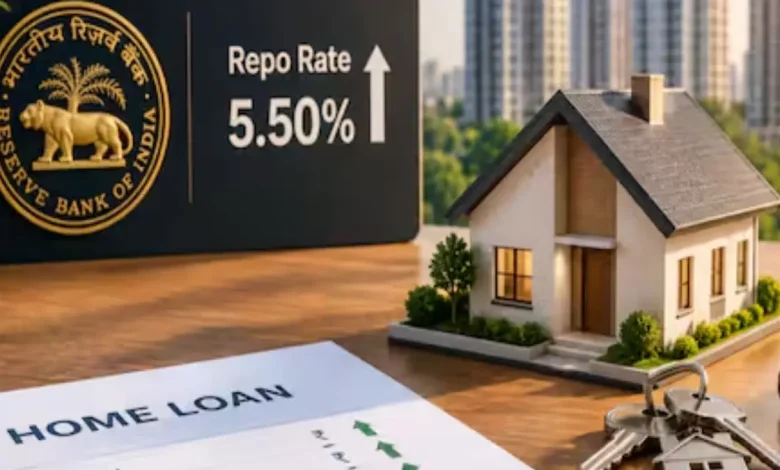
When inflation surges, the Reserve Bank of India (RBI) may raise the repo rate — the rate at which it lends to commercial banks — to curb price pressures. A repo rate hike increases banks’ cost of borrowing, prompting them to pass on the higher costs to customers through increased lending rates. This makes loans more expensive for households and businesses, pushing up EMIs and potentially dampening consumer spending and investment.




An interest rate hike hits borrowers where they feel it most — their monthly budgets. From home and car loans to personal and business credit, higher lending rates make borrowing more expensive. For borrowers with floating-rate loans linked to external benchmarks such as the repo rate, the impact can be swift, with EMIs rising or loan tenures stretching, depending on the lender’s terms.
For those planning to take out a new loan, the higher cost of credit can force a rethink of major purchases and investment plans. As borrowing becomes more expensive, demand for loans may weaken, potentially slowing consumer spending and business expansion.
Rising EMIs and costlier loans can put household budgets under pressure, leaving families with less money to spend on other needs. With private consumption being a key driver of the Indian economy, higher loan repayments can have wider economic consequences.
As a larger share of household income goes towards servicing debt, families may postpone big-ticket purchases such as homes, cars and electronics, while cutting back on travel and other discretionary spending. This pullback in consumption can weaken consumer demand, potentially affecting businesses and slowing economic activity.
The impact of higher interest rates extends beyond household budgets to corporate investment and business expansion. As business loans become more expensive, companies may put new projects on hold, delay factory expansions or scale back investments in new technology.
Higher borrowing costs can also squeeze profit margins and reduce returns on investment, prompting businesses to reassess their expansion plans. A slowdown in private sector capital expenditure (capex) can, in turn, weigh on innovation, industrial activity and job creation, potentially affecting the broader growth outlook.
Amid global uncertainties, volatile crude oil prices and domestic inflationary pressures, the Reserve Bank of India (RBI) may raise interest rates to rein in price rises and manage liquidity in the financial system. The central bank’s inflation-targeting framework aims to keep retail inflation at 4%, with a tolerance band of 2% to 6%.
While tighter monetary policy can help curb inflation by making borrowing more expensive and moderating demand, it can also have a downside: higher credit costs and tighter financial conditions may slow consumption, investment and overall economic activity.
Prolonged interest rate hikes can raise the risk of an economic slowdown, as higher borrowing costs weigh on consumer demand and business investment. When households cut spending and companies defer capital expenditure, production and business activity can take a hit, potentially slowing overall GDP growth.
Small and medium-sized enterprises are particularly vulnerable to sustained high interest rates, as rising financing costs can strain cash flows and limit expansion. If the slowdown persists, businesses may scale back hiring or cut jobs, adding to the risk of rising unemployment.
Interest rates can be a double-edged sword for the economy. While higher rates help the Reserve Bank of India (RBI) tame inflation and support currency stability, they also make loans costlier, squeeze household budgets and prompt businesses to put investment plans on hold.
The challenge lies in controlling rising prices without putting the brakes on economic growth. For the RBI, every rate decision is a balancing act — keeping inflation in check while ensuring that consumer spending, business investment and job creation continue to drive the economy forward.
Read Also : How Entrepreneurship Can Strengthen The Economy