
Singhbhum, Jharkhand: India has once again opened a page of history that goes beyond human civilisation, kingdoms and empires. This time, the story is not thousands of years old, but almost 3.5 billion years old.
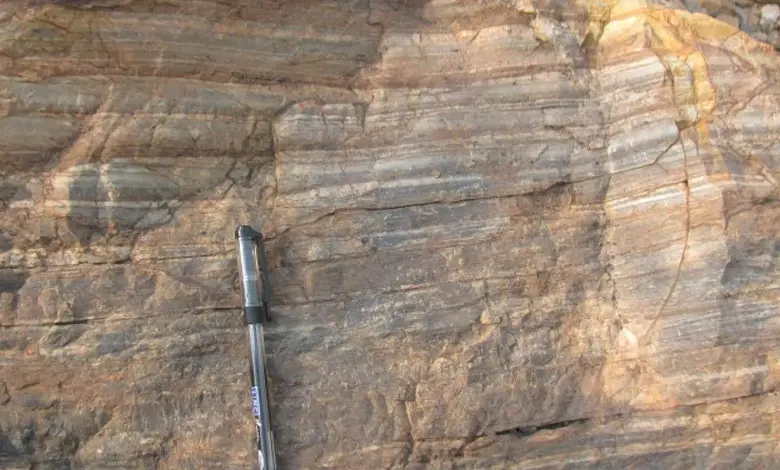
Scientists have discovered what could be the oldest directly dated evidence of life on Earth in the Singhbhum geological region of eastern India. A layered rock known as Bhitardari chert has preserved signs of ancient microbial life, taking us back to a time when the Earth itself was still very young.
The rock, believed to be around 3.497 billion years old, contains dark, carbon-rich bands between layers of silica. Scientists say these layers preserve biological signatures that could have been left behind by primitive microorganisms that lived in an ancient marine environment.
And what makes this discovery even more remarkable is the land where it was found.




The Singhbhum Craton is one of the ancient and well-preserved pieces of continental crust on Earth. Billions of years ago, this region was covered by a sea, where volcanoes and hot water beneath the seafloor created an environment rich in silica, iron and other materials.
ALSO READ: A 454-Gram Meteorite Points To An Earth-Like Diminished Planet
It was in this extreme environment that some of the earliest forms of life may have survived.
The researchers studied the rock using Raman spectroscopy and carbon isotope analysis. The carbon found in the rock shows patterns compatible with a biological origin, suggesting that primitive organisms were already carrying out complex processes to survive.
Imagine this, long before forests covered India, before the Himalayas rose, before humans walked on Earth, life had already begun its journey in what is now eastern India.
The rock has survived billions of years of geological changes, volcanic activity and transformations of the Earth, carrying within it a small but powerful message from the past.
A message that says life was here.
The discovery gives India a remarkable place in the history of our planet. It is not just a scientific discovery, but a reminder of how ancient the land beneath our feet truly is.
India’s history may be written in monuments, scriptures and civilisations, but nature has preserved another history deep inside its rocks.
And this time, the pages are almost 3.5 billion years old.