
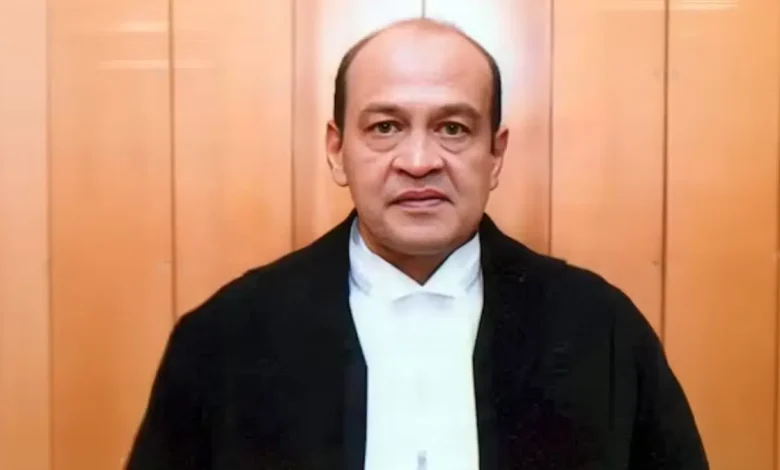
New Delhi : A parliamentary inquiry committee has found all three charges against former Delhi High Court judge Justice Yashwant Varma proved, concluding that substantial unexplained cash was found at his official residence, evidence was not properly preserved and his explanations about the episode were evasive and unsatisfactory. The panel, however, stopped short of saying that Justice Varma personally owned the money in the criminal-law sense.
The committee examined three formal charges against Justice Varma. In simple terms, these were the specific allegations framed for examination during the inquiry. The committee found that substantial amounts of Rs 500 notes were present in the storeroom after the fire. According to the report, the evidence pointed to bundles, heaps and stacks of currency rather than a few stray notes.
It also rejected his contention that the storeroom was completely outside his control, holding that it formed part of his official residential premises and remained under his institutional control. The committee said the storeroom was not immediately sealed and that cleaning took place after first responders left. By the time a formal inspection was carried out, the currency was no longer available.
The panel referred to the presence of Justice Varma’s Private Secretary Rajinder Singh Karki and household staff member Mohd. Rahil near the storeroom during the cleaning process. It said his responses failed to sufficiently address the central questions surrounding the cash, including its presence, source and ownership, as well as the steps taken after the fire.



The committee described his explanations as “evasive, incomplete and misleading in effect” and said they did not reflect the degree of candour and institutional responsibility expected in the circumstances. One of the key limitations of the inquiry is that the committee could not establish the exact value of the currency. As a result, while the panel concluded that a substantial quantity of Rs 500 notes had been present, it could not determine the precise amount.
Justice Varma also withdrew from further participation in the proceedings after the presenting side completed its evidence and cross-examination. The inquiry found that the three charges framed against Justice Varma were proved for the purpose of the parliamentary removal process. The key finding was that unexplained cash was present within premises under his control and that he failed to provide a satisfactory account of it, while evidence connected to the episode was also not adequately preserved.
The panel held its first meeting on September 17, 2025, and formally framed the charges against him on November 26. Justice Varma challenged the constitution of the committee, but the Supreme Court dismissed his plea on January 16, 2026. During the proceedings, Justice Varma’s side sought access to records, electronic material and official documents. The committee directed the production of specific records from the Delhi Police, CRPF and fire services.
Read Also : Russia Chooses Former CJI Chandrachud As Arbitrator In Legal Battle With Oschadbank