
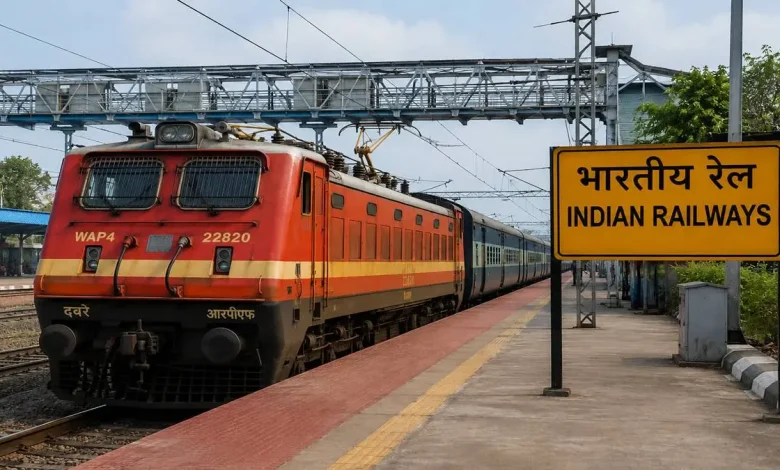
Mumbai: Following amendments introduced under the Jan Vishwas Act, commuters traveling across the Indian Railways network face significantly higher financial penalties for ticketing violations. According to a report by The Financial Express, the national transporter issued an official warning as the revised regulations became effective. Multiple regional divisions, including Central Railway’s Mumbai Division alongside Western Railway’s Mumbai Central and Bhusaval Divisions, have circulated advisories to inform the public about the heightened enforcement measures.
Double Fines for Ticketless Travel
The legislative updates directly alter the enforcement of Section 137 of the Railways Act, 1989, which addresses passengers traveling without a valid ticket or attempting to reuse previously validated tickets. Under the newly implemented structural changes, anyone caught without proper travel authority must pay the standard ticket fare in addition to an excess charge. The minimum base penalty for this offense has officially doubled, climbing from the previous Rs 250 to a new baseline of Rs 500.
Stricter Penalties for Class and Distance Violations
The regulatory overhaul extends beyond complete ticketlessness to penalize irregular travel under Section 138 of the Railways Act. This section applies to passengers who travel further than their ticket permits, board a higher class of accommodation than they purchased, or otherwise breach the specific terms of their booking. The minimum fine for these violations has similarly risen from Rs 250 to Rs 500, with the law allowing the Central government the authority to adjust this amount further in the future.
Passenger Notice
Passengers are hereby informed that, as per the provisions of the 𝐉𝐚𝐧 𝐕𝐢𝐬𝐡𝐰𝐚𝐬 𝐀𝐜𝐭, 2026, 𝐭𝐡𝐞 𝐦𝐢𝐧𝐢𝐦𝐮𝐦 𝐩𝐞𝐧𝐚𝐥𝐭𝐲 𝐮𝐧𝐝𝐞𝐫 𝐒𝐞𝐜𝐭𝐢𝐨𝐧𝐬 137 𝐚𝐧𝐝 138 𝐨𝐟 𝐭𝐡𝐞 𝐑𝐚𝐢𝐥𝐰𝐚𝐲𝐬 𝐀𝐜𝐭, 1989 𝐡𝐚𝐬 𝐛𝐞𝐞𝐧 𝐞𝐧𝐡𝐚𝐧𝐜𝐞𝐝… pic.twitter.com/gcN9T6NmKU— DRM Mumbai CR (@drmmumbaicr) June 20, 2026





Restrictions on Transferring Tickets
Transferring or using another individual’s ticket without proper authorization is also subject to stricter oversight under the revised Section 142 of the Railways Act. Passengers discovered traveling on a ticket booked under someone else’s name face the immediate forfeiture of the ticket, alongside the requirement to pay the full fare and an accompanying penalty. In line with the other updates, the minimum excess charge for this infraction has been raised to Rs 500 from the older Rs 250 fee.
Legal Consequences and Regional Awareness Campaigns
To ensure widespread public awareness, various railway divisions have initiated informational campaigns using social media platforms and digital passenger notices. Western Railway and Central Railway have strongly encouraged commuters to stick strictly to ticketing guidelines to avoid legal and financial complications.
For passengers who refuse to clear their outstanding fares and penalties upon request, the law empowers authorized railway personnel to escalate the matter to a competent court. If non-payment persists, the court retains the authority to order formal recovery actions. Under Section 142, continued non-compliance can result in an absolute fine of up to Rs 2,000, a prison term extending up to six months, or both punishments. Similarly, under Section 137, refusal to pay the demanded dues can result in a court-mandated fine of up to Rs 500, imprisonment for up to six months, or both.
Also Read: Multiple Express Trains to Short-Terminate at Dadar and Thane