
Selecting the ideal watermelon can be a challenge, often leading to disappointing results despite high hopes at the market or store. Many shoppers have experienced the frustration of bringing home a large, promising specimen only to find it lacking in sweetness and juiciness after cutting it open.
Traditional tricks like sniffing for sweetness or tapping for a hollow sound frequently fall short. The aroma of uncut watermelons tends to be similar across the board, and the knocking method proves unreliable for many people. These approaches work better for melons with thinner rinds, such as cantaloupes, but not consistently for watermelons.
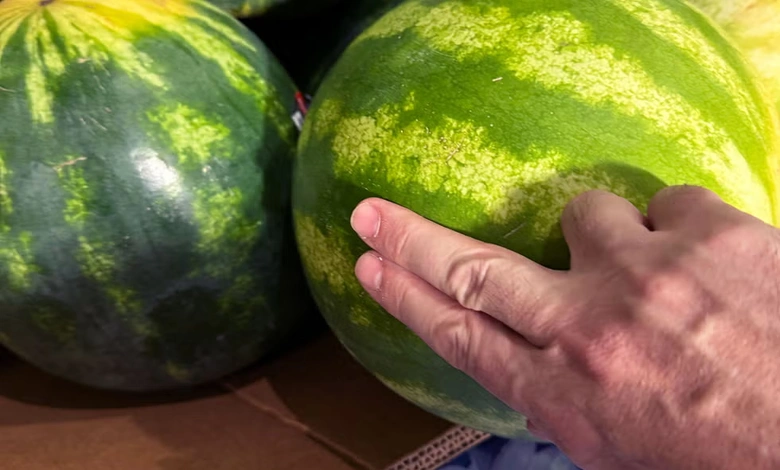
Fortunately, more dependable indicators exist, drawn from reliable sources including The Kitchn, the National Watermelon Promotion Board, and the University of Georgia’s extension service. One standout technique is the “two-finger rule,” particularly useful for striped varieties: Place two adult fingers side by side over the dark green area between the lighter stripes. If the dark stripe is wide enough to fully cover those fingers, the watermelon is likely ripe and worth choosing. This quick visual check outperforms guesswork and applies regardless of overall size—larger melons may have narrower stripes, while smaller ones can feature broader ones.
ALSO READ : Top 5 Foods Nutritionists Recommend To Help Combat Fatty Liver Naturally




Additional proven signs of ripeness and superior flavor include:
- Opt for rounder watermelons, which generally deliver sweeter taste with less wateriness compared to more elongated shapes.
- Examine the “field spot”—the patch where the fruit rested on the ground during growth. A darker, yellower field spot signals better flavor development, while paler or whiter ones suggest the melon was picked too early.
- Look for extensive webbing or hatching—those thin, brown vein-like lines on the rind, often near the field spot. Greater webbing typically correlates with higher sweetness, as it reflects pollination activity by bees.
- Choose a duller, darker rind over a shiny one; excessive sheen often indicates underripeness.
Combining these cues—starting with the two-finger rule and cross-checking the others—greatly improves the odds of selecting a flavorful, juicy watermelon. While the surest test remains slicing it open, these practical methods help avoid letdowns without causing a scene at the produce aisle. With watermelon season in full swing, these strategies ensure your next slice lives up to summer expectations: refreshing, sweet, and perfect for everything from casual eating to creative recipes.