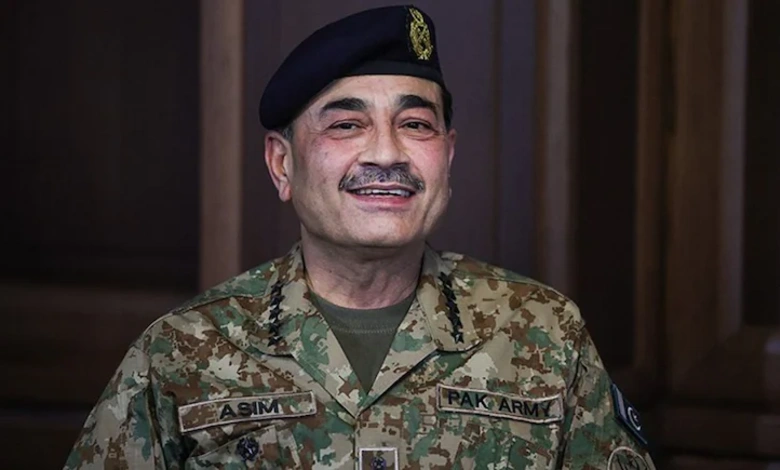
Washington is closely watching Pakistan’s influential army chief, Field Marshal Asim Munir, as he plays a central role in mediating between the United States and Iran, even as American analysts flag his longstanding connections to Tehran’s military establishment as a potential risk.
Munir recently concluded a three-day visit to Iran, becoming one of the first foreign leaders to travel there following the escalation of tensions between the US and Iran. The trip focused on advancing a possible peace agreement, with the Pakistani military stating that he held discussions with Iran’s president, foreign minister, parliament speaker, and the head of the country’s military central command centre.
According to Fox News Digital, Munir’s unusual access to both US President Donald Trump and Iran’s military leadership stems from ties he cultivated earlier in his career. While serving as Pakistan’s director general of military intelligence in 2016 and 2017, he began engaging with Iranian officials. Retired Pakistani General Ahmed Saeed told the channel that Munir has interacted with Iran’s leadership, intelligence community, and the Islamic Revolutionary Guard Corps (IRGC). Saeed added that these connections also extend to Iran’s regular army and intelligence services.
ALSO READ : Tenth Indian-Flagged Ship Navigates Strait of Hormuz as Iranian Gunboats Open Fire
Saeed noted Munir’s personal relationships within Iran’s intelligence, military, diplomatic, and political circles. He reportedly enjoyed close friendships with former IRGC Quds Force commander Qassem Soleimani, killed in a US strike in 2020, and commander Hossein Salami, killed in an Israeli strike in 2025.
Bill Roggio, a senior fellow at the Foundation for Defence of Democracies, cautioned against placing too much confidence in Pakistani assurances. Speaking to the channel, Roggio said Trump should not trust the Pakistanis, recalling Pakistan’s role as a “perfidious ally” in Afghanistan, where it backed the Taliban while claiming friendship with the US. He described Munir’s links to the IRGC as a “massive red flag” for the Trump administration.
Pakistani analyst Raza Rumi observed that the prominence of figures like Munir highlights how the military continues to overshadow civilian leadership in Pakistan.
A second round of direct talks between the United States and Iran is anticipated in Islamabad in the coming week, building on earlier efforts in which Pakistan has positioned itself as a key facilitator.
The developments come as President Trump has publicly praised Munir, referring to him in positive terms and signaling openness to further engagement if a peace deal materializes. Munir’s dual relationships underscore the complex diplomatic balancing act underway as Washington and Tehran seek to de-escalate their conflict through Pakistani channels.