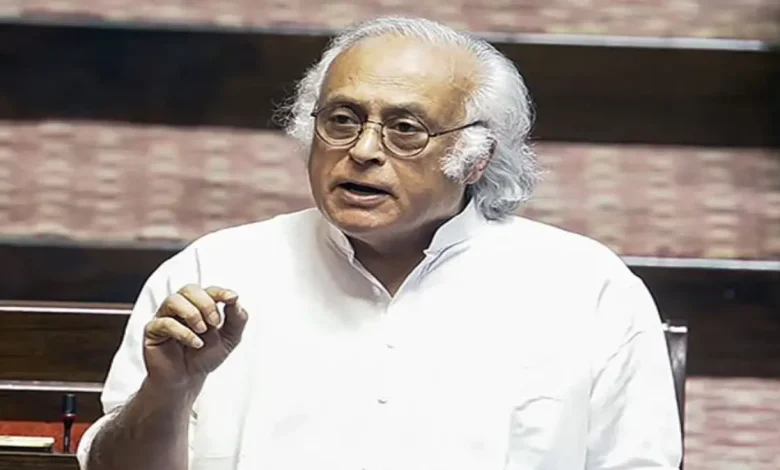
New Delhi : Congress leader and Rajya Sabha MP Jairam Ramesh on Saturday launched a sharp attack on the Narendra Modi-led Union government over the passage of the Sustainable Harnessing and Advancement of Nuclear Energy for Transforming India (SHANTI) Bill. Ramesh’s criticism came against the backdrop of President Trump recently signing the US National Defence Authorization Act (NDAA) for the Fiscal Year 2026, which makes specific reference to joint assessments between India and the US on nuclear liability rules.
In a statement, Ramesh said the US legislation runs over 3,000 pages and includes a section that refers to consultations with India on aligning nuclear liability norms. President Trump has just signed the National Defence Authorization Act for the US Fiscal Year 2026. The Act is 3,100-pages long. Page 1,912 has a reference to the joint assessment between the United States and India on Nuclear Liability Rules,” he posted on X, sharing the screenshots of the section that talked of the above-mentioned clause.
Now we know for sure why the Prime Minister bulldozed the SHANTI Bill through Parliament earlier this week that, among other things, did away with key provisions of the Civil Liability for Nuclear Damage Act, 2010. It was to restore SHANTI with his once good friend,” he remarked. The SHANTI Act may well be called the TRUMP Act – The Reactor Use and Management Promise Act,” he said in a pointed remark.
The Congress leader pointed to a specific section in the US NDAA titled ‘Joint assessment between the United States and India on nuclear liability rules’. As per US law, the Secretary of State, in consultation with other relevant departments, is required to maintain a joint consultative mechanism with India to assess the implementation of the 2008 civil nuclear agreement, discuss opportunities for India to align its domestic nuclear liability framework with international norms, and develop strategies for bilateral and multilateral diplomatic engagement.


The SHANTI Bill, which has been passed by both Houses of Parliament, introduces sweeping changes to India’s civil nuclear framework. It opens the nuclear energy sector to private participation and repeals two major legislations — the Atomic Energy Act, 1962, and the Civil Liability for Nuclear Damage Act, 2010. Opposition parties raised strong objections, with several members arguing that removing supplier liability provisions could leave citizens vulnerable in the event of a nuclear accident.
Read Also : Air India Express Pilot Accused of Assaulting Passenger At Delhi Airport, Left Him Bloodied