
Putin in India: Forging Ahead with Defense Ties Amid Western Pushback
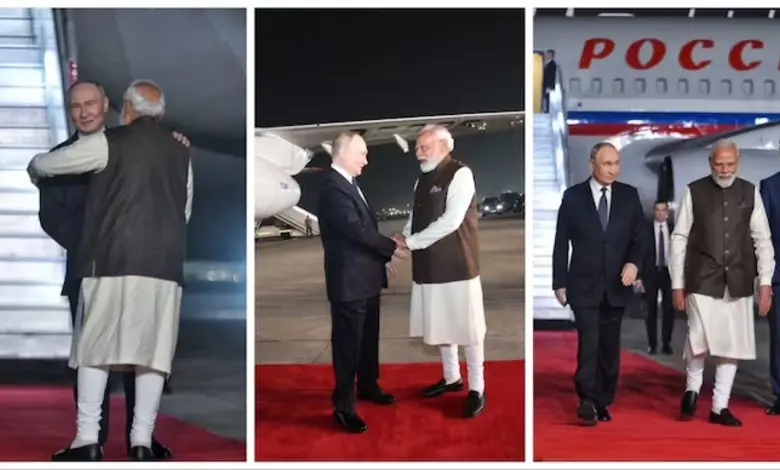
India and Russia have pledged to strengthen their robust defense collaboration, emphasizing joint efforts in specialized military technologies and enhanced industrial partnerships. This move signals Moscow’s continued dominance as New Delhi’s primary arms provider in the years ahead, even as international dynamics shift. In a clear nod to India’s commitment to independent decision-making, the two nations highlighted a foundation of mutual trust and shared values during high-level talks.
The agreement came on the eve of a summit between Prime Minister Narendra Modi and Russian President Vladimir Putin. Defense Minister Rajnath Singh and his Russian counterpart, Andrei Belousov, formalized a protocol outlining current and future areas of military-technical cooperation at the 22nd inter-governmental commission, which they co-chaired. The discussions affirmed New Delhi’s resolve to preserve its strategic independence, undeterred by intensifying calls from the United States and European Union to sever ties with Russia over the Ukraine conflict.
Key topics included India’s interest in procuring more S-400 Triumf air defense systems and their long-range surface-to-air missiles. Talks also covered upgrades to the Indian Air Force’s Sukhoi-30MKI fighters, equipping them with extended-range R-37 and RVV-BD air-to-air missiles. Negotiations extended to joint manufacturing of upgraded BrahMos supersonic cruise missiles, alongside acquisitions of Pantsir short-range systems and Verba man-portable air defenses.
Challenges persist, however. “It will be difficult for Russia to supply advanced S-500 air defense systems as of now, even if India wants them,” one official noted. Russia’s fifth-generation Sukhoi-57 fighters remain available, but India has yet to commit.

Singh emphasized expanding India’s domestic defense sector for production and exports under the Atmanirbhar Bharat initiative, while Belousov pledged Moscow’s support for New Delhi’s self-reliance goals, citing decades of enduring friendship and strategic alignment.
Delays from the Ukraine war continue to frustrate India, particularly for the final two of five S-400 squadrons under a $5.43 billion 2018 deal, and an Akula-class nuclear submarine on a 10-year, $3 billion lease from 2019. Sources indicate Russia anticipates delivery of the S-400 units next year and the submarine by 2028.
India aims to secure five additional S-400 squadrons. The defense ministry has approved a Rs 10,000 crore purchase of 280 missiles with ranges up to 380km to restock after the May 7-10 clashes with Pakistan and build reserves, as previously reported by TOI. The air force seeks R-37 missiles, exceeding 200km in reach, and the RVV-BD variant for its enhanced Sukhoi fleet—countering Pakistan’s Chinese J-10 jets with PL-15 armaments that surprised forces during Operation Sindoor.
BrahMos advancements are progressing, with strike ranges now at 450km—up from 290km—and slated to reach 800km. While heavier Sukhoi jets deployed BrahMos in long-range strikes against Pakistan in Operation Sindoor, lighter BrahMos-NG variants are planned for smaller aircraft. Cumulative deals with Indo-Russian BrahMos Aerospace surpass Rs 58,000 crore, establishing the 2.8-Mach missiles as a cornerstone for the Indian Air Force, Navy, and Army’s precision operations.